
For decades, scented candles have been the go-to choice for creating ambiance, masking odors, and adding a touch of luxury to homes. Their flickering flames and warm fragrances evoke comfort and relaxation. But in recent years, essential oil diffusers have surged in popularity—appearing on nightstands, in yoga studios, and across social media feeds. This shift raises a question: Is switching from candles to diffusers merely a passing trend, or do diffusers offer tangible advantages that make them genuinely better?
The answer lies not in hype, but in examining functionality, health impact, safety, longevity, and overall value. While both options serve the purpose of scenting a space, their mechanisms, effects, and long-term implications differ significantly.
How Candles and Diffusers Work: A Fundamental Difference
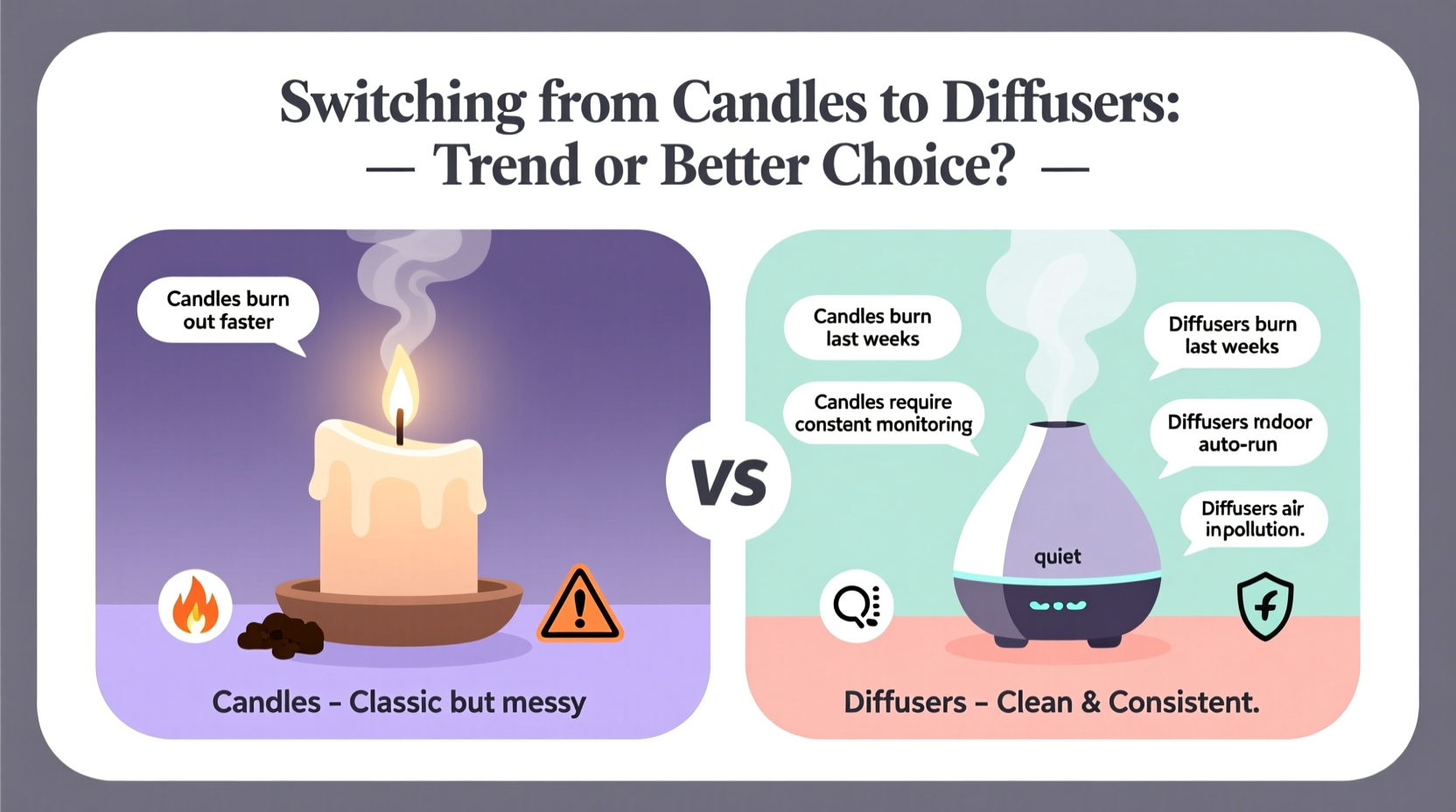
Scented candles release fragrance through combustion. As the wax melts and the wick burns, volatile compounds—including synthetic fragrances or essential oils—are released into the air. While this process creates an immediate sensory experience, it also produces byproducts such as soot, carbon dioxide, and potentially harmful volatile organic compounds (VOCs), especially with paraffin-based candles.
In contrast, diffusers disperse essential oils into the air without heat or flame. Most modern diffusers use ultrasonic technology: high-frequency vibrations break down water and essential oils into a fine mist, releasing aromatic molecules into the room. This cold diffusion preserves the integrity of essential oils and avoids combustion-related pollutants.
Health and Air Quality: Why Diffusers Win for Wellness
A growing body of research highlights concerns about indoor air pollution caused by burning candles. According to the U.S. Environmental Protection Agency (EPA), candle soot can contribute to respiratory irritation, particularly in individuals with asthma or allergies. Paraffin wax, derived from petroleum, releases toluene and benzene—known carcinogens—when burned.
Diffusers, on the other hand, enhance air quality when used with pure essential oils. Many essential oils possess natural antimicrobial, anti-inflammatory, or calming properties. For example:
- Lavender oil has been shown to reduce anxiety and improve sleep quality (source: National Institutes of Health studies).
- Eucalyptus and tea tree oils exhibit airborne pathogen-fighting qualities.
- Citrus oils like lemon and orange can elevate mood and energy levels.
“Cold-air diffusion preserves the therapeutic compounds in essential oils, making diffusers a superior option for holistic well-being.” — Dr. Lena Patel, Integrative Aromatherapy Researcher
Because diffusers don’t burn anything, they don’t degrade air quality. When paired with clean water and high-quality oils, they can actively support respiratory health and mental clarity.
Safety and Practicality: No Flame, No Risk
Candles require constant supervision. Leaving a lit candle unattended poses a fire hazard—accounting for thousands of home fires annually, according to the National Fire Protection Association (NFPA). Children, pets, and drafts increase the risk even further.
Diffusers eliminate this danger entirely. They operate on electricity or USB power, contain no open flame, and often include automatic shut-off features when water levels run low. This makes them ideal for bedrooms, nurseries, offices, and bathrooms where unsupervised use is common.
Beyond safety, diffusers offer consistent scent distribution. Candles tend to scent only the immediate area and lose potency over time as the wax pool shrinks. Diffusers can run for 4–8 hours continuously, evenly dispersing fragrance throughout medium to large rooms.
Cost Comparison Over Time: Long-Term Value Analysis
At first glance, candles may seem more affordable. A typical premium soy candle costs $20–$30 and lasts 40–50 hours. In contrast, a basic ultrasonic diffuser ranges from $30–$60 upfront. However, the long-term economics favor diffusers.
| Item | Initial Cost | Lifespan / Usage | Ongoing Cost (Monthly Est.) | Total 1-Year Cost |
|---|---|---|---|---|
| Premium Scented Candle | $25 | 50 hours per candle | $20 (2 candles/month) | $265 |
| Ultrasonic Diffuser + Essential Oils | $40 | 2+ years (with care) | $12 (10ml oils) | $184 |
This comparison assumes moderate daily use (2–3 hours). The diffuser pays for itself within 5–6 months and continues to save money thereafter. High-quality essential oils may cost more initially, but a little goes a long way—a 10ml bottle typically lasts 1–2 months with regular use.
Real-Life Example: Sarah’s Transition from Candles to Diffusers
Sarah, a 34-year-old graphic designer and mother of two, used to burn at least three candles a week—one in the living room, one in the bathroom, and one in her bedroom. She loved the ritual but noticed her youngest child coughing more at night and her own headaches increasing during winter months.
After reading about indoor air quality, she switched to a quiet ultrasonic diffuser in the bedroom with a lavender and cedarwood blend. Within two weeks, her child’s nighttime coughing decreased, and Sarah reported deeper sleep and fewer tension headaches. “I didn’t realize how much the soot was affecting us until it was gone,” she said. “Now I use the diffuser year-round and only light candles occasionally for special occasions.”
Step-by-Step Guide to Switching from Candles to Diffusers
Making the switch doesn’t have to be abrupt. Follow these steps to transition smoothly and get the most out of your new system:
- Evaluate your current usage: Track how many candles you burn weekly and where.
- Choose the right diffuser: Look for adjustable mist settings, timer options, LED lighting (optional), and a tank capacity of at least 100ml.
- Start with versatile essential oils: Begin with lavender (calming), eucalyptus (refreshing), and orange (uplifting).
- Place strategically: Use in frequently occupied rooms—bedroom, living room, home office.
- Monitor effects: Note changes in mood, sleep, air quality, or allergy symptoms over 2–4 weeks.
- Phase out candles gradually: Replace burned-out candles with diffuser sessions instead.
Common Myths About Diffusers—Debunked
- Myth: Diffusers are just humidifiers with a nice smell.
Truth: While they add moisture, their primary function is aromatherapy via controlled dispersion of essential oils. - Myth: All diffusers are noisy.
Truth: Most modern ultrasonic models operate nearly silently—ideal for sleep or concentration. - Myth: Essential oils are unsafe around pets.
Truth: Some oils (e.g., tea tree, citrus) can be harmful to cats and birds, but many are safe when diffused in well-ventilated areas. Always research pet-safe options.
Frequently Asked Questions
Can I use fragrance oils in a diffuser?
It’s not recommended. Fragrance oils are often synthetic and may clog the diffuser or release irritants when aerosolized. Stick to 100% pure essential oils for safety and performance.
Do diffusers work as well as candles for setting mood?
In many cases, better. Because diffusers provide continuous scent without flame, they create a subtle, immersive atmosphere. Pair with dim lighting for equivalent ambiance.
How do I clean my diffuser?
Wipe the tank weekly with a soft cloth and rinse with water. Once a month, use a mixture of white vinegar and water (1:1) to remove oil buildup. Never submerge the base in water.
Final Verdict: More Than a Trend—A Smarter Choice
The move from candles to diffusers isn't just a lifestyle fad driven by Instagram aesthetics. It reflects a broader cultural shift toward healthier living, conscious consumption, and evidence-based wellness. Diffusers offer measurable benefits: cleaner air, enhanced safety, lower long-term costs, and greater control over your olfactory environment.
That said, candles still have their place—for romance, ceremony, or short-term ambiance. But for everyday use, especially in spaces where people spend extended time, diffusers are objectively better in nearly every category.
If you're looking to upgrade your home’s atmosphere while supporting your well-being, now is the time to make the switch. Start with one high-quality diffuser in your bedroom or workspace. Experience the difference for yourself—without smoke, soot, or risk.




 浙公网安备
33010002000092号
浙公网安备
33010002000092号 浙B2-20120091-4
Comments
No comments yet. Why don't you start the discussion?