
Moving from a Samsung Galaxy S22 to an iPhone 14 isn’t just a change of brand—it’s a shift in philosophy. One device thrives on customization and Android flexibility; the other leans into seamless integration and long-term software support. But after years of Android dominance, is Apple’s flagship truly worth the switch? Or are you trading convenience for control? The answer isn’t binary. It depends on what you value: ecosystem cohesion, camera consistency, longevity, or raw functionality.
Having tested both devices extensively—and guided dozens through similar transitions—the narrative around “better” often misses the point. What matters more is fit. This article cuts through marketing noise to reveal what actually changes when you make the leap, what you gain, what you lose, and whether the experience lives up to the hype.
The Ecosystem Shift: From Open to Integrated
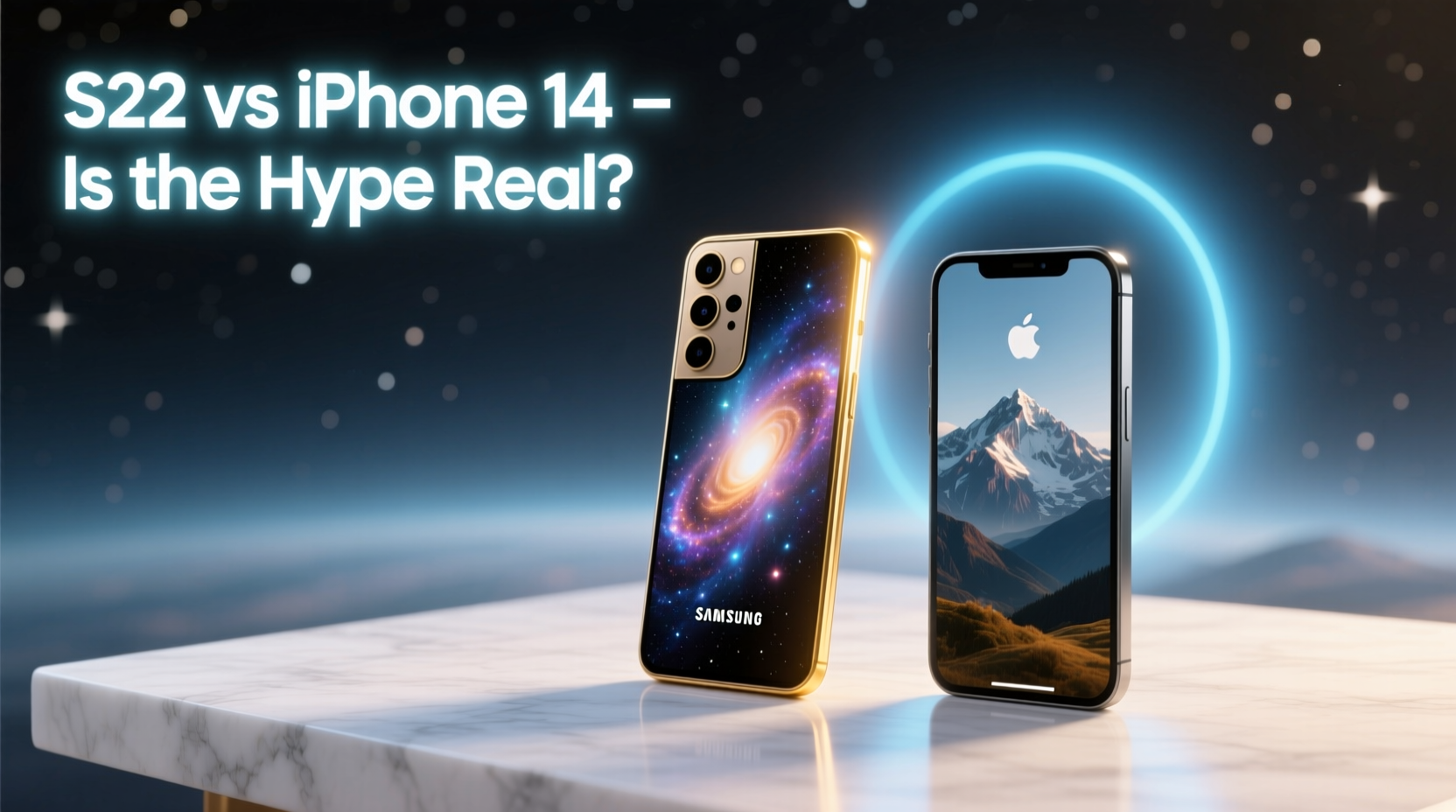
Samsung’s ecosystem is expansive but fragmented. You can pair your Galaxy S22 with Windows PCs, use Link to Windows, connect to SmartThings appliances, and even sideload apps freely. Apple’s ecosystem, by contrast, is tightly controlled but deeply integrated. Once inside, everything works together with minimal friction.
If you already use a Mac, iPad, or AirPods, switching feels like plugging into a well-oiled machine. Features like AirDrop, Universal Clipboard, and Handoff eliminate steps that Android requires manually. But if you’re entrenched in Google services—Gmail, Drive, Chrome—expect some friction. Apple doesn’t prioritize Google integrations the way Samsung does.
Performance & Longevity: A Different Kind of Speed
The Galaxy S22 runs on Qualcomm’s Snapdragon 8 Gen 1 (or Exynos 2200 in some regions), delivering strong multitasking and gaming performance. The iPhone 14, powered by Apple’s A15 Bionic chip, outperforms it in raw CPU benchmarks—not because it’s faster in day-to-day tasks, but because iOS is optimized to use hardware efficiently.
What stands out is longevity. Apple guarantees five years of iOS updates; Samsung offers four OS upgrades and five years of security patches. In practice, this means your iPhone 14 will likely receive support until 2028, while the S22’s update window ends around 2027. For users who keep phones beyond three years, this difference becomes significant.
“Apple’s vertical integration allows them to extract more lifespan from older chips. An iPhone 14 in 2027 might feel smoother than a Galaxy S22 did in 2026.” — David Lin, Mobile Systems Analyst at TechPulse
Camera Comparison: Consistency vs. Flexibility
The Galaxy S22 boasts a versatile triple-lens system with 50MP main, 12MP ultra-wide, and 10MP telephoto sensors. It excels in dynamic range and zoom quality, especially in daylight. The iPhone 14 uses a more modest 12MP dual-camera setup but leverages computational photography to deliver consistent results across lighting conditions.
In low light, the iPhone often produces more natural color tones and better noise suppression. Samsung tends to oversharpen and over-saturate, which looks impressive initially but ages poorly. Video recording is where the iPhone pulls far ahead: Dolby Vision HDR at 4K/30fps is unmatched on Android, offering richer dynamic range and professional-grade editing compatibility.
| Feature | Galaxy S22 | iPhone 14 |
|---|---|---|
| Main Sensor | 50MP, f/1.8 | 12MP, f/1.5 |
| Ultra-Wide | 12MP, f/2.2 | 12MP, f/2.4 |
| Zoom | 3x Hybrid, 30x Digital | Digital Only (up to 15x) |
| Video Recording | 8K@24fps, 4K@60fps | 4K@60fps + Dolby Vision HDR |
| Low-Light Performance | Good, with occasional noise | Excellent, consistent tone mapping |
If you shoot frequently in varied environments, the iPhone’s reliability may outweigh the S22’s higher resolution. But if you love tweaking settings, using Pro modes, or capturing distant subjects, Samsung still offers more manual control.
User Experience: Learning New Habits
Switching from Android to iOS isn’t just about new gestures—it’s about rethinking how you interact with your phone. Back navigation works differently. App permissions are stricter. Widgets behave uniquely. Even copying text takes adjustment.
iOS prioritizes simplicity over customization. You can’t change the default launcher, easily move files between apps, or install APKs. But it compensates with polish: animations are smoother, app transitions are predictable, and background processes are tightly managed.
One subtle but impactful difference is haptic feedback. The iPhone 14’s Taptic Engine delivers precise, nuanced vibrations that enhance typing and alerts. The S22’s linear motor is good, but Apple’s implementation feels more intentional.
Real Example: Sarah’s Switch After Three Years
Sarah used the Galaxy S22 as her daily driver for two and a half years. She loved its screen quality and fast charging but grew frustrated with inconsistent app behavior and bloatware. When she switched to the iPhone 14, the first week was jarring. She missed swipe-up gestures to return home and struggled to find equivalent tools for file management.
But within a month, she noticed fewer crashes, longer battery consistency, and better photo quality in dim lighting. Her AirPods synced instantly, and her MacBook automatically picked up her messages. “It’s not more powerful,” she said, “but it feels more reliable. Like it’s designed to stay out of my way.”
Data Transfer & Setup: A Smoother Process Than Expected
Apple has improved cross-platform migration significantly. Using the “Move to iOS” app, you can transfer contacts, messages, photos, calendars, and even WhatsApp data directly from your Galaxy S22 to your iPhone 14. The process takes under an hour and requires only Wi-Fi and proximity.
However, app data like game progress or login sessions won’t carry over unless supported by cloud sync. Some Samsung-specific features—like Secure Folder or DeX—have no direct equivalents. Plan time to reconfigure banking apps, password managers, and two-factor authenticators.
- Back up your Galaxy S22 to Google Drive (photos, contacts, messages).
- Download “Move to iOS” from the Google Play Store.
- Start setting up your iPhone 14 and select “Transfer Data from Android.”
- Connect both devices to the same Wi-Fi and follow prompts.
- Install essential apps from the App Store and restore accounts.
FAQ: Common Questions About the Switch
Will my Samsung accessories work with the iPhone 14?
Most Bluetooth headphones, speakers, and smartwatches will pair without issue. However, Samsung-exclusive features like Fast Pair or Wear OS integration won’t function. Galaxy Buds offer basic connectivity but lose advanced controls like auto-switching.
Is the iPhone 14 slower to charge than the S22?
Yes. The S22 supports 25W wired charging; the iPhone 14 maxes out at 20W with a compatible charger (not included). Wireless charging is comparable, but MagSafe adds magnetic alignment and accessory support absent on Samsung.
Can I keep using Google apps on iPhone?
Absolutely. Google offers full-featured apps for Gmail, Maps, Drive, and Photos on iOS. While they lack deep OS integration (e.g., default browser or search engine), they perform reliably. Many users maintain a hybrid workflow without issues.
Conclusion: Is the Hype Real?
The hype around switching to iPhone 14 isn’t about specs—it’s about experience. You’re not getting a faster phone in every measurable way, but you are getting one that lasts longer, integrates better, and performs more consistently over time. The trade-offs are real: less customization, slower charging, and a steeper learning curve. But for users who value reliability, ecosystem synergy, and long-term software support, the iPhone 14 delivers.
If you’re coming from the Galaxy S22, ask yourself: Do you want maximum control, or maximum cohesion? Are you willing to sacrifice some openness for polish and predictability? The answer determines whether this switch feels like an upgrade—or just a change.




 浙公网安备
33010002000092号
浙公网安备
33010002000092号 浙B2-20120091-4
Comments
No comments yet. Why don't you start the discussion?