
Moving from a beloved Android flagship like the Google Pixel 4 to an iPhone — especially one marketed as compact but still modern — feels like stepping into unfamiliar territory. The iPhone 12 mini, despite its size, carries Apple’s ecosystem weight, premium build, and long-term software support. But is trading the clean Android experience of the Pixel 4 for iOS on a smaller iPhone actually a step forward or a compromise too far? After six months of daily use, the answer isn’t binary. It’s layered, personal, and full of trade-offs.
The Pixel 4 was my daily driver for nearly two years. I appreciated its near-stock Android, excellent camera in daylight, Motion Sense gestures, and seamless Google integration. When it began slowing down and battery life dwindled, I faced a decision: upgrade within the Pixel line or explore alternatives. Curiosity, frustration with Google’s inconsistent hardware support, and a desire to test Apple’s much-hyped “mini” concept led me to the iPhone 12 mini. This is an honest assessment of that switch — not a marketing pitch, but a real-world evaluation of what was gained, lost, and redefined.
Performance and Software Experience
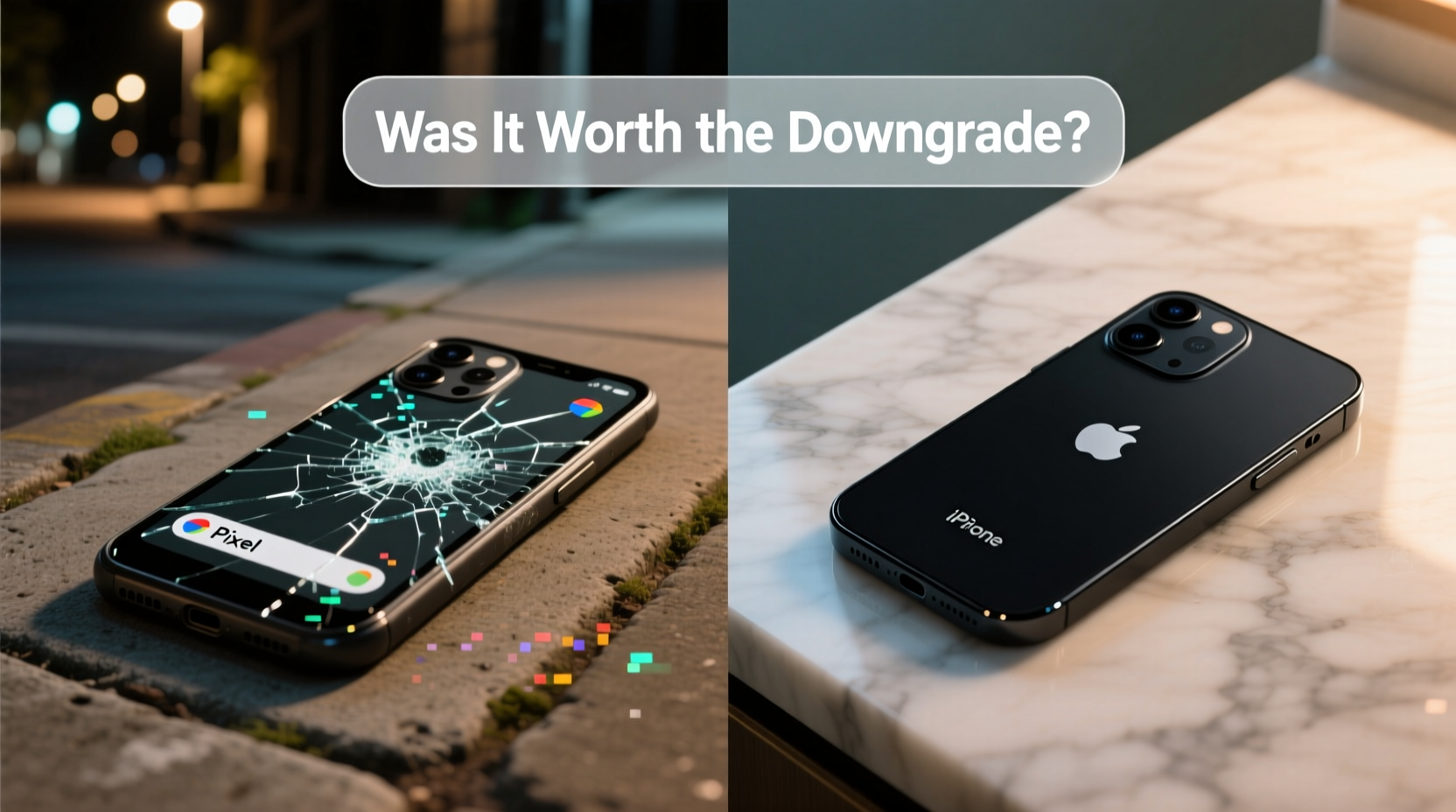
On paper, the iPhone 12 mini outclasses the Pixel 4 in raw processing power. Apple’s A14 Bionic chip remains impressively fast even years after release. Apps launch instantly, multitasking is smooth, and iOS animations are fluid without stutter. In contrast, the Pixel 4, even when new, occasionally showed jank in transitions and app switching by year two.
However, performance isn’t just about speed. It’s about ecosystem cohesion. iOS offers tighter integration between devices — if you own a Mac or iPad, features like AirDrop, Handoff, and Universal Clipboard become indispensable. iMessage, despite its walled-garden reputation, delivers reliability and feature richness (read receipts, typing indicators, reactions) that RCS still hasn’t fully matched on Android.
But the learning curve was steeper than expected. Muscle memory built over years of Android use — swiping from the bottom, accessing the notification shade, using Google Assistant — had to be unlearned. Siri, while improved, still lags behind Google Assistant in contextual understanding and smart home control. And unlike Pixel’s proactive suggestions (e.g., commute updates, package tracking), iOS feels more passive.
Battery Life: The Real Downgrade?
This is where the “downgrade” label hits hardest. The Pixel 4, despite its 2800mAh battery, managed a full day with moderate use thanks to aggressive Doze modes and adaptive battery. The iPhone 12 mini, packing a slightly smaller 2278mAh cell and lacking a power-efficient always-on display, struggles under similar conditions.
In practice, I rarely make it past 6–7 hours of screen-on time. Heavy usage — navigation, video streaming, or social media scrolling — drains it by mid-afternoon. While the Pixel wasn’t stellar either, it felt more predictable. The iPhone’s battery percentage also drops abruptly in the final 15%, which can be stressful.
Apple’s optimization helps, but it can’t overcome physics. The compact design sacrifices endurance. If you’re used to charging once a day, prepare to carry a charger or power bank. MagSafe accessories are convenient but add bulk and cost.
Real-World Battery Comparison
| Device | Battery Capacity | Average Screen-On Time | Charging Speed |
|---|---|---|---|
| Google Pixel 4 | 2800 mAh | 6–7 hours | 18W (USB-PD) |
| iPhone 12 mini | 2278 mAh | 5–6 hours | 20W (USB-PD, not included) |
Camera: Quality vs. Consistency
The Pixel 4 set a high bar for computational photography. Its single 12.2MP rear sensor produced stunning dynamic range, accurate colors, and best-in-class HDR+ processing. Night Sight was revolutionary. For portrait shots and landscapes, it often beat phones with multiple lenses.
The iPhone 12 mini improves with a dual-camera system (12MP wide + 12MP ultra-wide), better low-light performance via Night mode, and Dolby Vision HDR video recording. Photos feel more natural — less processed than Pixel’s sometimes over-sharpened output. Video quality is objectively superior, with smoother stabilization and richer audio.
But consistency is an issue. While the iPhone excels in well-lit scenes, it sometimes underexposes shadows or applies excessive noise reduction in dim environments. The ultra-wide lens, though useful, lacks autofocus and detail compared to main sensor shots. Meanwhile, the Pixel 4’s software magic made every shot look polished, even if less cinematic.
“Smartphone photography isn't just about hardware anymore — it's about how software interprets light, color, and context.” — David Kim, Mobile Imaging Analyst at DXOMARK
Ecosystem Lock-In and Daily Usability
The most significant shift wasn’t technical — it was behavioral. Switching to iPhone meant leaving behind Google Photos’ unlimited original-quality backup (a major loss), adopting iCloud (which costs extra for meaningful storage), and giving up deep Google Assistant integration.
Yet, Apple’s ecosystem has strengths. Find My works flawlessly. Face ID, once acclimated, is faster and more secure than the Pixel 4’s face unlock. And iOS updates are guaranteed for five years — a stark contrast to Google’s three-year promise, which often feels shorter in practice.
The 5.4-inch OLED display is sharp and vibrant, but touch sensitivity during gloves or rain is worse than the Pixel’s capacitive screen. The lack of a fingerprint sensor means Face ID fails when lying in bed or wearing masks — a genuine annoyance.
Mini Case Study: Commuting Workflow
As a daily commuter, I relied on the Pixel 4’s Active Edge (squeezing the frame to launch Assistant) to check transit times hands-free. On the iPhone 12 mini, saying “Hey Siri” doesn’t always register on noisy trains, and pressing the side button feels clunky. I’ve adapted by using AirPods Pro and double-tapping them to activate Siri, but it’s an extra step. Meanwhile, automatic transit card detection via NFC worked instantly on iPhone — something the Pixel never supported reliably in my region.
Checklist: Was the Switch Worth It? Key Questions to Ask Yourself
- Do you value long-term software support over immediate customization?
- Are you already invested in Apple devices (Mac, iPad, Watch)?
- Can you live with subpar battery life for a compact form factor?
- Do you prioritize video quality and ecosystem sync over camera versatility?
- Is iMessage a necessity for your social or professional circle?
- Are you willing to pay for cloud storage beyond 5GB?
- Does Face ID suit your lifestyle better than fingerprint or face unlock?
Frequently Asked Questions
Can I transfer everything from my Pixel 4 to iPhone 12 mini easily?
Yes, Apple provides the “Move to iOS” app on the Google Play Store, which securely transfers contacts, messages, photos, calendars, and free apps during initial setup. Some data (like app settings or third-party accounts) must be migrated manually.
Is the iPhone 12 mini too small for productivity?
It depends on your habits. Typing on the smaller keyboard takes adjustment, and split-screen multitasking isn’t available. However, for email, messaging, and web browsing, it’s manageable. Many users report increased focus due to reduced screen real estate.
Why choose the 12 mini over newer models like the iPhone 13 or 14 mini?
The 12 mini remains a compelling budget option in the mini lineup. While the 13 mini offers slightly better battery and camera improvements, the differences are marginal. The 14 mini further refines efficiency, but prices rise accordingly. For many, the 12 mini strikes the best balance of price, size, and performance.
Final Verdict: A Calculated Trade, Not a Clear Upgrade
Was switching from the Pixel 4 to the iPhone 12 mini worth the downgrade? In pure hardware terms — battery, expandable storage, charging flexibility, assistant intelligence — no, it was a step back. But in ecosystem reliability, build quality, long-term support, and video capabilities, it was a step forward.
The “downgrade” narrative misses the point. This wasn’t about specs — it was about shifting priorities. I traded raw customization and Google’s AI smarts for stability, longevity, and seamless device synergy. The iPhone 12 mini isn’t perfect, and its battery life remains its Achilles’ heel, but its compactness, performance, and iOS polish create a uniquely satisfying experience — one that grows on you over time.
If you’re considering this switch, ask not whether the iPhone is “better,” but whether it aligns with how you use technology. For some, the Pixel 4’s openness and Google integration will always win. For others — especially those embedded in Apple’s world — the 12 mini offers a rare blend of power and portability that few Android phones replicate.




 浙公网安备
33010002000092号
浙公网安备
33010002000092号 浙B2-20120091-4
Comments
No comments yet. Why don't you start the discussion?