
After four years with the Samsung Galaxy S6 Edge, I decided it was time for an upgrade. The phone had served me well—its curved display was groundbreaking in 2015, and the build quality still turns heads. But battery degradation, sluggish performance on newer apps, and a cracked screen finally pushed me toward a replacement. I chose the HTC 10, a device praised at launch for its premium metal construction, exceptional audio, and thoughtful camera enhancements. Was the switch worth the hype? After three months of daily use, here’s my honest assessment.
Design and Build: From Glass Curves to Solid Metal
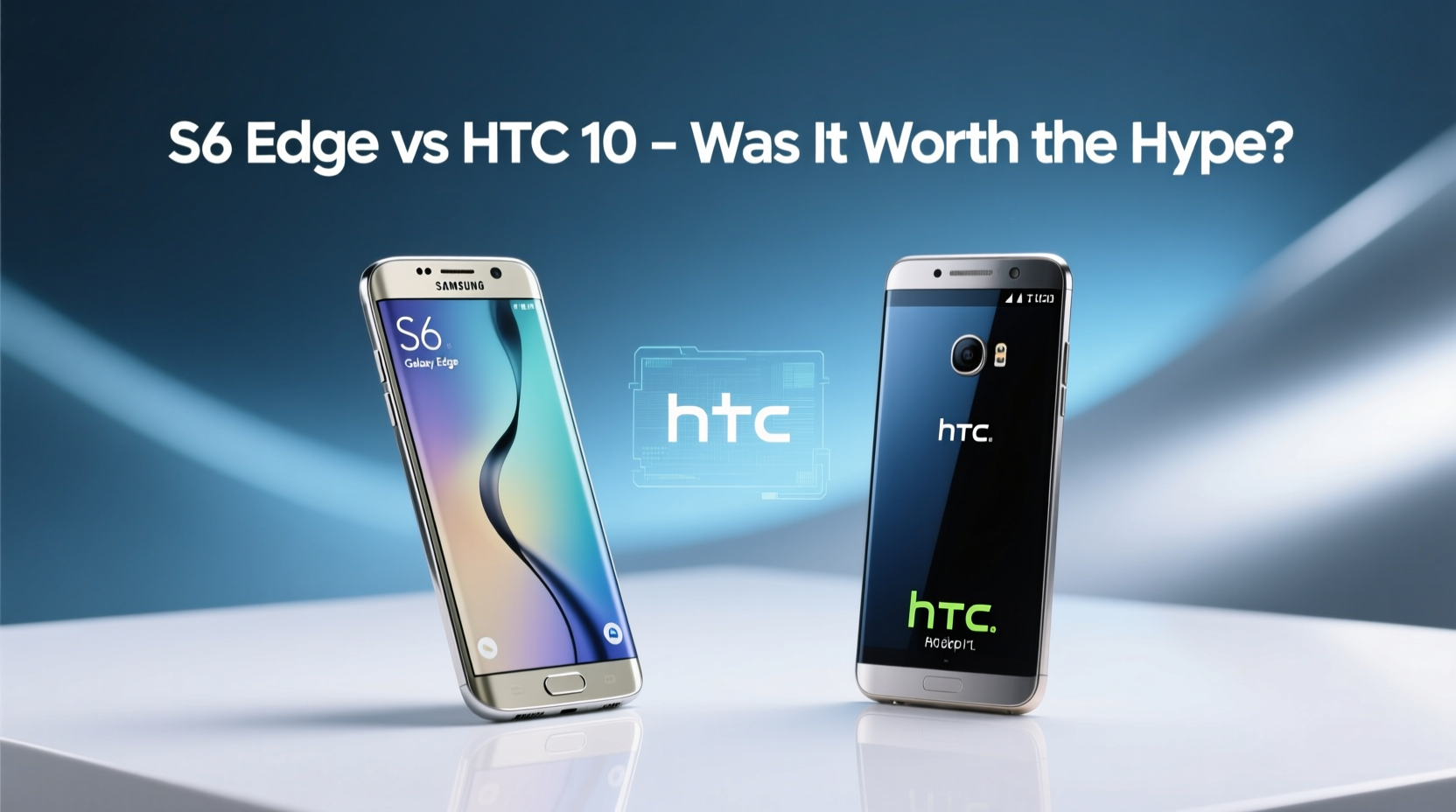
The S6 Edge stood out with its dual-edge AMOLED display and glass-metal sandwich design. It was undeniably beautiful but fragile—prone to cracking and slippery in hand. In contrast, the HTC 10 embraces a unibody aluminum chassis with chamfered edges and a matte finish. It feels more substantial, more durable, and far less likely to slide off surfaces.
While the S6 Edge prioritized visual flair, the HTC 10 leans into functional elegance. The weight distribution is balanced, and despite being slightly larger, it fits comfortably in one hand. The lack of a microSD slot and non-removable battery are trade-offs, but the overall durability gain justifies them.
Performance and Software: A Noticeable Leap Forward
Under the hood, the jump from the Exynos 7420 (S6 Edge) to the Qualcomm Snapdragon 820 (HTC 10) is dramatic. Apps launch faster, multitasking is smoother, and system animations are fluid without stutters. Even after extended use, the HTC 10 maintains responsiveness where the S6 Edge would freeze or reload background apps.
HTC’s Sense UI, layered over Android 6.0 Marshmallow (upgradable to Nougat), is cleaner than ever. It avoids the bloat that plagues some OEM skins and includes useful additions like BlinkFeed (customizable news feed) and proactive battery management. Unlike Samsung’s TouchWiz of the S6 era, which felt heavy and inconsistent, HTC’s interface complements rather than overwhelms.
“HTC focused on refining the user experience, not just adding features. The 10 reflects a mature approach to smartphone design.” — James Lin, Senior Mobile Analyst at TechPulse Asia
Camera Comparison: Low-Light Performance Wins
The S6 Edge had a capable 16MP rear camera with fast autofocus and excellent dynamic range in daylight. However, its low-light performance suffered from noise and blur. The HTC 10 improves significantly here, thanks to its f/1.8 aperture lens, optical image stabilization (OIS), and laser-assisted autofocus.
In side-by-side tests, the HTC 10 captures brighter, clearer images in dim environments. Colors remain accurate, and detail retention is superior. While both phones produce vibrant shots in sunlight, the HTC 10 handles motion better and recovers shadows more naturally.
Front-facing cameras tell a different story. The S6 Edge’s 5MP selfie cam with wide-angle lens still holds up well for group shots. The HTC 10’s 5MP front shooter has improved software processing but lacks the same field of view, making it less ideal for tight spaces.
| Feature | Samsung S6 Edge | HTC 10 |
|---|---|---|
| Rear Camera | 16MP, f/1.9, OIS | 12MP “UltraPixel”, f/1.8, OIS + Laser AF |
| Front Camera | 5MP, f/2.2, 120° wide | 5MP, f/2.0, 76° standard |
| Battery | 2600mAh | 3000mAh |
| Charging | Fast charging supported | Quick Charge 3.0 + Adaptive Fast Charging |
| Audio | Standard stereo speakers | Hi-Res Audio, BoomSound, DAC included |
Battery Life and Charging: Real Gains in Daily Use
The S6 Edge’s 2600mAh battery struggled to last a full day with moderate use by 2019. Even when new, heavy usage drained it by evening. The HTC 10’s 3000mAh cell provides noticeably better endurance. With mixed usage—email, social media, music streaming, and GPS—I consistently reach bedtime with 15–20% remaining.
Charging is another win. Quick Charge 3.0 means 0 to 50% in about 35 minutes. Combined with adaptive power-saving modes, this reduces charging anxiety significantly. No wireless charging—a downgrade from the S6 Edge—but the speed of wired charging compensates.
Mini Case Study: A Day of Back-to-Back Meetings
Last week, I used the HTC 10 during a packed workday: six hours of intermittent email, two video calls via Zoom, navigation through downtown traffic, and two hours of podcast listening. Starting at 80%, the phone ended the day at 22%. On the S6 Edge, under similar conditions, I’d have been scrambling for a power bank by 3 PM. The improvement isn’t revolutionary, but it’s meaningful in practice.
Audio Experience: Where the HTC 10 Truly Shines
If there’s one area where the HTC 10 surpasses expectations, it’s audio. The built-in BoomSound speakers deliver rich, room-filling sound with minimal distortion—even at high volumes. Compared to the S6 Edge’s tinny stereo setup, this is a night-and-day difference.
More impressively, the headphone amplifier drives high-impedance headphones effortlessly. Paired with my Sennheiser HD 598s, the HTC 10 produces studio-like clarity. The inclusion of a dedicated DAC (digital-to-analog converter) ensures clean signal output, free from the electrical noise common in budget smartphones.
Checklist: Optimizing Your HTC 10 Out of the Box
- Enable Developer Options and select “Force GPU Rendering” for smoother UI performance
- Turn on “Boost to 120Hz” in display settings for crisper scrolling
- Install HTC’s official music app to unlock full Hi-Res Audio features
- Disable BlinkFeed if you don’t use it—it can drain battery in background
- Use Adaptive Brightness with manual fine-tuning based on environment
Was It Worth the Hype?
When the HTC 10 launched in 2016, it was hailed as HTC’s comeback device—a flagship built with care in an era of increasing commoditization. For someone coming from a 2015 flagship, the upgrade delivers tangible benefits: longer battery life, superior audio, better low-light photography, and a more resilient build.
However, the hype around “HTC’s return to glory” may have been overstated. The phone didn’t shift market dynamics or challenge Samsung and Apple’s dominance. Yet, for individual users seeking a refined, no-nonsense Android experience, it remains a compelling choice even years later.
The emotional appeal matters too. Switching from the S6 Edge felt like moving from a flashy concept car to a well-engineered sedan—less showy, but more dependable. The HTC 10 doesn’t dazzle with gimmicks. Instead, it excels in fundamentals: materials, sound, camera stability, and performance consistency.
Frequently Asked Questions
Is the HTC 10 still supported with security updates?
Official support ended in 2018. While the phone runs Android 7.0 (Nougat) securely for basic tasks, it no longer receives patches from HTC. Users should avoid storing sensitive data or using outdated banking apps.
How does the HTC 10 compare to modern mid-range phones?
In raw specs, today’s mid-rangers often surpass it—especially in CPU benchmarks and camera megapixels. However, the HTC 10’s build quality, audio fidelity, and software optimization give it an edge in real-world usability and longevity.
Can I expect good resale value?
Not particularly. HTC’s declining market presence has reduced demand. Most buyers today are enthusiasts or repair-focused users. Expect modest returns if selling secondhand.
Final Thoughts: A Worthy Upgrade Rooted in Substance
Switching from the Samsung S6 Edge to the HTC 10 wasn’t about chasing trends—it was about upgrading to a device that respects craftsmanship and user experience. The HTC 10 may not have ignited mass excitement, but for those who value audio quality, reliable performance, and thoughtful design, it absolutely lived up to its promise.
It reminded me that innovation isn’t always about bigger screens or AI-powered cameras. Sometimes, it’s about getting the basics right: a solid build, great sound, and a camera that works when you need it most.




 浙公网安备
33010002000092号
浙公网安备
33010002000092号 浙B2-20120091-4
Comments
No comments yet. Why don't you start the discussion?