
For over a decade, vaping has been marketed as a safer alternative to traditional cigarette smoking. With sleek devices, flavored e-liquids, and aggressive marketing campaigns, electronic cigarettes have gained massive popularity—especially among former smokers looking for a way out of nicotine addiction. But behind the convenience and modern appeal lies a critical question: Is switching to vaping genuinely better for your health, or is it just another industry-driven trend masking long-term risks?
The answer isn’t simple. While public health agencies agree that vaping is likely less harmful than continued smoking, it’s not risk-free. Understanding the nuances requires examining scientific evidence, personal experiences, and regulatory perspectives.
The Harm Reduction Argument
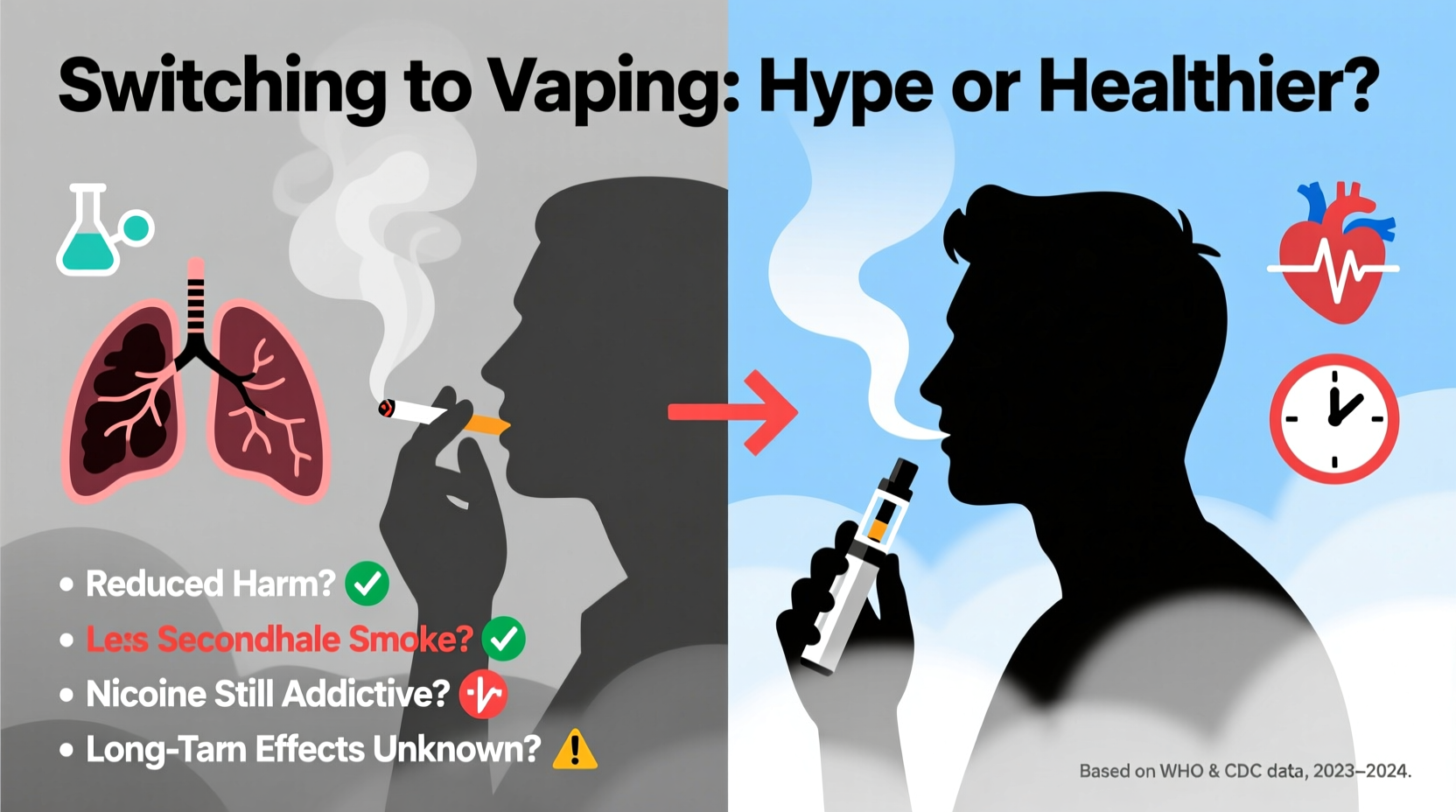
One of the strongest cases for vaping comes from harm reduction theory. Unlike combustible tobacco, which releases thousands of toxic chemicals when burned—including tar, carbon monoxide, and benzene—vaping heats a liquid (usually containing nicotine, propylene glycol, vegetable glycerin, and flavorings) into an aerosol without combustion.
According to Public Health England, vaping is estimated to be at least 95% less harmful than smoking. This conclusion is based on lower levels of carcinogens and toxins in vape aerosols compared to cigarette smoke.
“While vaping is not completely safe, it is a far safer choice for adult smokers who would otherwise continue smoking.” — Professor John Britton, Chair of the Tobacco Advisory Group at the Royal College of Physicians
This doesn't mean vaping is harmless, but for current smokers unable or unwilling to quit nicotine entirely, switching may significantly reduce their exposure to life-threatening toxins.
Comparing Health Risks: Smoking vs. Vaping
| Factor | Traditional Cigarettes | Vaping (E-Cigarettes) |
|---|---|---|
| Combustion | Yes – produces tar and carbon monoxide | No – heating only |
| Nicotine Content | High (varies by brand) | Adjustable (0–50mg/mL) |
| Carcinogen Exposure | Very high (69+ known carcinogens) | Significantly lower, but not zero |
| Lung Impact | Strongly linked to COPD, emphysema, cancer | Potential inflammation; rare cases of EVALI |
| Cardiovascular Risk | Well-documented increase in heart disease | Preliminary evidence suggests possible strain on blood vessels |
| Additives & Flavorings | Chemical additives for preservation and taste | Synthetic flavorings (some under scrutiny) |
The data clearly shows that eliminating combustion reduces exposure to the most dangerous components of tobacco use. However, this advantage diminishes if users continue both behaviors—so-called “dual use”—which undermines potential health gains.
Real-World Success: A Case Study
Mark T., a 47-year-old construction manager from Manchester, smoked two packs of cigarettes daily for nearly 30 years. Despite multiple attempts with patches, gum, and prescription medication, he couldn’t quit. After seeing a friend switch successfully, Mark tried vaping.
He started with a high-nicotine e-liquid and gradually reduced his intake over nine months. Within a year, he had stopped smoking completely and cut his nicotine down to 3mg/mL. His morning cough disappeared, exercise became easier, and he reported feeling more energetic.
“It wasn’t magic,” Mark said. “But having control over how much nicotine I took made all the difference. I didn’t feel trapped anymore.”
His story reflects a broader trend: many long-term smokers find vaping more satisfying than other nicotine replacement therapies because it mimics the hand-to-mouth ritual and delivers nicotine quickly.
Concerns and Controversies
Despite its potential benefits for adult smokers, vaping faces serious criticism. One major concern is youth uptake. Flavored e-liquids and discreet devices like vapes pens have led to a surge in underage use. In the U.S., over 2 million middle and high school students reported using e-cigarettes in 2023, according to the CDC.
Another issue is long-term safety. Vaping hasn’t been around long enough for definitive longitudinal studies. While short-term data is promising, unknowns remain about chronic lung effects, cardiovascular impact, and the safety of inhaling flavoring compounds like diacetyl (linked to “popcorn lung” in industrial settings).
The 2019 outbreak of EVALI (e-cigarette or vaping product use-associated lung injury) in the U.S. further complicated perceptions. Over 2,800 hospitalizations and 68 deaths were linked primarily to vitamin E acetate—an additive found in illicit THC cartridges—not standard nicotine vapes. Still, the episode highlighted the dangers of unregulated products.
Step-by-Step Guide to Transitioning Safely
Switching from tobacco to vaping can be effective—if done thoughtfully. Follow these steps to maximize success and minimize risks:
- Commit to quitting smoking entirely. Dual use negates most health benefits.
- Choose a reliable, regulated device. Avoid black-market or modified equipment.
- Select appropriate nicotine strength. Match your current intake initially (e.g., 18–20mg/mL for heavy smokers).
- Gradually reduce nicotine over several months to avoid dependency.
- Monitor your body’s response. Note changes in breathing, energy, or cravings.
- Seek support through cessation programs or healthcare providers.
- Aim to quit nicotine altogether within 1–2 years, if possible.
Expert Insight on Long-Term Outcomes
“The best thing a smoker can do for their health is to stop inhaling combusted tobacco. For those who can’t quit cold turkey, vaping offers a viable bridge. But it should be seen as a transitional tool, not a lifelong habit.” — Dr. Lion Shahab, Professor of Psychology, University College London
This perspective underscores a key point: vaping works best as a temporary aid, not a permanent substitute. The ultimate goal remains complete freedom from nicotine dependence.
Frequently Asked Questions
Is vaping really safer than smoking?
Yes, based on current evidence. Vaping exposes users to far fewer toxic chemicals than burning tobacco. Major health organizations, including the NHS and CDC, acknowledge this reduced harm profile—though they emphasize that neither option is completely safe.
Can vaping help me quit smoking for good?
For many people, yes. Studies show vaping can be more effective than traditional nicotine replacement therapy (NRT) when combined with behavioral support. However, success depends on commitment, proper device use, and a plan to eventually wean off nicotine.
What are the risks of vaping for non-smokers?
For non-smokers—especially youth—vaping poses unnecessary health risks and could lead to nicotine addiction. There is no benefit to starting vaping if you’ve never smoked. The potential harms outweigh any perceived social or recreational value.
- ✅ Quit smoking completely once you start vaping
- ✅ Use regulated, pharmacy-approved devices and e-liquids
- ✅ Avoid sweet or candy-like flavors if concerned about youth appeal or habit reinforcement
- ✅ Track your progress monthly (cravings, lung function, cost savings)
- ✅ Set a timeline to reduce and eventually eliminate nicotine
- ✅ Consult a doctor if you have pre-existing heart or lung conditions
Conclusion: Beyond the Hype
Switching to vaping from tobacco isn’t mere hype—it’s a legitimate harm reduction strategy supported by growing scientific consensus. For committed smokers struggling to quit, it offers a realistic path toward better health. But it’s not a cure-all. The technology carries its own risks, especially when used by non-smokers or indefinitely by former smokers.
The truth lies in context: vaping is better than smoking, but abstinence from all nicotine is best. If you’re a smoker looking to make a change, consider vaping as a stepping stone—not the final destination. Approach it with caution, clarity, and a clear exit plan.




 浙公网安备
33010002000092号
浙公网安备
33010002000092号 浙B2-20120091-4
Comments
No comments yet. Why don't you start the discussion?