
In the early 2010s, technology was widely seen as a force for good—a wave of progress promising connection, efficiency, and liberation. Smartphones, social media, cloud computing, and app-based services transformed daily life with an air of inevitability and excitement. Fast forward to the 2020s, and that same enthusiasm has cooled. While innovation continues, public sentiment has become more skeptical, cautious, and at times, outright wary. The shift in tech optimism isn’t just about new gadgets; it reflects deeper changes in trust, accountability, and the role of technology in society.
The Rise of Unchecked Tech Optimism (2010–2015)
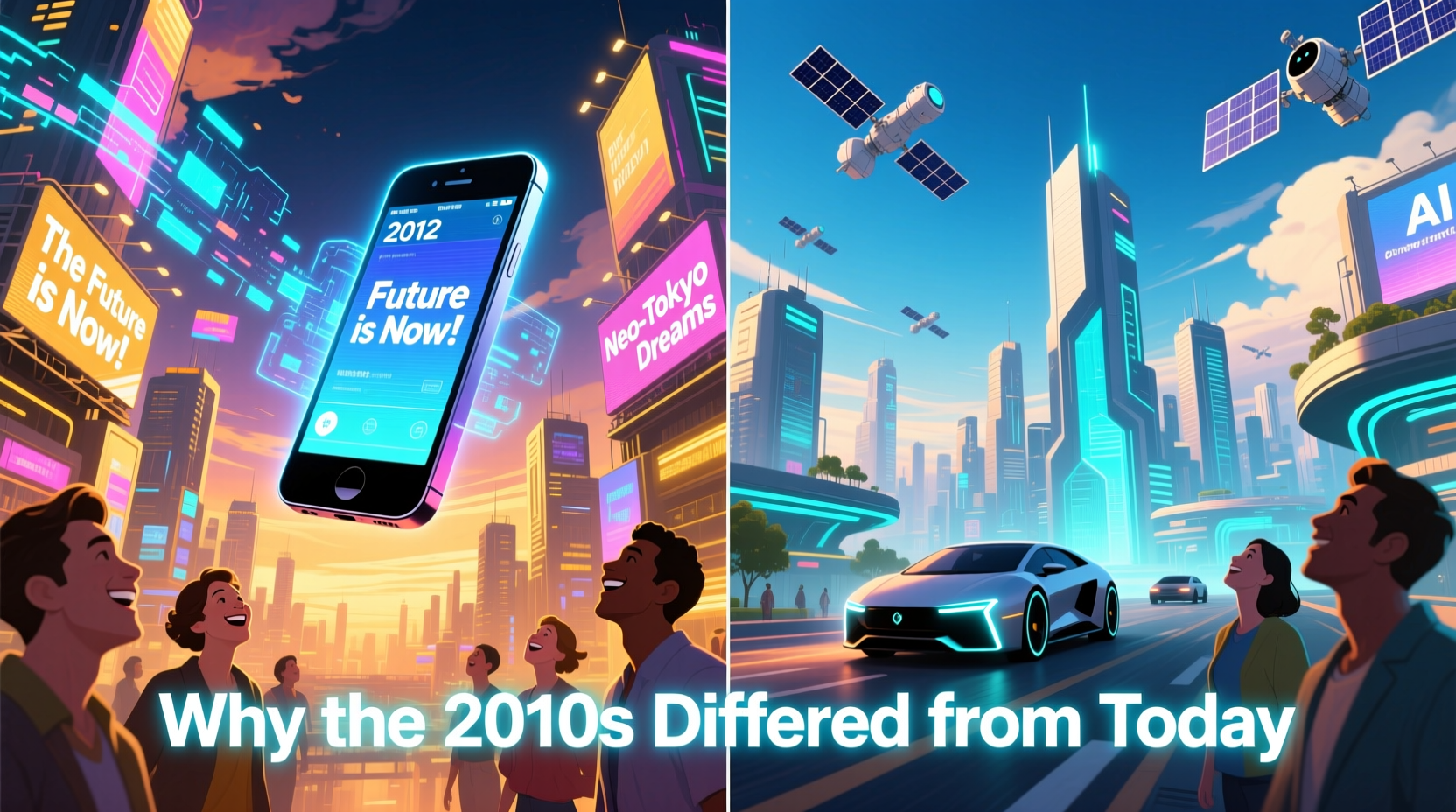
The first half of the 2010s was marked by a near-universal belief in technology’s redemptive power. Startups were celebrated as disruptors, venture capital poured into Silicon Valley, and phrases like “move fast and break things” became mantras. This era saw the mainstream adoption of platforms like Facebook, Twitter, Instagram, Uber, and Airbnb—each framed not just as tools, but as movements toward a more connected, convenient world.
Smartphones evolved from luxury items to essential lifelines. The launch of the iPhone 4 in 2010 and Android’s rapid expansion made high-speed internet portable, enabling real-time communication, navigation, and on-demand services. Cloud storage eliminated the fear of lost files, while streaming services replaced physical media. For many, this period felt like living in the future.
Key Drivers of 2010s Tech Optimism
- Visible Innovation: Each year brought tangible improvements—faster processors, better cameras, longer battery life.
- Democratization of Access: Mobile internet reached billions, especially in emerging economies.
- Startup Culture: Founders were portrayed as modern-day heroes solving global problems.
- Low Regulatory Scrutiny: Governments largely took a hands-off approach, allowing rapid scaling.
- Positive Media Narrative: Tech coverage focused on breakthroughs, not consequences.
This environment fostered a kind of techno-utopianism—the belief that if we built it, the benefits would naturally follow.
The Turning Point (2016–2019)
The tide began to turn around 2016. Several high-profile events eroded public trust:
- The role of social media in spreading misinformation during the U.S. election and Brexit referendum.
- Data breaches at companies like Equifax exposed systemic vulnerabilities.
- Whistleblower revelations, such as those from Frances Haugen, revealed internal knowledge of harm caused by platforms like Facebook.
- growing awareness of algorithmic bias in facial recognition and hiring tools.
At the same time, gig economy workers began organizing against exploitative conditions masked by the language of flexibility and freedom. Amazon faced criticism for warehouse labor practices, while Uber and Lyft drivers fought for basic protections. The narrative shifted from “empowering individuals” to “exploiting labor under the guise of innovation.”
“Technology is neither good nor bad; nor is it neutral.” — Melvin Kranzberg, Historian of Technology
Why Today’s Tech Optimism Is More Nuanced
In the 2020s, optimism hasn’t disappeared—but it’s tempered. People still embrace new tools, but with greater scrutiny. The conversation now includes questions about ethics, sustainability, privacy, and long-term impact.
Consider artificial intelligence. In the 2010s, AI was discussed primarily in terms of efficiency gains and automation. Today, debates center on job displacement, deepfakes, environmental costs of training models, and whether AI should be regulated at all. The release of generative models like ChatGPT sparked both excitement and alarm—highlighting the dual nature of modern tech sentiment.
Additionally, climate change and resource scarcity have reshaped expectations. Consumers increasingly ask: Is this innovation sustainable? Does it contribute to e-waste? Can decentralized systems like blockchain justify their energy use?
Comparison: Tech Sentiment Across Decades
| Aspect | 2010s Outlook | 2020s Outlook |
|---|---|---|
| Innovation Pace | Celebrated as inherently positive | Questioned for long-term consequences |
| Data Privacy | Largely ignored or accepted as trade-off | Major concern; subject to regulation (GDPR, CCPA) |
| Social Media | Tool for democratization and connection | Linked to mental health issues, polarization |
| Regulation | Seen as obstacle to progress | Increasingly viewed as necessary guardrail |
| AI Development | Focused on capability and speed | Emphasis on ethics, transparency, safety |
Mini Case Study: The Evolution of Self-Driving Cars
In 2012, Google’s self-driving car project was hailed as a miracle in progress. By 2015, Elon Musk promised full autonomy in Tesla vehicles within years. The public largely believed it. Fast-forward to 2024, and despite advances, fully autonomous cars remain rare. High-profile accidents involving autopilot systems, regulatory delays, and technical limitations have dampened expectations.
What changed? Not the technology alone—but the realization that engineering challenges are intertwined with legal, ethical, and behavioral ones. A self-driving car must not only navigate roads but also make moral decisions, comply with evolving laws, and earn public trust. The initial optimism underestimated complexity beyond pure code.
Steps Toward Healthier Tech Optimism
Rebuilding broad-based confidence in technology requires more than better products. It demands structural and cultural shifts. Here’s how stakeholders can foster responsible optimism:
- Prioritize Transparency: Companies should openly share how algorithms work, where data goes, and what risks exist.
- Engage Ethically: Involve diverse voices—especially marginalized communities—in design and testing phases.
- Support Regulation: Thoughtful rules don’t stifle innovation; they create fairer competition and public trust.
- Measure Impact Beyond Profit: Track metrics like user well-being, environmental footprint, and social equity.
- Educate Users: Help people understand digital tools so they can make informed choices.
Checklist: Evaluating Tech with Balanced Optimism
- ✅ Does it solve a real problem, or create convenience for its own sake?
- ✅ Is user privacy protected by design, not as an afterthought?
- ✅ Are there mechanisms for accountability if something goes wrong?
- ✅ Has the product been tested across diverse populations?
- ✅ Is the business model aligned with long-term user value, not just engagement?
- ✅ What is the environmental cost of production and operation?
FAQ
Has innovation slowed in the 2020s?
No—innovation continues rapidly, especially in AI, biotech, and clean energy. However, deployment is often slower due to regulatory review, ethical concerns, and public skepticism. The pace of adoption has decelerated even as R&D accelerates.
Can we return to the optimism of the 2010s?
Not in the same form. Blind faith in technology is no longer tenable. But a more mature, grounded optimism—one rooted in responsibility, inclusion, and sustainability—is possible and perhaps more valuable.
Are younger generations less optimistic about tech?
They’re more critical, but not necessarily pessimistic. Gen Z tends to support tech that promotes social justice, mental health, and climate action. Their optimism is conditional on alignment with values, not just novelty.
Conclusion
The difference between tech optimism in the 2010s and today reflects a necessary evolution. We’ve moved from wide-eyed wonder to a more reflective stance—one that acknowledges both the promise and peril of digital progress. This isn’t a retreat from innovation; it’s a maturation of our relationship with technology.
True optimism today means demanding better—not just faster, smarter, or cheaper, but fairer, safer, and more sustainable. It means supporting creators who prioritize impact over virality, and holding institutions accountable for unintended consequences. The future of technology doesn’t belong to those who build the flashiest product, but to those who ask the hardest questions.




 浙公网安备
33010002000092号
浙公网安备
33010002000092号 浙B2-20120091-4
Comments
No comments yet. Why don't you start the discussion?