
Small bathrooms present a unique challenge: how to maximize storage in tight quarters without compromising style or functionality. When shelves are full and cabinets overflowing, the solution might be simpler than you think. Tension rods—those adjustable, no-drill fixtures often relegated to shower curtains—are among the most underrated tools in bathroom organization. With a bit of creativity, they can transform unused vertical and horizontal spaces into smart, accessible storage zones. This guide reveals practical, tested ways to use tension rods to double your bathroom’s capacity, all while keeping it clutter-free and visually clean.
Why Tension Rods Are Perfect for Small Bathrooms
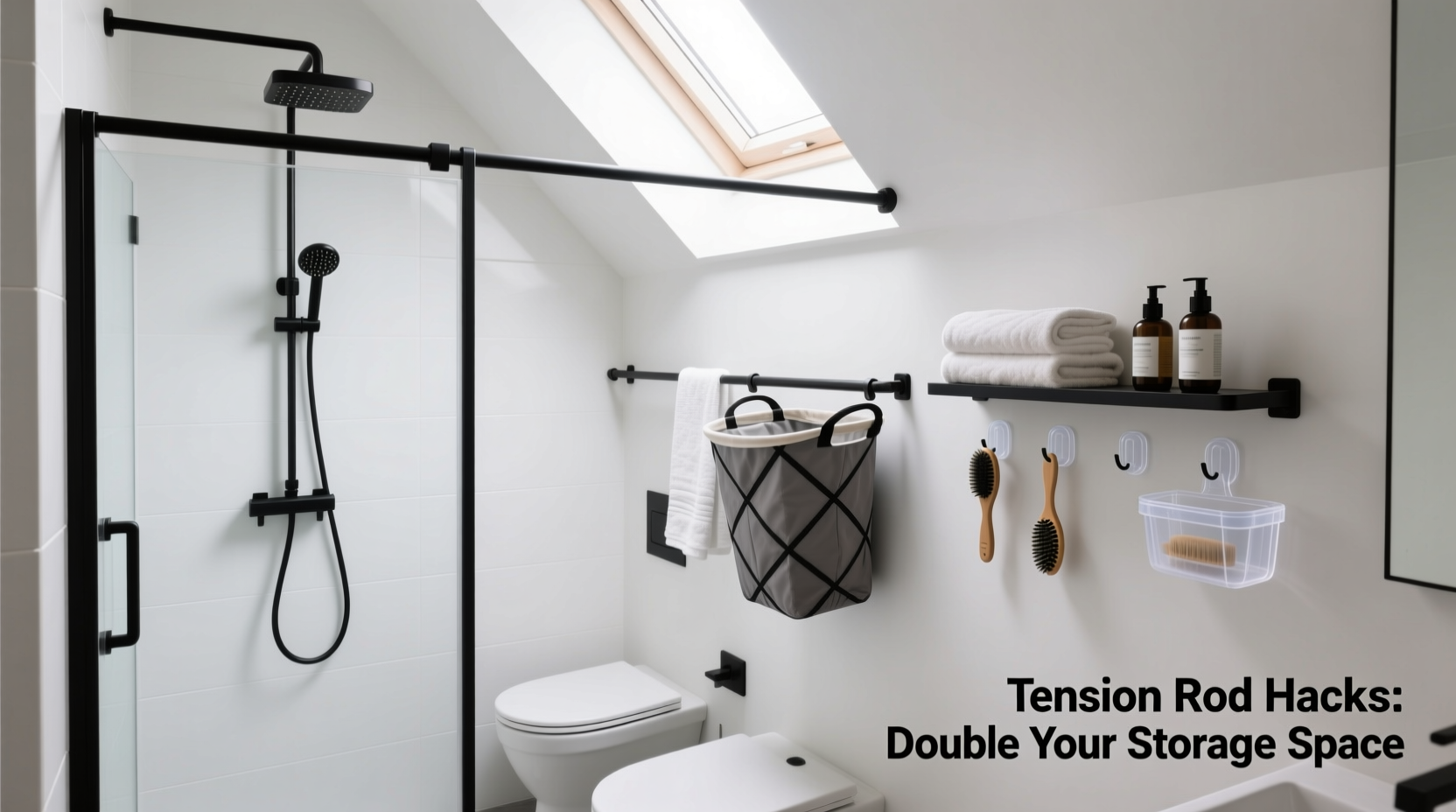
Tension rods require no permanent installation, making them ideal for renters and homeowners alike. They’re affordable, widely available, and come in various finishes and lengths to match any decor. Their spring-loaded mechanism allows for quick adjustment and removal, offering flexibility as needs change. Unlike shelves or wall-mounted racks, tension rods exploit overlooked spaces—between walls, under sinks, inside cabinets—that are typically left empty.
In a small bathroom, every inch counts. Traditional storage solutions like over-the-toilet shelves or freestanding carts can make a room feel cramped. Tension rods, on the other hand, occupy minimal visual space while providing substantial utility. They support lightweight but frequently used items such as cleaning cloths, hair tools, or toiletries, freeing up drawer and countertop real estate.
“Tension rods are one of the most underutilized organizational tools in compact bathrooms. Their adaptability makes them perfect for micro-storage solutions.” — Dana Reynolds, Interior Organizer & Space Optimization Consultant
5 Clever Tension Rod Hacks to Double Your Storage
1. Create a Vertical Towel Rack Between Walls
Narrow gaps between the toilet and wall or beside the vanity cabinet are often wasted. Insert a tension rod horizontally across the gap at shoulder height. Hang rolled towels, washcloths, or reusable cleaning rags from S-hooks or directly over the rod. This turns dead space into a functional towel rack.
For added stability, choose a rod with an extendable range close to your measured gap. Test the fit by gently twisting the rod to engage the spring. Avoid overtightening, which can damage surfaces or warp the rod.
2. Organize Hair Tools Under the Sink
The space beneath the bathroom sink is usually chaotic—curling irons, flat irons, brushes, and cords tangled together. Install a tension rod vertically or horizontally inside the cabinet to hang tools by their handles or cords.
For cord management, run the rod across the back panel and wrap appliance cords around it before tucking them away. For tools, use small shower curtain rings or silicone loops to hang them neatly. This prevents overheating risks and keeps countertops clear.
3. Make a Hanging Shower Caddy Alternative
Instead of a bulky mesh caddy that slides around, use a tension rod across the width of your tub or shower niche. Slide scrubbers, loofahs, razors, and soap bars onto the rod using plastic-coated wire hangers or clip-on organizers. You can even hang a small basket from the rod with sturdy hooks for shampoo bottles.
This method keeps essentials within reach but off the tub floor, reducing mold and mildew buildup. It also eliminates suction cup failures common in humid environments.
4. Store Cleaning Supplies Behind the Door
Bathroom doors swing open into limited space, but the back offers untapped potential. Install a short tension rod vertically along the door’s edge (avoiding hinges). Use it to hang spray bottles, microfiber cloths, or dusters with clips or hooks.
Ensure the rod doesn’t interfere with the door’s swing. Choose a model with protective end caps to prevent wall marks. This hack keeps cleaning supplies hidden yet instantly accessible—a game-changer for maintaining daily hygiene routines.
5. Create Multi-Tier Shelving Inside Cabinets
Maximize depth in medicine cabinets or linen closets by installing horizontal tension rods to act as shelf dividers. Stack folded washcloths, rolled socks, or travel-sized toiletries between layers. The rods prevent stacks from toppling and allow easy pull-through access.
For deeper cabinets, use two parallel rods to support a lightweight tray or cutting board as a false shelf. This creates an upper level for less frequently used items, effectively doubling usable space.
| Hack | Best For | Estimated Space Saved |
|---|---|---|
| Vertical towel rack | Tight side gaps | 1–2 sq ft |
| Under-sink tool organizer | Vanity storage | Drawer clearance + cord safety |
| Shower rod caddy | Tub or niche | Floor space + hygiene |
| Door-back supply rack | Cleaning tools | 100% hidden storage |
| Internal cabinet tiers | Medicine cabinets | Doubles depth efficiency |
Step-by-Step Guide: Installing a Tension Rod for Maximum Impact
Follow this sequence to ensure secure, effective placement:
- Measure the space: Use a tape measure to determine the exact distance between two stable surfaces (e.g., wall-to-wall, cabinet sides).
- Select the right rod: Choose a tension rod with an adjustable range overlapping your measurement. Opt for stainless steel or chrome for moisture resistance.
- Check for obstructions: Ensure no pipes, outlets, or moving parts interfere with installation.
- Insert and twist: Hold the rod diagonally into position, then rotate clockwise until it extends and grips both sides. Do not force beyond snug.
- Test stability: Gently press down or pull on the rod to confirm it doesn’t shift. Re-tighten if needed.
- Add accessories: Attach S-hooks, baskets, or hangers only after confirming load limits (usually 5–10 lbs).
- Load gradually: Start with lighter items to assess performance before adding heavier loads.
Real-Life Example: Transforming a 3x5 Foot Bathroom
Sarah, a graphic designer living in a downtown studio apartment, struggled with her tiny bathroom’s lack of storage. Her countertop was cluttered with skincare bottles, her curling iron had no safe place to cool, and towels were stacked precariously on the toilet tank.
After researching space-saving ideas, she installed three tension rods:
- A 12-inch rod behind the door to hold spray cleaner and two microfiber cloths.
- A 16-inch rod under the sink to organize her blow dryer, flat iron, and brush—all hung by their cords.
- A 24-inch rod between the toilet and wall to display rolled hand towels.
Within one weekend, Sarah cleared her countertop completely and gained easy access to daily essentials. “I didn’t spend more than $25,” she said. “Now my bathroom feels twice as big, and I actually enjoy being in it.”
Do’s and Don’ts of Tension Rod Use in Bathrooms
| Do’s | Don’ts |
|---|---|
| Use rods with rubber or silicone tips to protect surfaces | Install on uneven or crumbling walls |
| Choose moisture-resistant materials like stainless steel | Overload beyond weight capacity |
| Reposition seasonally based on usage needs | Use near heat sources like radiators or heaters |
| Pair with adhesive hooks or clips for versatility | Force installation in tight corners without clearance |
| Wipe down rods monthly to prevent mineral buildup | Forget to check for corrosion in high-humidity areas |
FAQ: Common Questions About Tension Rod Storage
Can tension rods hold heavy items like baskets or bottles?
Most standard tension rods support 5 to 10 pounds when properly installed between solid surfaces. Lightweight plastic or mesh baskets filled with toiletries are generally safe. Avoid metal containers or large glass bottles unless using a reinforced or locking-style rod designed for heavier loads.
Will tension rods damage tiles or painted walls?
When equipped with protective end caps and correctly sized, tension rods rarely cause damage. However, prolonged pressure in high-moisture areas may lead to staining or paint lifting over time. Check contact points monthly and rotate rod positions periodically to prevent wear patterns.
Are there alternatives for wider spaces where tension rods won’t reach?
For spans exceeding 30 inches, consider adjustable telescoping rods with center supports or explore corner-mounted tension systems. Alternatively, use multiple rods in staggered levels or switch to removable adhesive shelves for broader coverage.
Expert Tips for Long-Term Success
To keep your tension rod systems effective over time, adopt these habits:
- Rotate usage: Shift rods seasonally—use one spot for winter bath oils and another for summer beach towels.
- Maintain cleanliness: Wipe rods weekly during bathroom cleaning to prevent soap scum and hard water buildup.
- Inspect regularly: Every few months, check for warping, corrosion, or loosening, especially in steam-heavy environments.
- Combine with other organizers: Pair rods with drawer dividers, magnetic strips, or hanging pockets for a fully optimized system.
“The key to small-space success isn’t buying more—it’s reimagining what you already have. A $10 tension rod can outperform a $100 shelving unit if placed strategically.” — Marcus Lin, Urban Living Efficiency Expert
Conclusion: Reclaim Your Space with Simple Solutions
Living in a small bathroom doesn’t mean sacrificing comfort or organization. Tension rods offer a low-cost, reversible, and highly effective way to unlock hidden storage potential. From under-sink tool racks to behind-the-door cleaning stations, these simple devices empower you to think vertically, creatively, and efficiently.
You don’t need a renovation or expensive upgrades to gain space. Often, the best solutions are already within reach—literally. By implementing even two or three of these hacks, you can dramatically reduce clutter, streamline routines, and create a bathroom that feels spacious and intentional.




 浙公网安备
33010002000092号
浙公网安备
33010002000092号 浙B2-20120091-4
Comments
No comments yet. Why don't you start the discussion?