
The upcoming release of *Terrifier 3* has sparked intense debate among horror fans, film regulators, and especially parents concerned about the increasing extremity of modern horror cinema. While anticipation for the film is high, a growing discussion centers on whether *Terrifier 3* will even receive an official MPAA rating—and if not, what that means for public access, marketing, and parental control over what children might see.
Unlike most mainstream films, *Terrifier 3* may be headed toward an “Unrated” or even an outright rejection from the Motion Picture Association (MPA), due to its graphic depictions of violence, gore, and disturbing themes. This isn’t speculation—its predecessors have already pushed boundaries, with *Terrifier 2* being released unrated after reportedly being rejected multiple times by the MPA for excessive content.
Why Terrifier 3 Might Not Get an MPAA Rating
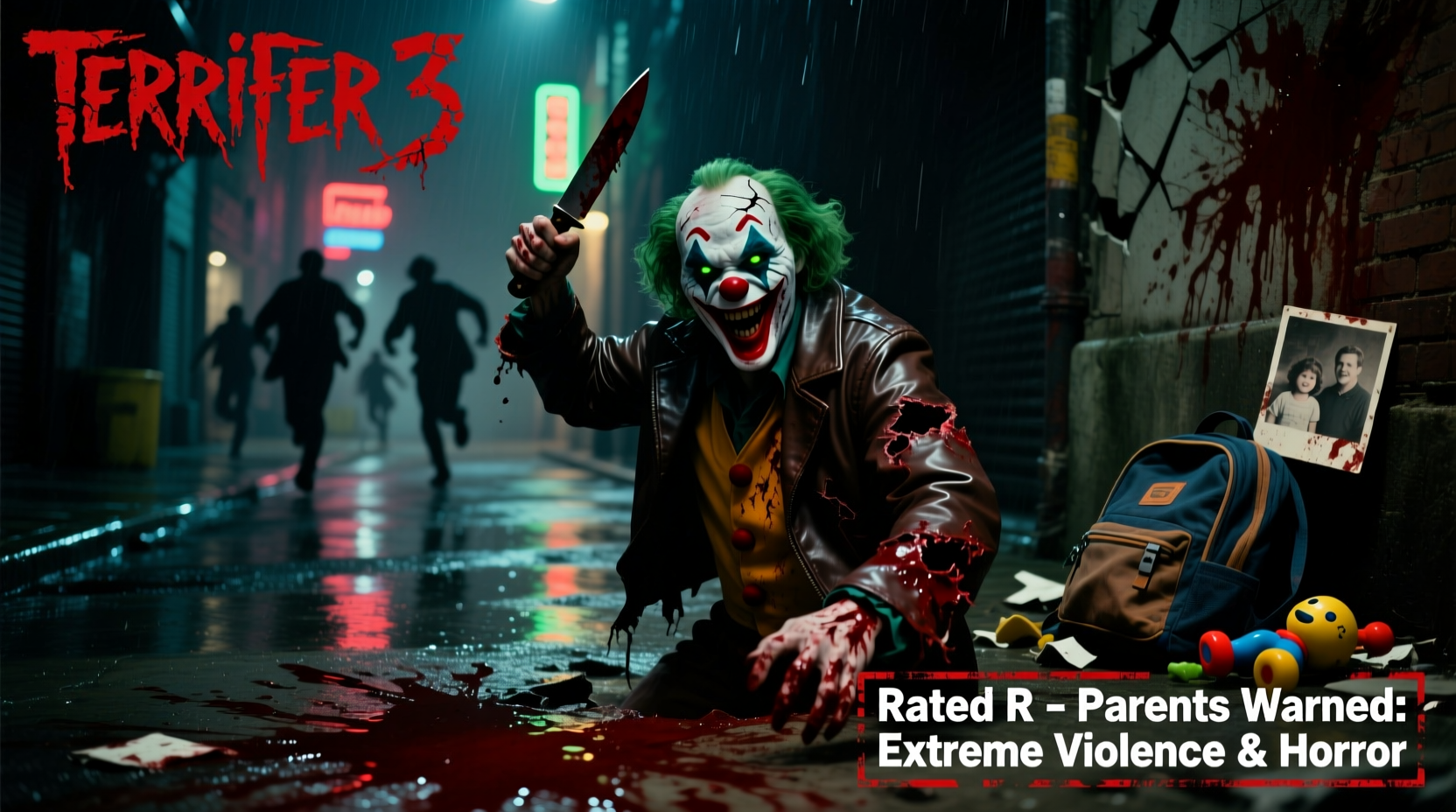
The MPAA assigns ratings based on content such as language, sexual content, drug use, and violence. However, when violence becomes excessively graphic, prolonged, or sadistic, the board often demands cuts—or refuses to rate the film at all. Director Damien Leone has made no secret of his intent to escalate the horror in *Terrifier 3*, promising more elaborate kills, extended runtime for violent sequences, and deeper immersion into Art the Clown’s twisted psyche.
Insiders familiar with early cuts suggest the film includes scenes that go far beyond typical R-rated horror. These include:
- Extended torture sequences lasting several minutes
- Hyper-realistic dismemberment and mutilation effects
- Psychological torment involving child characters (though not depicting actual harm to minors)
- Disturbing imagery meant to provoke visceral discomfort
Such content routinely triggers MPAA pushback. Films like *A Serbian Film* and *Cannibal Holocaust* were either banned or released unrated in the U.S. due to similar concerns. If Leone refuses to edit down these sequences—which he has indicated he likely will—*Terrifier 3* could follow suit.
What Parents Are Saying About Terrifier 3
Parent advocacy groups and online communities have voiced alarm over the cultural normalization of extreme horror. On platforms like Reddit, Facebook parenting groups, and Common Sense Media, many parents express concern that films like *Terrifier 3* blur the line between fiction and desensitization, particularly for teens who may access them without supervision.
“We’re raising kids in an era where the most disturbing content is just one click away. When a movie glorifies torture and gets celebrated by fans, it sends the wrong message,” says Lisa Tran, a mother of two from Portland and contributor to FamilyMediaWatch.org.
Common complaints from parents include:
- Fear that younger audiences will stumble upon trailers or clips on social media
- Concerns about copycat behavior or psychological impact on sensitive viewers
- Disapproval of marketing strategies that highlight gore as a selling point
- Belief that the MPAA should enforce stricter accountability for filmmakers pushing limits
Some parents argue that while adults should have freedom of choice, there needs to be stronger gatekeeping to prevent minors from accessing material designed to shock and traumatize.
Comparison: Rated vs. Unrated Horror Films
| Film | MPAA Rating | Key Issues | Parental Concern Level |
|---|---|---|---|
| Hereditary | R | Supernatural horror, brief nudity, strong language | Moderate |
| Get Out | R | Thematic violence, disturbing images | Moderate |
| Terrifier 2 | Unrated | Extreme gore, prolonged violence, sexualized brutality | High |
| Hostel | NC-17 (initially), later R (edited) | Torture porn, sadistic violence | High |
| Terrifier 3 (projected) | Unrated / Rejected | Excessive gore, psychological terror, taboo themes | Very High |
This comparison shows a clear trend: as horror evolves toward more explicit content, the gap between mainstream R-rated films and underground extreme horror widens—with *Terrifier 3* positioned firmly in the latter category.
Expert Insight: Where Do We Draw the Line?
“There’s a difference between horror that challenges us and horror that traumatizes us. *Terrifier 3* isn’t trying to explore fear—it’s weaponizing it,” says Dr. Alan Pierce, clinical psychologist and author of *Media and the Modern Mind*. “For adolescents still developing emotional regulation, exposure to this level of graphic content can lead to anxiety, sleep disturbances, and distorted perceptions of reality.”
Experts agree that context matters. Films like *The Exorcist* or *The Shining* use horror to explore deep psychological or spiritual fears. In contrast, the *Terrifier* series leans heavily into spectacle-driven violence, where the kill is the centerpiece rather than a narrative device.
Potential Impact on Theaters and Distribution
If *Terrifier 3* is submitted and rejected by the MPAA, it won’t be eligible for a traditional rating. This doesn’t mean it can’t be released—it can still premiere in theaters, be sold on physical media, or stream online—but it comes with consequences:
- Major theater chains like AMC or Regal may refuse to screen it
- Streaming platforms like Netflix or Hulu typically avoid unrated, extreme content
- Marketing options become limited; TV spots and YouTube ads often require a rating
- International distribution may be blocked in countries with strict censorship laws
However, the lack of a rating can also serve as a marketing tool. For horror enthusiasts, “banned” or “unrated” labels often increase curiosity and drive box office performance through niche appeal. *The Human Centipede* and *Cannibal Ferox* gained cult status partly due to their infamy.
Step-by-Step: How Parents Can Protect Kids From Extreme Content
- Use parental controls on streaming devices, browsers, and mobile phones to restrict access to mature content.
- Monitor viewing habits by discussing what your child watches and why it appeals to them.
- Educate about media literacy—help kids understand the difference between fictional horror and real-world violence.
- Check reviews before allowing rentals using sites like Common Sense Media or ScreenRant’s parental guides.
- Set household rules about age-appropriate movies and stick to them consistently.
Mini Case Study: A Teen’s Exposure to Terrifier 2
In early 2023, a 14-year-old from Ohio watched *Terrifier 2* at a friend’s house during a weekend sleepover. Neither parent was aware of the film’s content. After seeing the infamous “penny trick” scene, the teen reported nightmares for over two weeks, refused to stay home alone, and began avoiding horror media entirely—even mild entries like *Scooby-Doo*.
His mother, Karen Mullins, later discovered the film had been downloaded from a pirated site and shared via group chat. “I didn’t know a movie like this existed,” she said. “It wasn’t just scary—it felt cruel. I now check every movie my kids watch, even if it’s ‘just a Halloween thing.’”
This case highlights how easily extreme content can bypass safeguards, especially when films are widely discussed online and available through unofficial channels.
FAQ
Can an unrated movie still be shown in theaters?
Yes. Theaters are not required to show only rated films. However, many major chains avoid unrated content due to liability, audience complaints, or corporate policies.
Is Terrifier 3 illegal to watch?
No. Watching an unrated or extremely violent film is not illegal for adults. However, distributing such content to minors may violate local obscenity laws in extreme cases.
Will Terrifier 3 be available on streaming platforms?
It’s unlikely to appear on mainstream services like Netflix or Hulu. More probable outlets include niche horror platforms like Shudder (if edited) or physical Blu-ray/DVD releases labeled “Unrated Cut.”
Conclusion: Balancing Freedom and Responsibility
*Terrifier 3* stands at the intersection of artistic freedom and societal responsibility. While filmmakers have the right to create provocative work, audiences—especially families—deserve transparency and protection from content designed to overwhelm and disturb. Whether the film receives an MPAA rating or not, the conversation it sparks about boundaries in horror is long overdue.




 浙公网安备
33010002000092号
浙公网安备
33010002000092号 浙B2-20120091-4
Comments
No comments yet. Why don't you start the discussion?