
Choosing the right iPhone case isn’t just about style—it’s a decision that affects how your phone feels in your hand, how well it survives daily drops, and how easily it attracts fingerprints and scratches. Among the most common design choices are textured and smooth finishes. While both have loyal followings, understanding their differences in tactile experience and protective capabilities can help you make a smarter, more informed choice.
Manufacturers use different materials and surface treatments to achieve these finishes—ranging from soft-touch polycarbonate to rubberized TPU coatings. Each impacts grip, shock absorption, and long-term wear. This article breaks down the key factors that separate textured from smooth cases, backed by material science, user experience, and real-world testing insights.
Grip and Handling: The First Impression
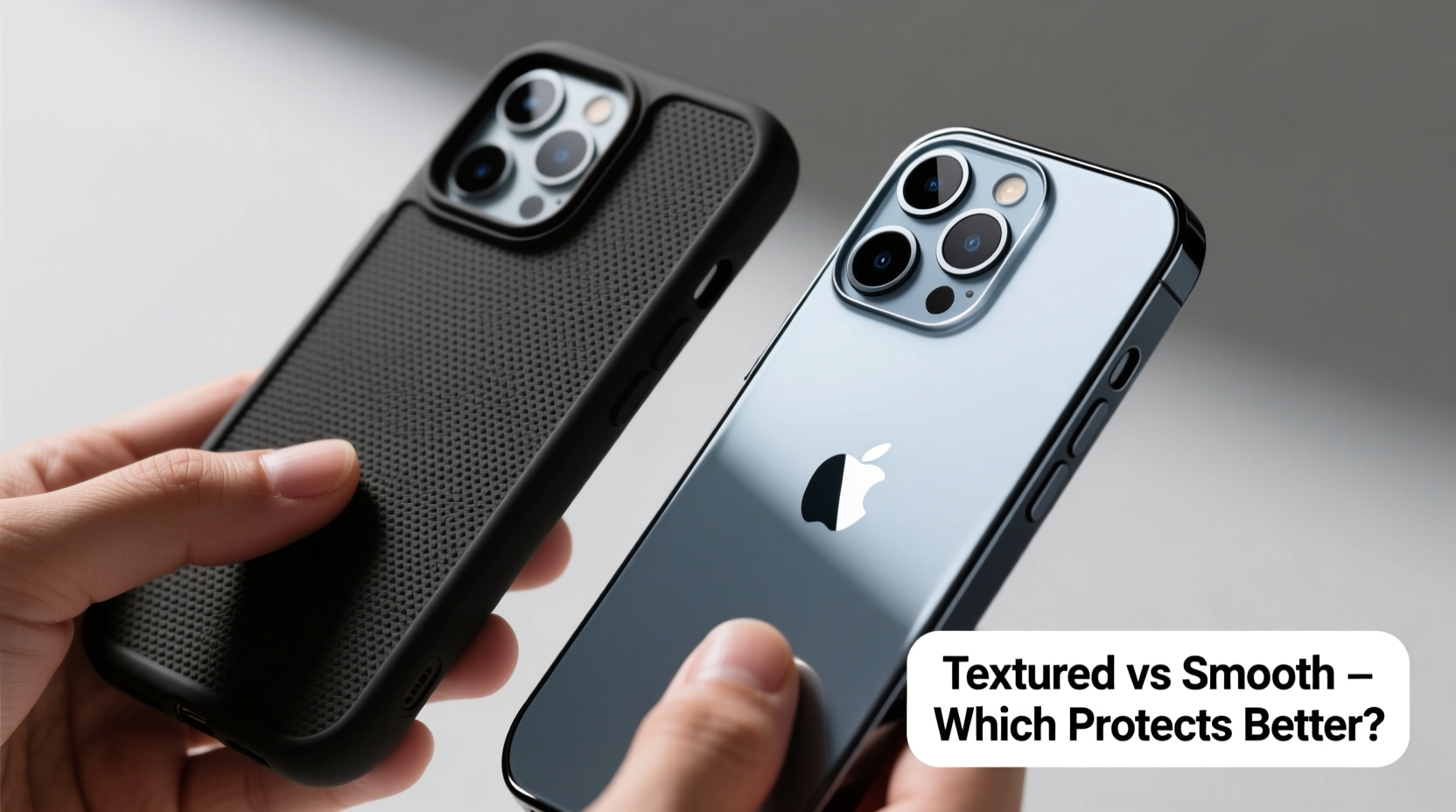
The moment you pick up your phone, the case’s texture—or lack thereof—plays a crucial role in how securely it sits in your hand. A smooth case may feel sleek and premium, especially if it has a glossy or matte finish, but it often sacrifices practicality for aesthetics. Smooth surfaces, particularly glossy ones, become slippery when exposed to moisture, sweat, or even natural skin oils.
In contrast, textured cases—featuring patterns like dots, ridges, or subtle grain—are engineered for enhanced friction. These micro-surfaces increase contact points between your fingers and the case, reducing the chance of accidental slips. This is especially valuable during commutes, workouts, or rainy conditions.
Drop Protection: What Happens When It Hits the Floor?
Protection isn’t just about thickness—it’s about energy distribution. When an iPhone hits the ground, impact forces travel through the case and into the device. Textured cases are often made from thermoplastic polyurethane (TPU), a flexible material that absorbs shock by deforming slightly on impact and then returning to shape. Many textured designs also feature raised edges around the screen and camera to prevent direct contact with surfaces.
Smooth cases, particularly hard polycarbonate models, offer rigidity but less give. They protect against scratches and light bumps but can transmit more force during a fall. Some high-end smooth cases combine rigid outer shells with soft inner linings to mitigate this, but they still tend to be less forgiving than fully cushioned textured alternatives.
“Cases with textured surfaces often use softer, more resilient materials that dissipate impact energy more effectively than rigid, smooth counterparts.” — Dr. Lena Park, Materials Engineer at MobileTech Labs
Material Comparison: Durability and Long-Term Wear
Beyond initial feel and protection, longevity matters. Smooth cases, especially those with glossy finishes, are prone to fingerprint smudges, fine scratches, and yellowing over time. Matte smooth finishes fare better but can still develop a worn appearance after months of use.
Textured cases, while not immune to dirt, tend to hide smudges and micro-scratches more effectively due to their uneven surface. However, deep cleaning can be trickier—dust and lint may accumulate in grooves. Most users report that textured cases maintain their “like-new” look longer, despite frequent handling.
| Feature | Textured Case | Smooth Case |
|---|---|---|
| Grip Quality | Excellent (high friction) | Fair to Poor (slippery when wet) |
| Drop Protection | High (flexible, shock-absorbing) | Moderate (rigid, less energy dissipation) |
| Scratch Resistance | Good (hides minor marks) | Poor to Fair (shows every mark) |
| Fingerprint Visibility | Low | High (especially glossy) |
| Cleaning Ease | Moderate (debris in texture) | Easy (smooth wipe) |
| Lifespan (typical) | 1.5–3 years | 1–2 years |
Real-World Example: Commuter vs. Office User
Consider two users: Maya, a city commuter who walks 30 minutes to work daily and uses public transit, and Jordan, a remote worker who mostly uses their phone at a desk.
Maya frequently pulls her phone out with damp hands, juggles bags, and rides crowded trains. After switching from a smooth case to a textured one, she noticed fewer near-drops and greater confidence using her phone while walking. Over six months, her phone survived three minor falls—from waist height onto pavement—with no damage.
Jordan prefers the minimalist look of a smooth matte case. Since they rarely move with the phone in hand and keep it on a desk, slip resistance isn’t a priority. However, after eight months, the case developed visible scuffs and required weekly cleaning to remove oily residue.
This example illustrates that the best choice depends on lifestyle. High-mobility users benefit more from textured cases, while low-activity users may prioritize aesthetics without sacrificing much functionality.
How to Choose: A Practical Checklist
Use this checklist to determine which type suits your needs:
- ✅ Do you often use your phone outdoors or on the move? → Lean toward textured
- ✅ Are your hands often sweaty or moist? → Textured provides better grip
- ✅ Do you dislike cleaning fingerprints daily? → Textured hides smudges better
- ✅ Do you value a sleek, minimalist aesthetic? → Smooth may appeal more
- ✅ Is your phone usually on a table or dock? → Smooth is acceptable
- ✅ Have you dropped your phone before due to slippage? → Switch to textured
- ✅ Do you plan to keep the case for over a year? → Textured generally lasts longer
Hybrid Solutions and Emerging Trends
Some manufacturers now blend the best of both worlds. Hybrid cases feature a smooth back panel for easy pocket sliding but include textured sides or corners for grip. Others use nano-coatings on smooth surfaces to increase friction without altering appearance.
MagSafe-compatible cases are also influencing design. Smooth cases dominate here for seamless attachment of wallets and chargers, but some brands add subtle textures only on the edges to preserve magnetic alignment while improving hold.
Additionally, eco-conscious options are emerging—biodegradable TPU with natural textures derived from cork or recycled rubber. These offer environmental benefits alongside superior grip and impact resistance.
FAQ: Common Questions About iPhone Case Finishes
Does a textured case make the phone harder to clean?
Slightly. While textured surfaces can trap dust in crevices, a quick rinse under water or a damp cloth with mild soap usually removes buildup. Avoid abrasive scrubbers that could damage the texture.
Can a smooth case offer the same protection as a textured one?
It depends on construction. A well-designed smooth case with internal air cushions and reinforced corners can rival textured models. However, most budget smooth cases lack these features, making them less protective overall.
Do textured cases attract more lint?
In pockets or bags, yes—especially if made from soft silicone or rubber. Regular wiping or using a microfiber cloth minimizes accumulation. Consider storing the phone in a dedicated compartment to reduce exposure.
Final Verdict: Which Should You Choose?
If your priority is protection and usability in dynamic environments, a textured iPhone case is the superior choice. Its enhanced grip, shock absorption, and resistance to visible wear make it ideal for active lifestyles. It reduces the likelihood of drops and keeps your phone looking newer for longer.
Smooth cases excel in aesthetics and ease of cleaning, making them suitable for users who value minimalism and keep their phones in controlled settings. However, they come with trade-offs in safety and long-term durability.
Ultimately, the “better” case depends on how you use your phone. For most people—especially those on the go—textured cases deliver greater peace of mind and tangible performance advantages.




 浙公网安备
33010002000092号
浙公网安备
33010002000092号 浙B2-20120091-4
Comments
No comments yet. Why don't you start the discussion?