
Moving to a new home is one of life’s most disruptive transitions. Even when planned with care, it’s easy for details to fall through the cracks—especially when it comes to updating your address. A missed update can mean lost mail, lapsed insurance, late fees, or even identity risks. Whether you're relocating across town or across the country, managing your address change systematically is essential. This guide outlines a step-by-step approach, highlights common pitfalls, and provides tools to ensure a seamless transition.
Why Address Updates Matter More Than You Think
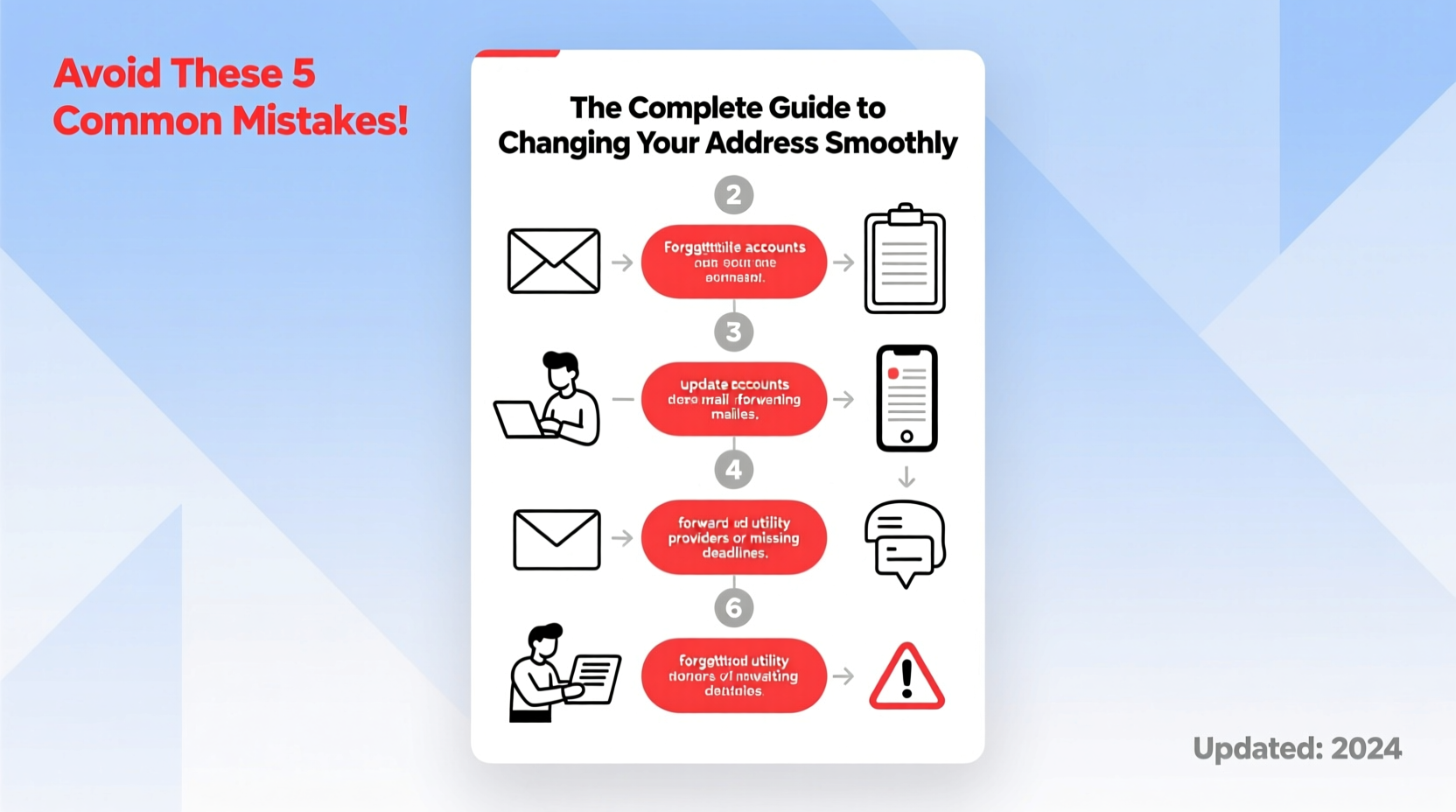
Your address is more than just a location—it's tied to legal documents, financial accounts, medical records, and government services. Failing to update it promptly can lead to:
- Missed tax notices or IRS correspondence
- Disrupted utility or internet service activation
- Expired auto or health insurance due to undelivered renewal notices
- Credit report errors from unverified address mismatches
- Delayed access to prescriptions or medical test results
According to the U.S. Postal Service, over 40 million people file change-of-address requests annually. Yet, many still experience gaps in mail delivery because they rely solely on this one step. A comprehensive strategy goes far beyond notifying the post office.
“People think forwarding mail solves everything. In reality, each institution must be notified separately—and timing matters.” — Lisa Tran, Relocation Coordinator at National Move Advisors
A Step-by-Step Timeline for a Smooth Address Transition
To avoid last-minute scrambling, begin preparing at least four weeks before your move. Follow this timeline to stay ahead:
- 4 Weeks Before Moving: Create a master list of all organizations linked to your current address. Include banks, subscriptions, employers, schools, and government agencies.
- 3 Weeks Before: Update your address with critical institutions: IRS, DMV, voter registration, and healthcare providers. These often require official documentation and longer processing times.
- 2 Weeks Before: Notify banks, credit card companies, insurance providers, and subscription services (e.g., streaming, meal kits).
- 1 Week Before: Submit your USPS Change of Address form online or in person. Choose start and end dates carefully—forwarding lasts up to 12 months but only covers first-class and periodical mail.
- Move Day: Confirm utilities are transferred or scheduled for disconnection/activation. Leave updated contact info with neighbors if possible.
- 1 Week After Moving: Verify that important mail has arrived. Contact any organization that sent correspondence to your old address.
Essential Checklist: Who to Notify When Changing Your Address
Use this checklist as a starting point. Customize it based on your personal and professional needs.
- United States Postal Service (USPS)
- Internal Revenue Service (IRS) and state tax agency
- Department of Motor Vehicles (DMV) – driver’s license and vehicle registration
- Voter registration office
- Employer and HR/payroll department
- Banks, credit unions, and all financial institutions
- Credit card issuers
- Insurance providers (auto, home, health, life)
- Medical providers and pharmacies
- Subscription services (magazines, deliveries, apps)
- Online shopping accounts (Amazon, eBay, etc.)
- Children’s schools and daycare centers
- Professional licenses and regulatory boards
- Membership organizations (gyms, clubs, alumni associations)
- Landlord or property management company
Common Mistakes and How to Avoid Them
Even well-intentioned movers make errors that create unnecessary stress. Here are frequent missteps and how to prevent them:
| Mistake | Consequence | Solution |
|---|---|---|
| Only updating USPS | Financial statements, bills, and legal notices may still go to the old address | Contact each institution directly; don’t assume forwarding is enough |
| Delaying DMV updates | Fines for expired registration or issues during traffic stops | Update within 30 days of moving—some states require it by law |
| Forgetting digital accounts | Delivery failures, account lockouts, or security flags | Review shipping, billing, and notification settings on all e-commerce platforms |
| Not confirming changes | No verification that the update was processed | Request confirmation emails or reference numbers after each update |
| Overlooking recurring payments | Late fees or service interruptions | Check bank statements for automatic withdrawals and confirm address accuracy |
Real-Life Example: What Happened When Sarah Skipped the Details
Sarah moved from Denver to Austin for a new job. She submitted a USPS change-of-address form and assumed her mail would follow. Two months later, she received a call from her auto insurer stating her policy had lapsed. The renewal notice had been forwarded, but because she hadn’t proactively updated her account online, the payment failed due to an outdated billing profile.
Worse, her voter registration wasn’t transferred, so she couldn’t vote in a local election. It took three weeks to reinstate her insurance and update her state records. “I thought I’d checked everything,” she said. “But I learned the hard way that assuming isn’t the same as verifying.”
Her experience underscores a key principle: proactive communication beats passive reliance on systems.
Frequently Asked Questions
Does USPS forwarding update my address everywhere?
No. The USPS Change of Address service only redirects certain types of mail. It does not notify banks, government agencies, or private companies. You must contact each organization individually to update your information.
How long should I keep my old address active?
It’s wise to maintain mail forwarding for at least six months. Some bills or letters may take time to cycle through systems. For legal or tax-related matters, consider extending forwarding to 12 months.
Can I update my address with the DMV online?
In most states, yes. Nearly all offer online portals for updating driver’s licenses and vehicle registrations. However, some states require in-person visits for first-time residents or specific documentation. Check your state’s DMV website for exact requirements.
Final Tips for a Hassle-Free Transition
Changing your address isn’t a one-step task—it’s a process that spans weeks and involves dozens of touchpoints. To close the loop effectively:
- Set calendar reminders to follow up with key providers two weeks after updating.
- Keep a temporary mailbox or ask a trusted contact to monitor your old address for missed items.
- Update your address on password managers and autofill settings to prevent future confusion.
- Notify your employer of your new address for W-2 forms and benefits mailing.
Take Control of Your Move
A smooth address change doesn’t happen by accident. It happens when you plan ahead, double-check every detail, and treat each update as non-negotiable. By following this guide, you’re not just redirecting mail—you’re protecting your financial health, legal standing, and peace of mind. Start today, stay organized, and make your next move the easiest one yet.




 浙公网安备
33010002000092号
浙公网安备
33010002000092号 浙B2-20120091-4
Comments
No comments yet. Why don't you start the discussion?