
Virtual Private Networks (VPNs) are essential tools for protecting online privacy, securing public Wi-Fi connections, and accessing geo-restricted content. However, many users only install a VPN without fully understanding how to customize or change their settings for optimal performance and safety. Whether you're switching servers, adjusting encryption levels, or troubleshooting connection issues, knowing how to modify your VPN settings correctly is crucial. This guide walks through everything you need to know to update your VPN configuration across devices—without compromising security.
Why Adjusting Your VPN Settings Matters
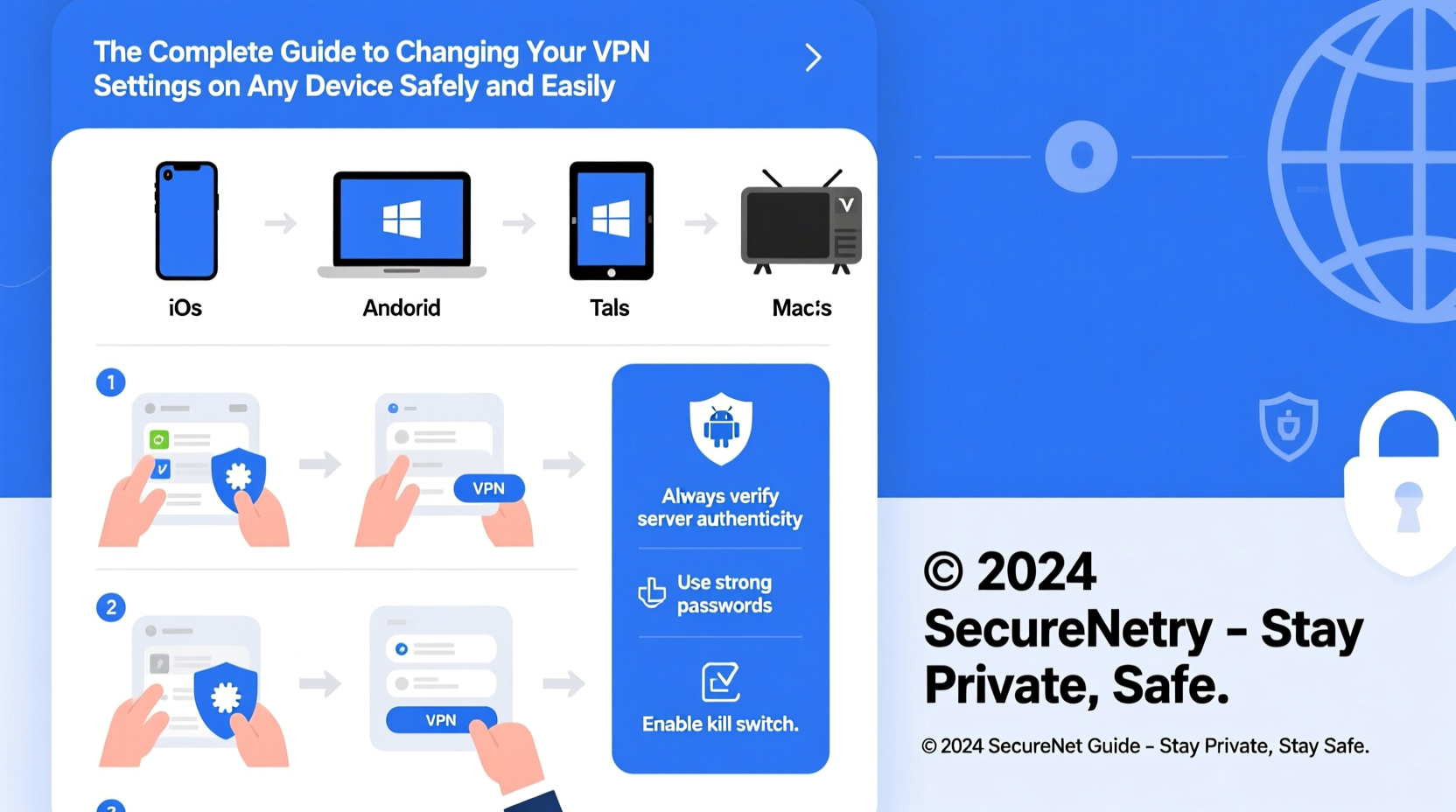
Default settings may not always align with your specific needs. For example, a high-security mode might slow down streaming, while a faster protocol could reduce encryption strength. Customizing your settings allows you to balance speed, security, and functionality. Additionally, manually configuring your connection gives you more control over data routing, DNS leakage prevention, and kill switch behavior—all vital for maintaining anonymity online.
“Most data breaches involving remote workers stem from misconfigured network settings, including improperly set up or outdated VPNs.” — Dr. Lena Torres, Cybersecurity Researcher at NetSecure Labs
Step-by-Step: How to Change VPN Settings by Device
Each operating system handles VPN configurations differently. Below are detailed instructions for the most common platforms.
On Windows 10 & 11
- Open Settings > Network & Internet > VPN.
- Select your connected VPN and click Advanced options.
- Under Edit, modify server address, type of VPN (e.g., L2TP/IPsec, IKEv2), or authentication method.
- Navigate to Properties to adjust proxy settings, DNS assignment, or use a static IP if needed.
- Enable Always-on and Lockdown mode for continuous protection.
On macOS
- Go to System Settings > Network.
- Select your active VPN connection from the sidebar.
- Click the gear icon and choose Move Service to prioritize it above other network interfaces.
- Click Details to edit protocol settings, certificates, or MTU size.
- Check “Send all traffic over VPN connection” to prevent leaks.
On iPhone/iPad (iOS)
- Open Settings and tap General > VPN & Device Management.
- Select your configured VPN profile.
- Toggle Connect on Demand to automate connections based on network conditions.
- Modify server address or credentials directly in the configuration panel.
- Ensure Send All Traffic is enabled unless split tunneling is intentionally used.
On Android
- Navigate to Settings > Network & Internet > VPN.
- Select your current VPN and tap the gear icon.
- Update server details, username/password, or certificate information.
- Use third-party apps like OpenVPN or WireGuard for advanced settings such as custom scripts or obfuscation.
- Activate the kill switch within the app settings to block internet access if the tunnel drops.
On Routers (For Whole-Network Protection)
Configuring a router-level VPN ensures every connected device benefits from encryption—even smart TVs or gaming consoles that lack native support.
- Access your router’s admin interface via browser (usually http://192.168.1.1).
- Log in and navigate to Advanced Settings > VPN Client.
- Choose the protocol (PPTP, L2TP, OpenVPN) and input server credentials provided by your service.
- Upload configuration files (.ovpn) when required.
- Save and reboot the router; verify connectivity using an IP leak test site.
Best Practices When Modifying VPN Settings
Making incorrect changes can expose your real IP address, degrade performance, or break connectivity entirely. Follow these best practices to stay protected.
| Do | Don’t |
|---|---|
| Enable DNS and IPv6 leak protection | Disable firewall protections without reason |
| Use strong protocols like OpenVPN or WireGuard | Rely on outdated PPTP connections |
| Test new settings with a leak checker (e.g., ipleak.net) | Share login credentials across untrusted devices |
| Back up configurations before making changes | Ignore software updates from your provider |
Real Example: Fixing a Slow Work Connection Abroad
Sophie, a freelance designer based in Lisbon, regularly collaborates with clients in New York. She uses a U.S.-based VPN server to access cloud-based design tools restricted to American IPs. After noticing sluggish upload speeds affecting her video calls, she reviewed her settings and found she was using L2TP/IPsec—a secure but bandwidth-heavy protocol. By switching to WireGuard through her provider’s desktop app and selecting a closer East Coast server, her latency dropped by 60%, and file sync times improved significantly. The change took less than five minutes and restored her workflow efficiency.
Essential Checklist Before Changing Any Setting
- ✅ Confirm your subscription supports manual configuration
- ✅ Note down current settings for rollback capability
- ✅ Verify your provider offers updated config files or app versions
- ✅ Disable auto-connect temporarily during adjustments
- ✅ Run a pre- and post-change IP and WebRTC leak test
- ✅ Re-enable the kill switch once changes are confirmed stable
Frequently Asked Questions
Can changing my VPN settings get me banned from services?
No—adjusting technical parameters like protocol or server location does not violate typical terms of service. However, repeatedly switching IPs to bypass bans on platforms like streaming sites may trigger anti-abuse systems. Always review the platform's policy before doing so.
Is it safe to use third-party configuration files?
Only if they come directly from your trusted provider. Never install .ovpn or .conf files from forums or unknown sources—they could redirect your traffic through malicious nodes or inject malware into network stacks.
What should I do if my internet stops working after changing settings?
First, disconnect the VPN and restart your device. Then restore previous settings or delete and re-add the connection profile. If issues persist, contact your provider’s support team with logs (available in most advanced client apps).
Final Thoughts: Take Control of Your Digital Security
Your online safety shouldn't depend solely on default configurations. Taking a few minutes to understand and adjust your VPN settings empowers you to maintain faster, safer, and more reliable connections—no matter where you are or what device you're using. From tweaking protocols to enabling network-wide encryption on your router, each adjustment brings greater control over your digital footprint.




 浙公网安备
33010002000092号
浙公网安备
33010002000092号 浙B2-20120091-4
Comments
No comments yet. Why don't you start the discussion?