
Every year, billions of dollars in unclaimed property go unnoticed by rightful owners. From forgotten bank accounts and uncashed checks to dormant insurance benefits and safe deposit box contents, the assets sitting in state custody could belong to you or someone you know. The good news? Reclaiming them is not only possible—it’s free and often simpler than people assume. This guide walks you through every stage of the process, from searching databases to submitting claims, all while avoiding common pitfalls and scams.
What Is Unclaimed Property?
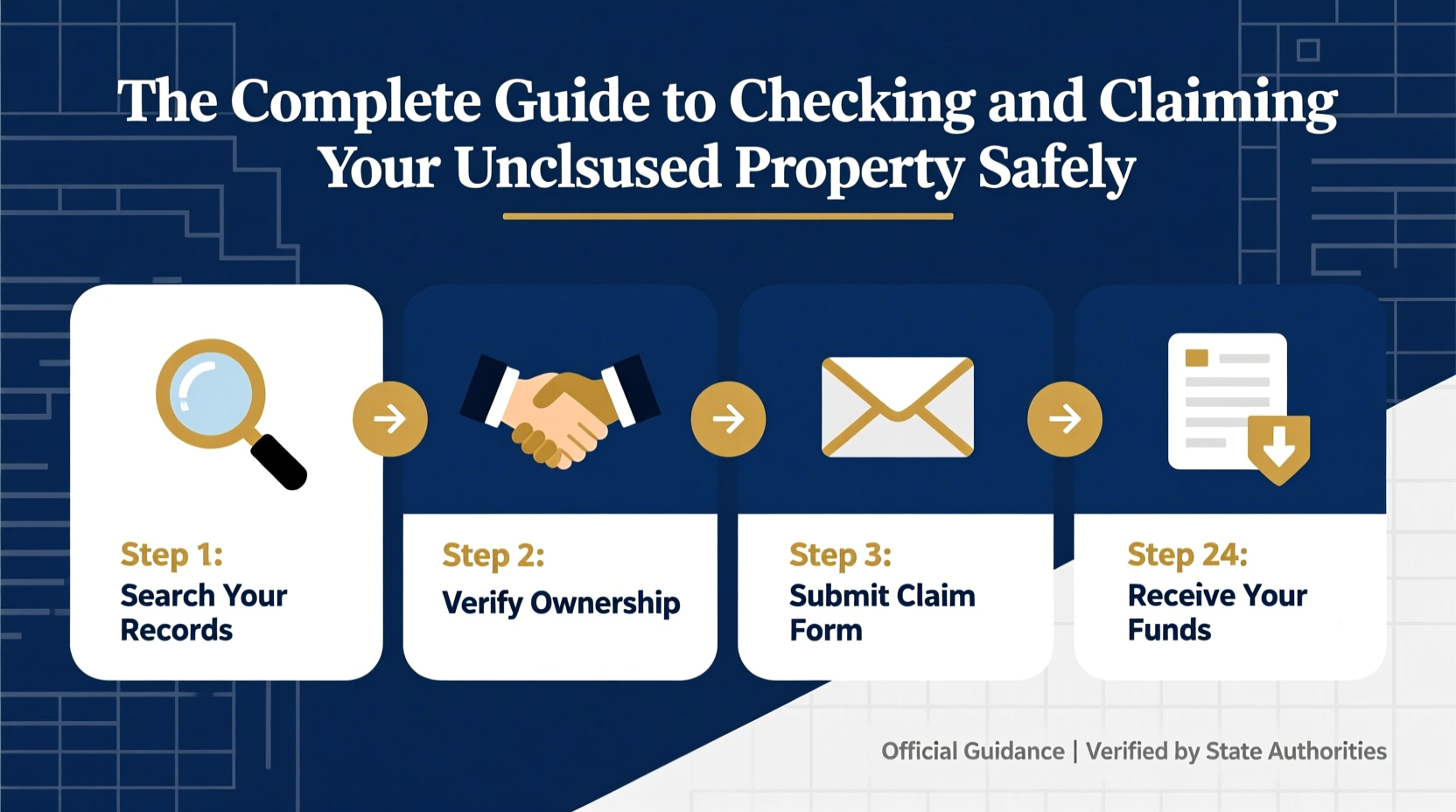
Unclaimed property refers to financial assets that have been inactive for a certain period—typically one to five years—after which the holder (like a bank, employer, or insurance company) is legally required to turn them over to the state. These assets are held indefinitely until claimed by the rightful owner or heir.
Common types include:
- Savings or checking account balances
- Uncashed payroll or dividend checks
- Insurance policy payouts
- Stocks and mutual funds
- Safe deposit box contents
- Utility security deposits
- Estate inheritances with no known heirs
States do not take ownership—they act as custodians. You never lose your right to claim what's yours, regardless of how much time has passed.
How to Search for Your Unclaimed Property
The first step is knowing where to look. Each U.S. state, along with territories like Puerto Rico and Guam, maintains its own unclaimed property database. There is no single national registry, but several centralized tools can streamline your search.
Step-by-Step Search Process
- Gather personal information: Full name, past addresses, aliases, business names, and relatives’ names (for inheritance claims).
- Start with your current state: Visit your state’s official treasury website and use their unclaimed property search tool.
- Expand your search: Use multi-state platforms to cast a wider net.
- Check variations of your name: Include maiden names, nicknames, and former business names.
- Search for family members: Deceased relatives may have unclaimed assets you’re entitled to inherit.
Popular search tools include:
- National Association of Unclaimed Property Administrators (NAUPA) – Official hub linking to all 50 states
- MissingMoney.com – Covers over 40 states and allows keyword searches
- UnclaimedMoney.gov – Federal portal for specific agencies like the IRS or SEC
“Over $70 billion in unclaimed property is currently held by states. Less than 2% of Americans check annually.” — National Association of State Treasurers
Avoiding Scams: Red Flags to Watch For
Because unclaimed property is essentially “free money,” it attracts scammers. Fraudulent services often charge high fees, impersonate government agencies, or request sensitive information upfront.
| Do’s | Don’ts |
|---|---|
| Use only official state websites (.gov domains) | Pay a fee to search or claim your property |
| Verify URLs directly through your state treasury | Share Social Security numbers or banking details early in the process |
| Work directly with state claims processors | Respond to unsolicited calls or emails about unclaimed funds |
| Keep copies of all submitted documents | Use third-party finders unless absolutely necessary (and even then, proceed with caution) |
Claiming Your Property: A Practical Checklist
Once you locate an asset, follow this checklist to ensure a smooth and successful claim:
- ✔️ Confirm the match: Verify the name, last known address, and amount align with your history.
- ✔️ Download the correct claim form: Available on the holding state’s treasury website.
- ✔️ Gather required documentation: Typically includes photo ID, proof of address, and sometimes a signature guarantee or notarization.
- ✔️ Submit the form online or by mail: Follow the state’s preferred method.
- ✔️ Track your claim status: Most states provide a case number and online tracking portal.
- ✔️ Respond promptly to requests: Delays often occur when additional verification is needed.
- ✔️ Receive payment: Usually via check or direct deposit within 30–90 days after approval.
For inherited claims, additional paperwork such as death certificates, letters of testamentary, or small estate affidavits may be required. Heirs should contact the state’s unclaimed property division for guidance on eligibility and forms.
Mini Case Study: Recovering a Forgotten Inheritance
In 2021, Maria Thompson, a teacher from Ohio, discovered $12,500 in unclaimed property under her late father’s name while researching her family history. The funds originated from a life insurance policy issued in the 1990s that had gone uncollected due to outdated contact information.
Maria used MissingMoney.com to locate the record in Pennsylvania, where her father once lived. She downloaded the heir claim form, submitted a certified copy of his death certificate, her birth certificate (to prove relationship), and a notarized affidavit. Within six weeks, she received a check in the mail.
“I had no idea this existed,” Maria said. “It helped me pay off student loans I’ve been struggling with for years.”
Frequently Asked Questions
Is there a deadline to claim unclaimed property?
No. States hold unclaimed assets indefinitely. You can file a claim at any time, even decades later. There is no statute of limitations for rightful owners or legal heirs.
Can someone else claim my property before I do?
No. Only the named owner or verified heir can claim the asset. States require identity verification and proof of entitlement, so fraudulent claims are rare and closely monitored.
What if I find unclaimed money in multiple states?
You must file separate claims in each state where assets are located. Keep organized records of each submission, including confirmation numbers and correspondence. Some people discover hundreds or thousands across several jurisdictions.
Final Steps and Ongoing Vigilance
Recovering unclaimed property isn’t a one-time task—it’s part of responsible financial hygiene. People move, change names, switch banks, and inherit assets without realizing it. Making annual checks a habit can uncover unexpected windfalls.
If you run a business, extend this practice to corporate accounts. Companies also leave behind dormant accounts, refunds, and vendor payments that revert to state control.
“Checking for unclaimed property should be as routine as reviewing your credit report or updating your will.” — Sarah Lin, Consumer Financial Advocate




 浙公网安备
33010002000092号
浙公网安备
33010002000092号 浙B2-20120091-4
Comments
No comments yet. Why don't you start the discussion?