
Factory resetting your Apple Watch is a powerful tool for resolving persistent performance issues, preparing the device for resale, or starting fresh after a long period of use. While the process is straightforward, skipping key steps—like backing up data or unpairing properly—can lead to lost information or activation lock complications. Done correctly, a factory reset restores your Apple Watch to its original state, ensuring optimal performance and security. This comprehensive guide walks you through every phase, from preparation to post-reset setup, so you can complete the process confidently and without setbacks.
Why You Might Need to Factory Reset Your Apple Watch
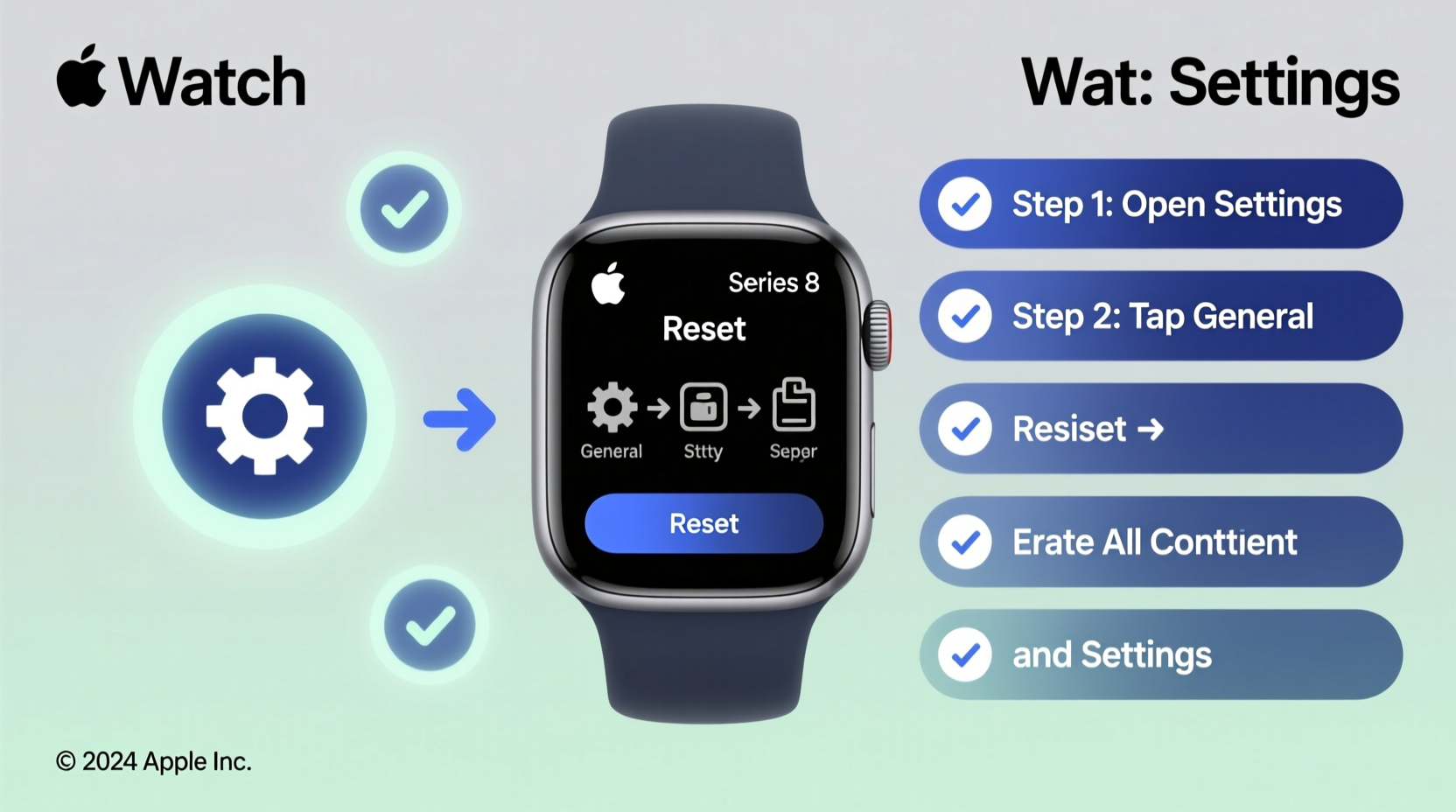
A factory reset erases all personal data, apps, settings, and media from your Apple Watch, returning it to the condition it was in when first unboxed. Common reasons for performing a reset include:
- Selling or gifting the device: Ensures your personal data is completely removed.
- Fixing software glitches: Resolves freezing, unresponsive apps, or syncing errors.
- Removing activation lock issues: Helps if you're troubleshooting pairing problems.
- Starting over: Useful after experimenting with settings or apps that degraded performance.
“Resetting your Apple Watch is often the most effective way to resolve deep-seated software conflicts.” — Jordan Lee, Senior iOS Support Specialist at AppleCare
Step-by-Step: How to Factory Reset Your Apple Watch
Follow this precise sequence to ensure a secure and complete reset. The method varies slightly depending on whether you still have access to your paired iPhone.
- Back up your Apple Watch: Open the Watch app on your iPhone, go to the \"My Watch\" tab, tap your device, then select \"Back Up Now.\" This saves health data, app settings, and preferences.
- Unpair your Apple Watch (recommended): In the same menu, tap the \"i\" icon next to your watch, then choose \"Unpair Apple Watch.\" Confirm the action. This automatically triggers a factory reset and removes Activation Lock.
- If you don’t have your iPhone: On the Apple Watch, go to Settings > General > Transfer or Reset > Erase All Content and Settings. Enter your passcode if prompted.
- Confirm the erase: Choose \"Erase All Content and Settings\" again. The watch will reboot and begin wiping data.
- Wait for completion: The process may take 5–10 minutes. Once done, the Apple logo will appear, indicating the watch is reset and ready for setup.
What Happens During the Reset?
The reset process securely deletes encrypted user data, disassociates the device from your iCloud account (if unpaired via iPhone), and reinstalls the latest version of watchOS. Activation Lock remains tied to your Apple ID until unpairing is completed through the iPhone—this is a critical security feature designed to deter theft.
Essential Pre-Reset Checklist
Before hitting reset, verify the following actions are complete to prevent data loss or technical hurdles:
- ✅ Back up your Apple Watch via the Watch app on your iPhone
- ✅ Charge your Apple Watch to at least 50%
- ✅ Ensure your iPhone is nearby and connected to Wi-Fi
- ✅ Disable Lost Mode (if enabled) in Find My app
- ✅ Note down any custom watch face configurations you want to recreate
- ✅ Sign out of sensitive apps (e.g., banking or password managers)
Common Mistakes to Avoid
Even experienced users can make errors during a reset. These pitfalls can delay recovery or compromise security:
| Mistake | Consequence | How to Avoid |
|---|---|---|
| Skipping the backup | Lose health metrics, app data, and personalized settings | Always perform a manual backup before resetting |
| Resetting without unpairing via iPhone | Activation Lock remains active; new user can't set up the watch | Use the Watch app to unpair whenever possible |
| Interrupting the reset due to low battery | Potential software corruption or bricking | Charge to at least 50%, ideally 80%+ |
| Forgetting Apple ID credentials | Inability to disable Activation Lock | Verify login details before starting |
Real-World Example: Selling an Apple Watch Safely
Sarah decided to upgrade her Series 6 to a new Ultra 2. She wanted to sell her old watch but wasn’t sure how to protect her privacy. Following best practices, she opened the Watch app on her iPhone, backed up her Series 6, then selected \"Unpair Apple Watch.\" The system prompted her to keep or remove the cellular plan (she chose remove), and after confirmation, the watch erased itself remotely. When the buyer received the device, it booted directly into setup mode—no data, no lock, no issues. Sarah avoided embarrassment and ensured a smooth transaction by doing it right the first time.
Frequently Asked Questions
Will a factory reset delete my activity and health data?
Yes, but only from the Apple Watch itself. Your Health and Activity data is stored on your iPhone and in iCloud, so it remains safe as long as you’ve synced recently. After re-pairing, your historical data will sync back to the watch.
Can I reset my Apple Watch without the paired iPhone?
Yes, but with limitations. You can erase the watch directly via Settings > General > Reset, but Activation Lock will remain active unless previously disabled through the iPhone. Without the original iPhone, you’ll need the previous owner’s Apple ID and password to proceed—a crucial reminder for secondhand buyers.
How long does a factory reset take?
The process typically takes between 5 and 15 minutes, depending on the amount of data stored and the watch model. Older models with mechanical storage may take longer than newer ones with faster flash memory.
Post-Reset: Setting Up Again or Preparing for Transfer
After a successful reset, your Apple Watch displays the Apple logo, followed by a setup screen. If you’re keeping the device, pair it again using your iPhone by opening the Watch app and following the prompts. If selling or gifting, leave it at the setup screen—the new owner should activate it with their own Apple ID.
For maximum trust and transparency, consider including a note with the device confirming that it has been factory reset and unpaired, and that Activation Lock has been removed. This reassures buyers and reduces post-purchase disputes.
Final Thoughts and Next Steps
Factory resetting your Apple Watch doesn’t have to be intimidating. With proper preparation and attention to detail, it’s a quick and effective way to restore performance or responsibly pass the device to someone else. The key lies in respecting the ecosystem Apple has built around security and continuity—especially iCloud integration and Activation Lock. By backing up first, unpairing correctly, and verifying each step, you maintain control over your digital footprint while ensuring the device functions flawlessly for the next user.




 浙公网安备
33010002000092号
浙公网安备
33010002000092号 浙B2-20120091-4
Comments
No comments yet. Why don't you start the discussion?