
Finding your vehicle registration number doesn’t have to be a frustrating task. Whether you're filling out paperwork, selling your car, or dealing with law enforcement, knowing exactly where to look—and how to interpret what you find—can save time and prevent delays. The vehicle registration number is a critical piece of information tied directly to your car’s legal documentation and identification. This guide walks you through every possible location, common misconceptions, and practical steps to retrieve it quickly—even in unusual circumstances.
Understanding the Vehicle Registration Number
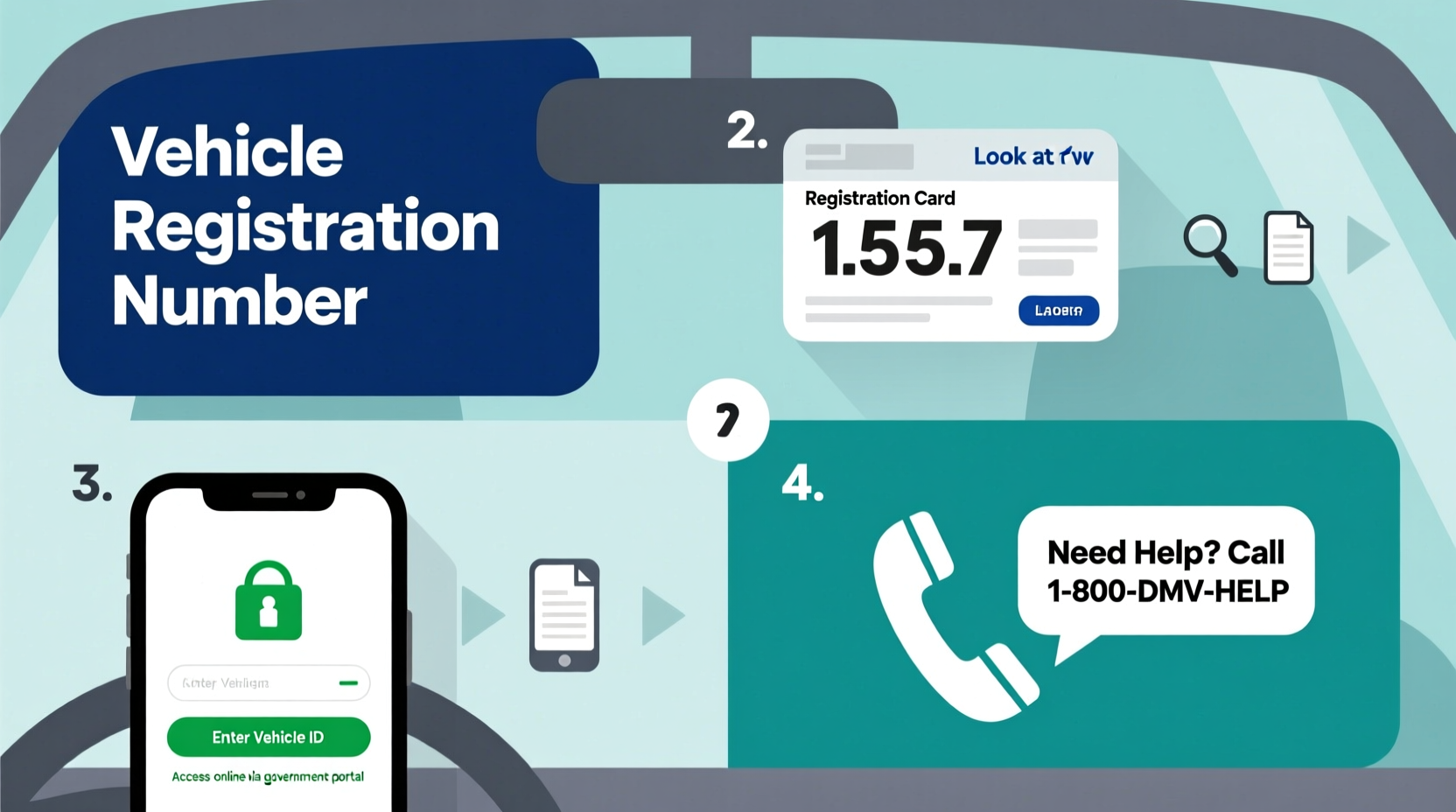
The term “vehicle registration number” can sometimes cause confusion because it's often used interchangeably with \"license plate number.\" However, they are not always the same. The license plate displays the visible alphanumeric code assigned by your local motor vehicle department. The vehicle registration number, on the other hand, may refer to the unique identifier listed on your official registration documents—not necessarily what appears on the physical plate.
In some jurisdictions, the two match exactly. In others, the registration document contains additional internal tracking numbers used by DMVs or transport authorities. To avoid errors, always verify which number is being requested: the one on the plate, the one on the registration card, or a separate VIN-linked identifier.
“Always double-check whether the requestor needs the license plate number, VIN, or the registration ID from the document itself. Confusing these can lead to processing delays.” — James Rutherford, Senior Licensing Officer, California DMV
Where to Find Your Vehicle Registration Number
The fastest way to locate your vehicle registration number depends on whether you're looking at the physical vehicle, the registration documents, or digital records. Here’s where to check in each scenario:
1. On the Vehicle Itself – The License Plate
The most visible form of your registration number is typically displayed on the front and rear license plates. These are issued by your state or country’s motor vehicle agency and must remain legible and securely attached.
2. On the Registration Certificate
Your official vehicle registration document—usually a small paper card kept in the glove compartment—contains several identifiers. Look for a field labeled:
- Registration Number
- Reg No.
- Plate Number
- Registration ID
This number should match the one on your license plate unless your plate has been changed recently and the documents haven’t been updated.
3. Digital or Mobile Access
Many states now offer mobile access to digital registration through official apps (e.g., myDMV, DriveOhio, or mDL platforms). Once authenticated, you can view your current registration status and associated number without carrying physical documents.
4. Vehicle Identification Number (VIN) vs. Registration Number
It's important not to confuse the VIN with the registration number. The VIN is a 17-character code unique to your vehicle, stamped on the dashboard, door jamb, and engine block. It never changes. The registration number, however, can change if you move states, renew with a new plate, or personalize your plate.
| Identifier | Purpose | Changes Over Time? | Where to Find |
|---|---|---|---|
| Registration Number | Assigned for legal road use; linked to ownership period | Yes (upon renewal, relocation, or personalization) | License plate, registration card, DMV portal |
| VIN | Unique vehicle fingerprint; used for history checks, recalls | No (permanent) | Dash near windshield, driver’s side door jamb, insurance docs |
Step-by-Step Guide to Retrieving a Lost or Missing Registration Number
If your registration documents are lost, stolen, or damaged, don’t panic. Follow this timeline to recover your registration number efficiently:
- Check your vehicle – Look at both license plates for the visible number.
- Search digital backups – Review email archives for DMV renewal confirmations or scan old photos where the plate might be visible.
- Log into your DMV account – Most departments allow online access to registration details once you’ve created a secure profile.
- Call your local DMV office – Have your driver’s license, VIN, and proof of ownership ready for verification.
- Request a duplicate registration – You can usually order a replacement online or in person for a small fee.
Real-Life Scenario: Recovering a Registration After a Move
Samantha relocated from Texas to Colorado and stored her car during the transition. When she needed to register it under her new address, she realized she’d misplaced the registration card. She couldn’t recall the exact plate number, and her old photos didn’t include clear shots of the rear plate.
Instead of visiting the DMV blindly, she followed these steps:
- She checked the front license plate while the car was still in storage.
- Used that number to log into the Texas DMV website and downloaded a PDF copy of her expired registration.
- Printed the document and brought it—along with her VIN and ID—to the Colorado DMV, where they processed her re-registration smoothly.
By taking proactive steps, Samantha avoided delays and completed the process in under 30 minutes.
Common Mistakes That Delay the Process
Even simple tasks can become complicated when avoidable errors occur. Below are frequent missteps people make when trying to locate their registration number:
- Mixing up VIN and registration number – Using the VIN when the system asks for the plate number causes rejection.
- Assuming the number hasn’t changed – After renewal or relocation, your plate may have been reassigned.
- Not checking both plates – Some vehicles only display the number clearly on one side due to dirt or damage.
- Relying solely on memory – Alphanumeric combinations are easy to misremember (e.g., confusing ‘B’ with ‘8’).
“The single biggest delay we see at service counters is when customers bring the wrong ID number. Five seconds with the actual plate saves 45 minutes in line.” — DMV Customer Service Report, State of Washington, 2023
Checklist: How to Quickly Locate Your Vehicle Registration Number
Use this actionable checklist the next time you need to find your registration number:
- ✅ Look at the front and rear license plates for the visible number
- ✅ Retrieve your physical registration card from your glove box or wallet
- ✅ Check your smartphone for digital copies or DMV app access
- ✅ Search your email for recent renewal notices or DMV correspondence
- ✅ Verify the number against your VIN to ensure you’re using the correct identifier
- ✅ If missing, visit your state’s DMV website to print a duplicate or call for assistance
Frequently Asked Questions
Is the registration number the same as the license plate number?
In most cases, yes. The number displayed on your license plate is your current registration number. However, some government forms may refer to an internal registration ID found only on the document. Always clarify which is needed.
What should I do if my license plate is missing or stolen?
Report it to your local DMV and law enforcement immediately. You’ll need to apply for a replacement plate, which will come with a new registration number unless you request retention of the original.
Can I look up my registration number using my VIN?
Yes, but only through authorized channels like your state’s DMV portal or official vehicle history services. Law enforcement and licensed agencies can also perform this lookup. Public websites generally do not provide this information due to privacy laws.
Final Tips for Stress-Free Access
To ensure you never struggle to find your vehicle registration number again, adopt a few smart habits:
- Take a photo of your license plate and registration card every time you renew.
- Store digital copies in encrypted folders or trusted cloud storage.
- Bookmark your state’s DMV login page for quick access.
- Teach family members or co-owners where to find the number in emergencies.




 浙公网安备
33010002000092号
浙公网安备
33010002000092号 浙B2-20120091-4
Comments
No comments yet. Why don't you start the discussion?