
Google services are deeply integrated into daily life—Gmail, Drive, YouTube, Chrome, Android—all tied to a single account. While convenience is a major benefit, it also means that access to your Google account across multiple devices can pose a security risk if not managed properly. Whether you're switching phones, sharing a computer, or simply cleaning up digital footprints, knowing how to log out of your Google account on all devices is essential for protecting your personal information.
This guide walks through every method available to sign out remotely, manage active sessions, and prevent unauthorized access—whether you're using Android, iOS, desktop browsers, or smart TVs.
Why Logging Out of All Devices Matters
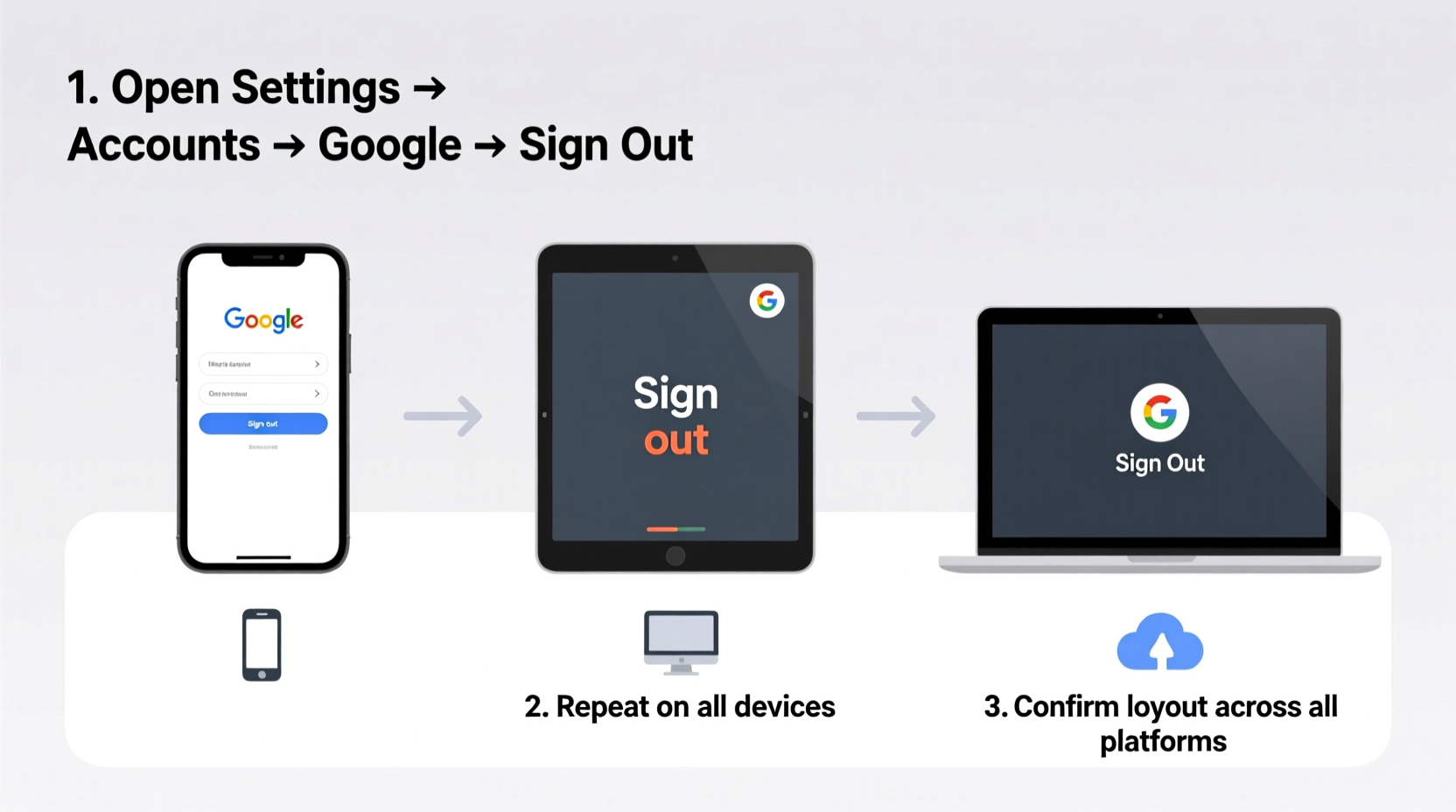
Your Google account holds emails, photos, browsing history, location data, payment methods, and more. Leaving it logged in on unfamiliar or unsecured devices increases the risk of data exposure. Even trusted devices can become compromised if lost, stolen, or used by others without your knowledge.
Remote logout capabilities give you control. You don’t need physical access to each device to remove your session. Google allows users to terminate active sessions across all platforms with just a few clicks—this is especially useful when selling an old phone, borrowing a laptop, or suspecting suspicious activity.
“Signing out remotely isn’t just about convenience—it’s a fundamental layer of digital hygiene.” — Lena Patel, Cybersecurity Analyst at Digital Shield Labs
Step-by-Step: How to Log Out of Your Google Account on All Devices
Google provides a centralized way to manage your account activity. Follow these steps to sign out of all devices at once:
- Sign in to your Google Account: Go to myaccount.google.com and log in with your credentials.
- Navigate to Security Settings: In the left-hand menu, click “Security.”
- Go to “Your devices”: Under the “Your devices” section, click “Manage devices.”
- Select Active Devices: You’ll see a list of all devices currently signed in with your Google account—phones, tablets, laptops, and even some smart TVs.
- Sign Out Remotely: Click on any device you want to log out from, then select “Sign out.” To log out everywhere except your current device, scroll to the bottom and click “Sign out of all other sessions.”
This action invalidates active login sessions on those devices. The next time someone tries to access Gmail or Google Drive, they’ll be prompted to sign in again.
Device-Specific Logout Procedures
While the remote sign-out method works universally, certain platforms require additional manual steps to fully disconnect your account.
Android Phones & Tablets
On Android, removing your Google account logs you out of all associated services and may affect app functionality (e.g., Play Store, Messages backup).
- Open Settings.
- Tap Accounts (or “Passwords & accounts” on some models).
- Select your Google account.
- Tap the three-dot menu or “Remove account,” then confirm.
iOS Devices (iPhone/iPad)
If you use Gmail or Google apps on iPhone, follow these steps:
- Open the Gmail app, tap your profile picture, then “Manage accounts.”
- Select your account and choose “Remove account.”
- Repeat for other Google apps like YouTube or Drive if needed.
Desktop Browsers (Chrome, Firefox, Safari)
Clearing cookies signs you out but doesn’t always revoke access tokens. For full logout:
- Visit myaccount.google.com.
- Go to “Security” > “Manage devices.”
- Find the browser session and click “Sign out.”
- Alternatively, clear site data for google.com in your browser settings.
Smart TVs and Streaming Devices
Devices like Chromecast, Android TV, or Smart TVs with YouTube apps retain login sessions. To log out:
- Open the YouTube or Google app.
- Go to Settings or your profile icon.
- Select “Sign out” or “Remove account.”
If no sign-out option exists, use the remote sign-out via your Google Account page—the session will expire automatically after a period of inactivity.
What Happens After You Sign Out?
Signing out remotely does not delete data from the device itself. It only ends the active session and prevents further syncing. Here's what to expect:
| Action | Effect | Limitations |
|---|---|---|
| Remote sign-out via Google Account | Ends web and app sessions; requires re-login | Doesn't wipe local data (e.g., downloaded files) |
| Remove account from Android | Stops sync, removes mail, contacts, backups | Data may remain recoverable without factory reset |
| Clear browser cookies | Logs you out temporarily | Access tokens might still allow background sync |
To ensure complete removal, combine remote logout with local account deletion where possible.
Checklist: Secure Your Google Account in 5 Steps
Use this checklist to fully log out and protect your account:
- ✅ Review all active devices in your Google Account dashboard
- ✅ Sign out of all devices except your current one
- ✅ Remove your Google account from any shared or sold devices manually
- ✅ Update your password using strong, unique characters
- ✅ Enable two-factor authentication (2FA) to prevent future unauthorized access
Real Example: Recovering Control After a Lost Phone
Sophie, a freelance designer from Portland, misplaced her Android phone at a coffee shop. She had been using it for client emails, cloud storage, and banking apps linked to her Google account. Realizing the risk, she immediately opened her laptop and went to myaccount.google.com.
Under “Manage devices,” she saw her lost phone still listed as active. She clicked on it and selected “Sign out.” Within seconds, the session was terminated. She followed up by changing her password and enabling 2FA. Though the phone was never recovered, her data remained secure because she acted quickly using Google’s remote logout feature.
This scenario highlights how fast and effective remote sign-out can be during emergencies.
Frequently Asked Questions
Will logging out of all devices delete my data?
No. Logging out ends your session but does not erase emails, files, or photos stored in Google services. Locally saved data on a device may remain unless manually deleted or wiped.
Can someone still access my account after I sign out remotely?
Only if they have saved passwords or recovery codes. For maximum security, change your password immediately after signing out remotely, especially if you suspect a breach.
Does signing out stop Google Photos backup?
Yes. Once you're signed out, automatic backup stops. Any photos taken after logout won’t sync until you sign back in.
Final Thoughts: Take Control of Your Digital Access
Your Google account is a gateway to much of your digital life. Simply relying on screen locks or app sign-in prompts isn’t enough. Proactively managing where and how you’re logged in ensures that your private conversations, financial records, and personal memories stay protected.
Logging out across all devices should be part of your regular digital maintenance—just like updating passwords or reviewing app permissions. With Google’s built-in tools, the process takes less than five minutes and can prevent serious privacy issues down the line.




 浙公网安备
33010002000092号
浙公网安备
33010002000092号 浙B2-20120091-4
Comments
No comments yet. Why don't you start the discussion?