
Finding the perfect pair of platform sandals should be a celebration of style, comfort, and confidence. Yet, too many people settle for ill-fitting footwear that pinches, slips, or causes long-term foot strain. The root cause? Inaccurate sizing. Unlike traditional shoes, platform sandals often feature thicker soles, elevated heels, and unique structural designs that can skew standard size charts. The solution lies not in guessing or relying on past shoe sizes—but in accurately measuring your feet with precision. This guide walks you through every step of measuring your foot correctly, understanding sandal fit nuances, and making informed buying decisions—whether shopping online or in-store.
Why Standard Shoe Sizes Aren’t Enough
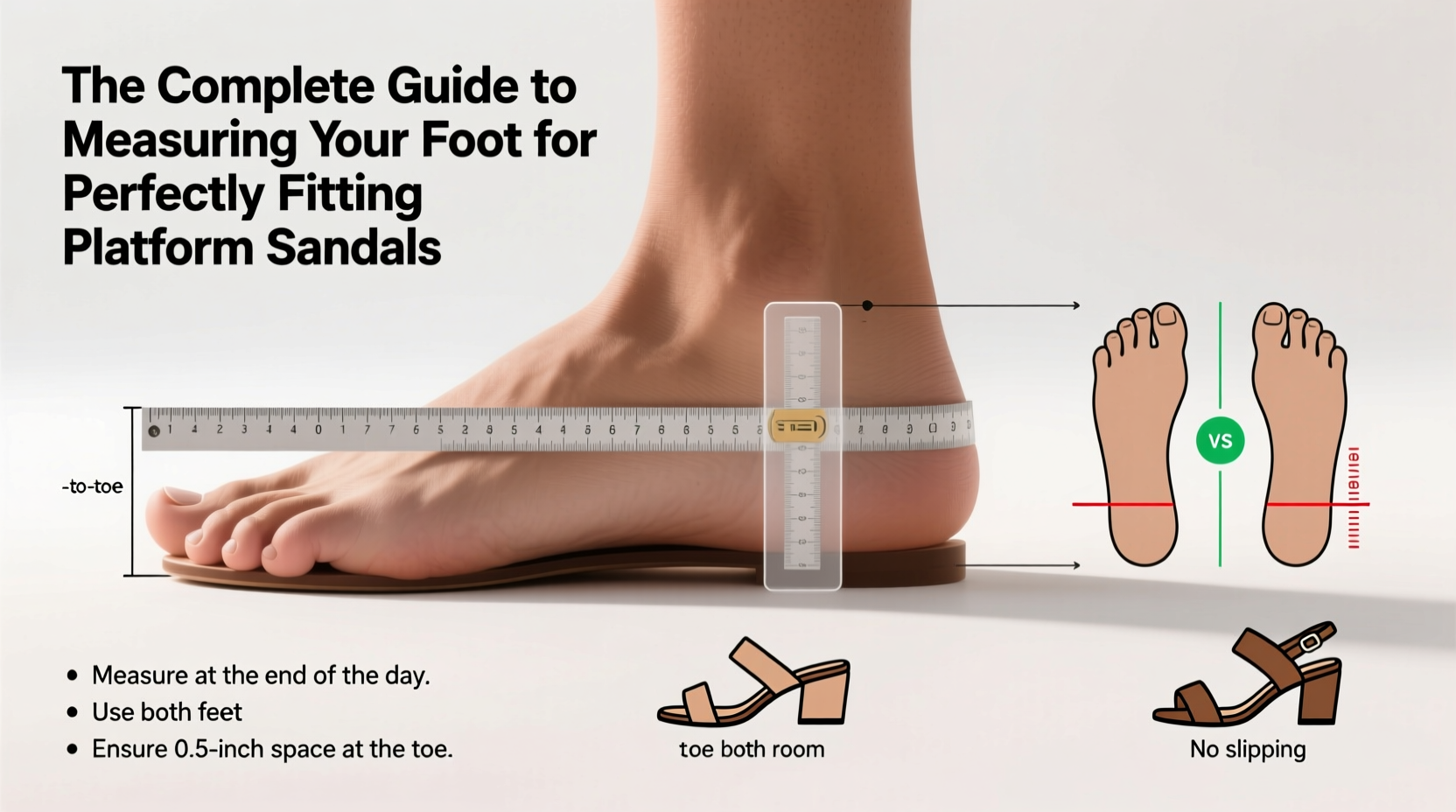
Shoe sizes are notoriously inconsistent across brands and styles. A size 8 in one brand may feel like a 7.5 in another, especially when it comes to fashion-forward footwear like platform sandals. These shoes often have deeper toe boxes, wider footbeds, or contoured arches that don’t align with conventional sizing systems. Moreover, platform soles add height without extending the shoe’s interior length proportionally, which can lead to cramped toes if not sized correctly.
According to Dr. Lena Torres, podiatrist and footwear biomechanics specialist:
“Platform sandals redistribute weight unevenly. Without proper fit, they increase pressure on the forefoot and can alter gait over time. Measuring your foot—not just relying on a number—is essential for both comfort and long-term foot health.”
The only way to ensure consistent accuracy is to measure your feet yourself using reliable methods and reference those measurements against brand-specific size charts.
A Step-by-Step Guide to Measuring Your Foot at Home
You don’t need special tools or a visit to a specialty store to measure your feet. With a few household items, you can obtain accurate dimensions in under ten minutes.
- Gather Supplies: You’ll need a piece of blank paper (larger than your foot), a pen or pencil, a ruler (preferably in centimeters and inches), and a flat surface.
- Prepare Your Feet: Measure both feet at the end of the day when they’re slightly swollen—this reflects real-world wear conditions. Wear the type of socks you plan to use with your sandals, if any.
- Trace Your Foot: Place the paper on a hard floor. Stand on it with your full weight evenly distributed. Have someone trace the outline of your foot while keeping the pencil vertical. Repeat for the other foot.
- Measure Length: Use the ruler to draw a straight line from the heel to the longest toe (usually the big toe or second toe). Measure this distance in both centimeters and inches.
- Measure Width: Find the widest part of the foot (typically across the ball) and measure side-to-side. Record the measurement.
- Compare Measurements: Note the larger of the two feet—your shoe size should accommodate the bigger foot.
Understanding Sandal Fit: Length, Width, and Arch Support
Measuring length alone isn’t sufficient. Platform sandals vary significantly in internal structure, strap placement, and footbed shape. To achieve true comfort, consider these three dimensions:
- Length: Ensure there’s about 0.3–0.5 cm (1/8 inch) between your longest toe and the front edge of the sandal. Too much space increases slippage; too little causes toe crowding.
- Width: Check whether the sandal has adjustable straps or a fixed width. Narrow feet may slip in wide footbeds, while wide feet need models designed for D-width or EE-width fits.
- Arch Position: Some platforms offer built-in arch support; others are flat. If you have high arches or flat feet, choose a style that complements your natural foot shape.
| Foot Measurement | What to Look For in Platform Sandals |
|---|---|
| Foot Length: 24.1 cm (9.5 in) | Size EU 39 / US 8 – confirm with brand chart |
| Foot Width: 10.2 cm (4 in) | Select wide-width or adjustable strap options |
| Arch Length: Medium | Look for contoured footbeds or cushioned midsoles |
| High Instep | Choose sandals with ankle straps or open vamp design |
Real Example: Sarah’s Sizing Struggle Turned Success
Sarah, a freelance designer from Portland, loved bold platform sandals but kept returning purchases due to blisters and heel slippage. She assumed she was a US 7.5, but after measuring her feet following this guide, she discovered her right foot was 24.3 cm—closer to a US 8—and significantly wider than average.
She used her exact measurements to search for brands offering half-sizes and wide widths. She selected a pair from a sustainable footwear label that provided detailed footbed diagrams and a fit calculator. The new sandals fit perfectly, offering stability and all-day comfort during outdoor markets and city walks. “I wasted hundreds before learning to measure properly,” she said. “Now I never buy without tracing my feet first.”
Essential Checklist Before Buying Platform Sandals
Before finalizing a purchase—especially online—run through this checklist to avoid returns and discomfort:
- ✅ Measured both feet at the end of the day
- ✅ Recorded the longer foot’s length and widest foot’s width
- ✅ Checked the brand’s size chart (not just standard conversions)
- ✅ Verified if the model runs small, large, or true to size via reviews
- ✅ Confirmed adjustability of straps (ankle, instep, toe)
- ✅ Researched return policy in case of fit issues
- ✅ Compared footbed shape to your arch type
Frequently Asked Questions
Can I use my running shoe size for platform sandals?
No. Athletic shoes are engineered for performance and often fit differently than fashion sandals. Running shoes typically have extra room in the toe box for swelling during activity, while platform sandals may have rigid structures or narrow footbeds. Always measure specifically for the sandal style you're purchasing.
My feet are different sizes—what size should I buy?
Always size up for the larger foot. You can use inserts or heel grips to minimize slippage in the smaller foot. Never size down to accommodate the smaller foot, as this can lead to nerve compression, bunions, or calluses over time.
Do platform sandals stretch over time?
Materials like leather or fabric uppers may loosen slightly with wear, but synthetic materials and molded footbeds retain their shape. Assume minimal stretch and prioritize getting the correct initial fit. Adjustable straps help compensate for minor changes.
Final Tips for Long-Term Comfort and Confidence
Accurate foot measurement is not a one-time task. Feet change over time due to age, weight fluctuations, pregnancy, or medical conditions. Re-measure every 6–12 months, especially if you notice discomfort in well-worn shoes.
When trying on new platform sandals, walk on a hard surface for several minutes. Pay attention to pressure points, heel lift, and toe grip. The best-fitting pair should feel secure without tightness, allow natural toe splay, and support your arch without digging in.
“Fit is function. No matter how stylish a sandal is, if it doesn’t align with your foot’s anatomy, it’s a compromise your body will remember.” — Dr. Lena Torres, Podiatry Today Journal
Take Action Today for Better-Fitting Sandals Tomorrow
Don’t let another summer pass with uncomfortable footwear. Pull out a sheet of paper, trace your feet, and record your exact measurements. Use them to shop smarter, compare brands confidently, and invest in sandals that look great and feel even better. Share your experience in the comments—what sizing surprises have you encountered? Your insight might help someone else finally find their perfect fit.




 浙公网安备
33010002000092号
浙公网安备
33010002000092号 浙B2-20120091-4
Comments
No comments yet. Why don't you start the discussion?