
Choosing the right pillowcase isn’t just about color or fabric—it starts with a proper fit. A poorly fitting pillowcase can lead to constant readjustment, wrinkled bedding, and even disrupted sleep. The key to a seamless fit lies in accurate measurement. Many people assume all standard pillows are the same size, but slight variations between brands and materials mean that guessing can backfire. By taking a few simple measurements, you ensure your pillowcase hugs your pillow snugly without strain or excess fabric.
Why Accurate Pillow Measurement Matters
A well-fitting pillowcase protects your pillow while enhancing comfort and aesthetics. Too tight, and the case stretches, straining seams and distorting the pillow’s shape. Too loose, and the case slips around during the night, requiring frequent tucking and adjustment. Proper fit also preserves the integrity of delicate fabrics like silk or high-thread-count cotton, which can tear under tension.
Pillow sizes vary more than most realize. While “standard” is commonly 20 x 26 inches, some manufacturers produce pillows up to half an inch larger in either dimension. Memory foam and down-alternative pillows often expand slightly over time, making pre-measurement essential.
“Many customers return pillowcases thinking they’re defective, when in reality, their pillow simply doesn’t match the assumed standard size.” — Lydia Nguyen, Home Textiles Specialist at LinenCraft Co.
Step-by-Step: How to Measure Your Pillow Correctly
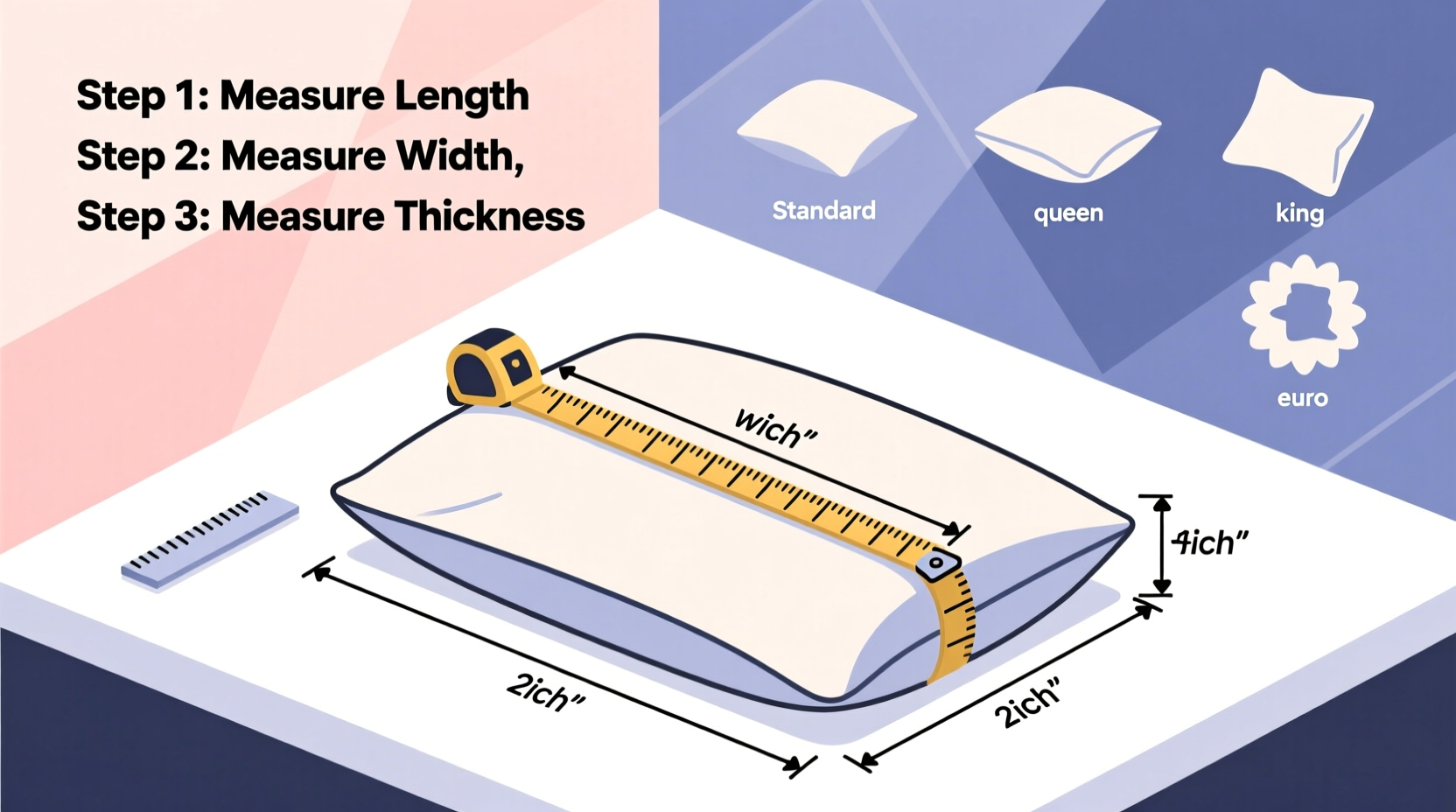
Measuring your pillow takes less than two minutes but ensures long-term satisfaction. Follow this precise method for reliable results:
- Remove the pillow from its current case and let it rest flat on a firm surface for at least 30 minutes if it’s been compressed.
- Use a rigid tape measure or ruler—avoid stretchy sewing tapes, as they can give inaccurate readings.
- Measure length and width: Place the tape from one edge to the opposite, pressing gently to avoid compressing the pillow. Record both dimensions in inches.
- Check thickness (optional but recommended): Especially for deep-pocket cases, measure the pillow’s height when lying flat. This helps determine if you need a standard or extra-deep case.
- Repeat across multiple sides—pillows aren’t always perfectly rectangular. Take the largest measurement for each dimension to allow for natural puffiness.
Common Pillow Sizes and Their Ideal Case Fit
While standardization exists, deviations are common. Refer to this table to understand typical dimensions and recommended case sizes.
| Pillow Type | Average Dimensions (inches) | Recommended Case Size | Notes |
|---|---|---|---|
| Standard | 20 x 26 | 20 x 26 or 21 x 27 | Most common in North America; check for variance. |
| Queen | 20 x 30 | 20 x 30 or 21 x 31 | Longer than standard; ideal for side sleepers. |
| King | 20 x 36 | 20 x 36 or 21 x 37 | Ensure case has deep gusset if pillow is thick. |
| European Square | 26 x 26 | 26 x 26 or 28 x 28 | Often used as decorative shams; verify exact size. |
| Body Pillow | 20 x 54 | 20 x 54 or custom | May require envelope closures or zipper styles. |
If your pillow falls outside these ranges—or if it’s a specialty type like a cervical or buckwheat pillow—custom sizing may be necessary. Always err on the side of slightly larger rather than smaller, provided the closure method (such as envelope, zip, or button) keeps the pillow secure.
Understanding Pillowcase Design Features That Affect Fit
Beyond dimensions, several design elements influence how a pillowcase fits and functions:
- Gusset Depth: A gusset is a band of fabric running along the perimeter of the case, adding volume. A 3–4 inch gusset accommodates thicker pillows without bulging.
- Closure Style: Envelope, zip, and tie closures offer varying levels of security. Zippers provide the tightest fit, while envelope flaps allow easier removal but may shift.
- Fabric Stretch: Natural fibers like cotton can shrink after washing, while blends with spandex offer slight elasticity. Pre-wash or choose pre-shrunk cases when possible.
- Seam Allowance: Manufacturers typically add 1/2 inch per side for seams. A case labeled “20x26” may actually have a finished interior of 19x25.
Real-World Example: Sarah’s Sizing Surprise
Sarah purchased a set of organic down-alternative pillows labeled “standard.” She assumed they’d fit her existing pillowcases. After struggling to close the cases each morning, she noticed fraying along the seams. When she finally measured the pillows, they were 20.5 x 26.5 inches—half an inch longer on both sides than expected. The slight excess caused constant tension. She switched to 21 x 27 inch cases with a 4-inch gusset and zipper closure. The new fit was secure, smooth, and eliminated wear. Her bedding stayed neat, and the pillowcases lasted twice as long.
This scenario is more common than many realize. Even small discrepancies compound over time, affecting both comfort and durability.
Checklist: Measuring & Selecting the Right Pillowcase
Follow this checklist to ensure a perfect fit every time:
- ✅ Remove pillow from case and let it rest overnight if compressed.
- ✅ Measure length, width, and depth using a firm tape measure.
- ✅ Record the largest measurement in each dimension.
- ✅ Compare against manufacturer’s case specifications—not label names.
- ✅ Check if the case includes a gusset and whether it suits your pillow’s thickness.
- ✅ Confirm closure type aligns with your preference (zipper for security, envelope for ease).
- ✅ Wash sample case first if concerned about shrinkage.
Frequently Asked Questions
Can I use a king pillowcase for a standard pillow?
You can, but the case will be excessively loose, leading to shifting and wrinkling. It may also disrupt your sleep aesthetic. If you must, opt for a case with a hidden zipper or internal ties to keep the pillow centered.
Do pillowcases shrink after washing?
Yes, especially those made from natural fibers like cotton or linen. Most shrinkage occurs in the first wash. To avoid surprises, choose pre-shrunk cases or wash before use. Blends with polyester resist shrinkage better.
How much larger should a pillowcase be than the pillow?
Ideally, a pillowcase should be 1–2 inches longer and wider than the pillow. This allows for easy insertion and removal while preventing strain. Any more than 2 inches risks a baggy appearance.
Final Thoughts: Precision Leads to Comfort
The perfect pillowcase fit isn’t a luxury—it’s a detail that enhances sleep quality, extends textile life, and elevates your bedroom’s look. Taking a moment to measure your pillow accurately saves time, money, and frustration in the long run. Whether you’re refreshing your linens, shopping online, or replacing worn cases, never assume size. Measure, compare, and choose wisely.




 浙公网安备
33010002000092号
浙公网安备
33010002000092号 浙B2-20120091-4
Comments
No comments yet. Why don't you start the discussion?