
Choosing the right trash bag isn’t just about brand or thickness—it starts with accurate measurements. A poorly fitting bag sags, slips, or overflows, creating messes and undermining even the most organized household. Whether you're stocking up for the kitchen, bathroom, or office, getting the dimensions right ensures a clean, secure fit every time. This guide walks you through how to measure any trash can correctly, decode bag labeling, and avoid common sizing mistakes.
Why Proper Trash Bag Sizing Matters
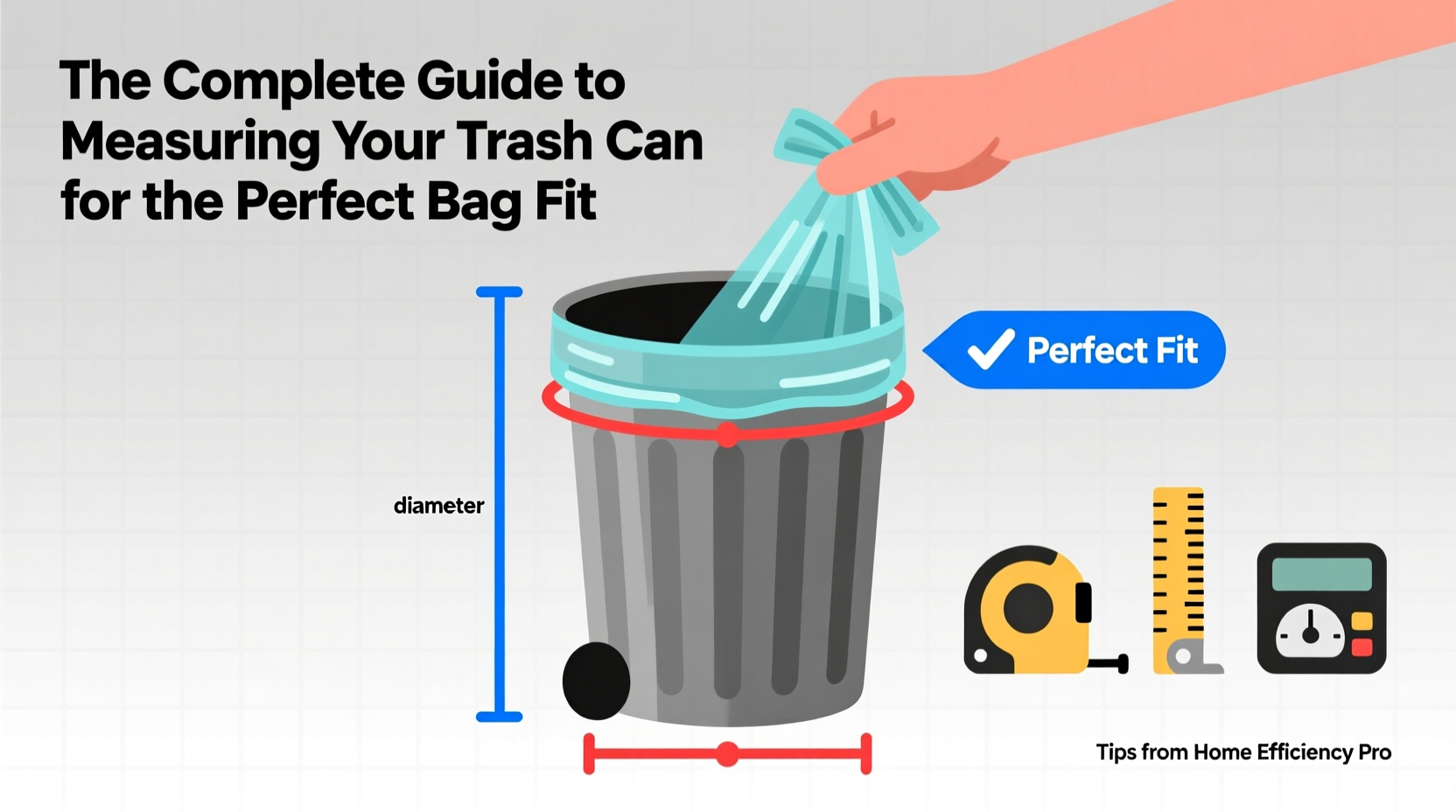
A trash bag that fits well stays in place, resists tearing, and makes disposal effortless. Too small, and the bag won’t reach the rim, causing it to slide down when filled. Too large, and excess material bunches at the top, interfering with lids or creating tripping hazards. The wrong size also leads to waste—both of space and money—when oversized bags are used unnecessarily.
Properly sized bags improve efficiency across homes, offices, and commercial spaces. They reduce leakage risks, support hygiene, and make changing the bin quicker and cleaner. Beyond convenience, correct sizing extends the life of your trash can by minimizing strain on the interior lining from ill-fitting plastic.
How to Measure Your Trash Can: A Step-by-Step Guide
Accurate measurement is simple but requires attention to detail. Follow these steps using a flexible tape measure for best results.
- Empty the can completely. Remove the current liner and ensure no debris remains inside.
- Measure the height. Place the tape from the bottom center to the top rim. Record this as your can’s height.
- Measure the top diameter (for round cans). Stretch the tape across the widest part of the opening, from inner edge to inner edge.
- For rectangular cans, measure length and width. Take both inside dimensions at the top rim.
- Determine the circumference (optional but helpful). Wrap the tape around the top opening to find the total distance around. This helps confirm compatibility with stretch-fit bags.
Record all numbers in inches. Most manufacturers list bag sizes using width x height, often based on the container’s top dimensions and depth.
Round vs. Rectangular Cans: Key Differences
Round cans are typically labeled by diameter and height. A standard kitchen can might be 14” in diameter and 18” tall. Bags for these are usually listed as “14–16 gallon” or “fits up to 15” diameter.”
Rectangular cans require two top measurements. For example, a slim under-cabinet bin may be 10” long x 7” wide x 16” high. Look for bags labeled “rectangular” or “slim fit,” as standard round bags won’t conform properly.
Understanding Trash Bag Labels and Sizing Charts
Beyond volume (gallons), bag packaging includes critical dimensions. However, brands use different terminology, which can cause confusion.
| Label Term | What It Means | How to Use It |
|---|---|---|
| Capacity (e.g., 13-gallon) | Volume the bag can hold, not exact fit | Use as a starting point; verify with actual measurements |
| Bag Size: 18” x 20” | Width x Height of the flat bag | Add 2–3 inches to your can’s diameter/length for overlap |
| Fits cans up to 16” | Maximum recommended can opening | Compare directly to your measured diameter or width |
| Drawstring, Sensor, Kitchen, etc. | Design type, not size indicator | Choose after confirming dimensions |
When in doubt, refer to manufacturer sizing charts—many brands provide downloadable PDFs or online tools that match bag models to specific trash can brands like Simplehuman, Nine Stars, or Rubbermaid.
Common Measurement Mistakes and How to Avoid Them
Even experienced shoppers get it wrong. These errors lead to repeated returns and ongoing frustration.
- Measuring the outside instead of the inside. Trash bag sizes correspond to internal dimensions where the plastic sits.
- Ignoring the rim shape. Flared or tapered cans need extra width to grip the top securely.
- Assuming all 13-gallon cans are the same. One brand’s 13-gallon can may be 15” wide; another’s is 12.5”. Always measure.
- Forgetting lid clearance. In sensor or pedal bins, excess bag material can interfere with automatic closing.
Mini Case Study: The Office Renovation Mix-Up
A mid-sized law firm upgraded its office suite and purchased new stainless steel trash cans for each workspace. Staff ordered 13-gallon bags based on volume alone. Within days, complaints arose—bags kept slipping down during use. Upon inspection, facilities manager Linda Chen discovered the new cans were taller and narrower than the old ones: 12.2” diameter vs. the previous 14.5”. The “universal” 13-gallon bags were too wide and lacked vertical coverage. After re-measuring and switching to custom-fit 12” x 22” bags, the problem vanished. The lesson? Volume doesn’t equal fit.
Expert Insight: What Professionals Recommend
Janitorial supply specialists emphasize precision over guesswork. According to Mark Delaney, a commercial cleaning consultant with over 20 years of experience:
“Every facility we audit has at least one recurring waste issue tied to incorrect bag sizing. It’s not glamorous, but measuring once saves hours of cleanup later. I tell my clients: ‘Tape measure in hand before you click ‘Add to Cart.’’” — Mark Delaney, Commercial Cleaning Consultant
Checklist: Measuring & Selecting the Right Trash Bag
Follow this checklist to ensure accuracy and compatibility:
- ✅ Empty the trash can completely
- ✅ Use a flexible tape measure
- ✅ Measure internal height from base to rim
- ✅ Measure top diameter (round) or length and width (rectangular)
- ✅ Note any flaring, handles, or lid mechanisms
- ✅ Compare numbers to bag product specs—not just volume labels
- ✅ Order a test pack before bulk purchasing
- ✅ Confirm return policy for unopened bags
Frequently Asked Questions
Can I use a larger bag and just fold it over?
You can, but it’s not ideal. Folding reduces usable capacity and may prevent the lid from sealing, increasing odor and pest risks. It also creates loose material that can catch on fingers or tools when removing the bag.
What if my trash can isn’t a standard shape?
For irregular shapes—like oval, hexagonal, or tapered bins—focus on the widest top dimension and height. Consider universal-fit or stretchable bags made with polyethylene blends. Some brands offer “flex-fit” designs specifically for non-standard containers.
Do drawstring bags require different sizing?
No. Drawstrings affect closure, not fit. Size drawstring bags the same way—by width and height. Just ensure the bag is tall enough so the drawstring sits above the rim when full, preventing contact with waste.
Final Tips for Long-Term Success
Once you’ve found the right fit, keep a record of your can’s dimensions and the exact bag model that works. Label the storage box or save the product link. This eliminates guesswork during future purchases.
Consider buying in bulk only after verifying fit with a sample pack. Store unused bags in a cool, dry place away from direct sunlight to prevent brittleness.
If you own multiple cans, create a simple chart mapping each location (kitchen, bathroom, garage) to its required bag size. This helps family members or cleaning staff restock correctly.
Take Action Today for a Cleaner Tomorrow
Stop wrestling with ill-fitting trash bags. Spend ten minutes measuring your bins now and eliminate a daily frustration. With the right dimensions in hand, you’ll buy smarter, reduce waste, and enjoy a neater, more efficient space. Share your success—or ask questions—in the comments below. Let’s end the trash bag struggle together.




 浙公网安备
33010002000092号
浙公网安备
33010002000092号 浙B2-20120091-4
Comments
No comments yet. Why don't you start the discussion?