
Losing your car key or discovering it’s broken can be stressful, especially if you're in a rush or stranded. While many assume that only dealerships can replace modern car keys, the truth is that with the right information and tools, you can often handle the replacement yourself. Modern keys—especially transponder and smart keys—are more complex than traditional metal ones, but DIY solutions have evolved alongside them. This guide walks through everything you need to know: from identifying your key type to programming a new one, avoiding costly service fees, and getting back on the road without delay.
Understanding Your Car Key Type
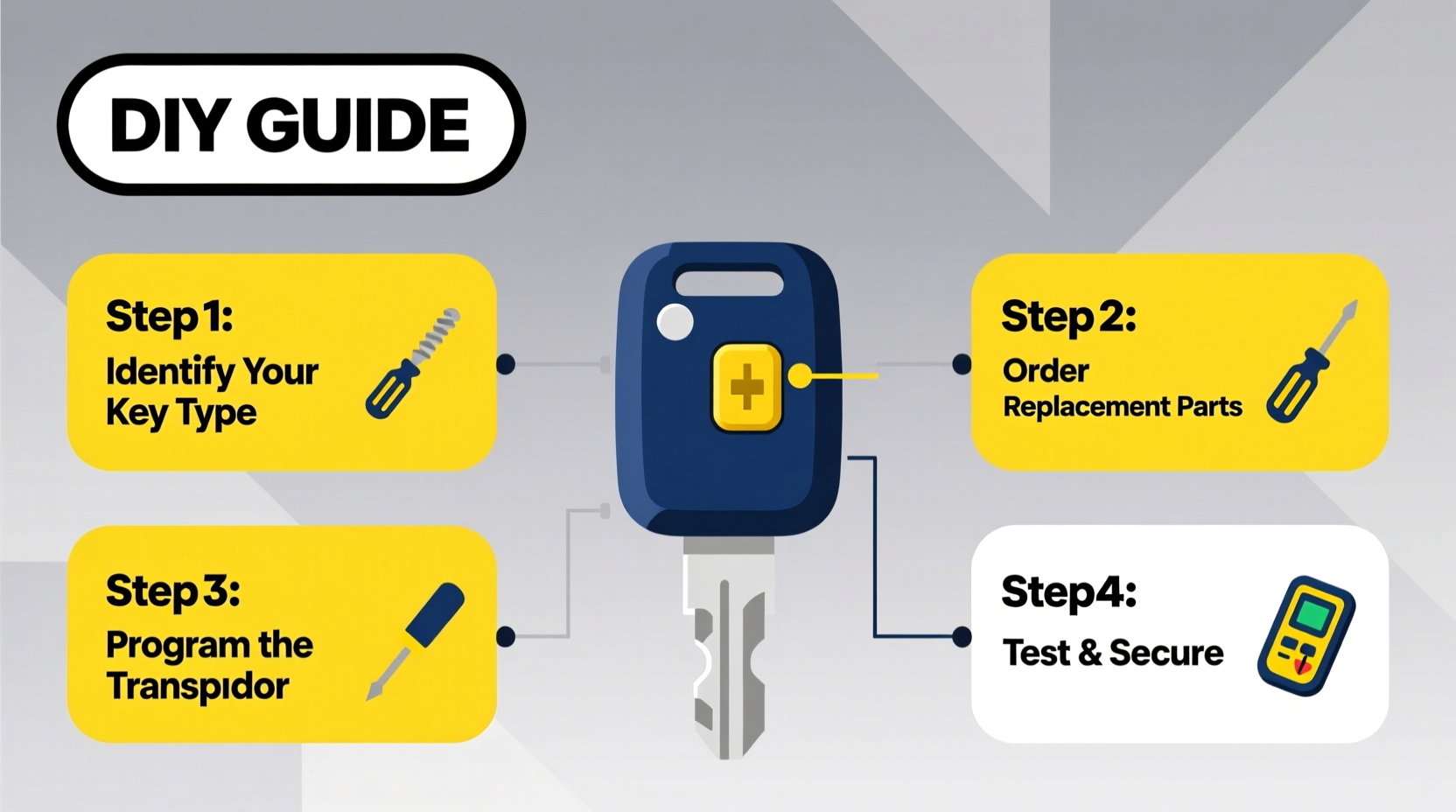
Before attempting any replacement, it's essential to identify what kind of key your vehicle uses. The method for replacement depends heavily on this factor. Most vehicles today use one of three key types:
- Traditional Metal Keys: Simple cut keys without electronic components. Common in older models (pre-1995).
- Transponder Keys: Contain a small RFID chip that communicates with your car’s immobilizer system. Required to start the engine.
- Remote Key Fobs / Smart Keys: Include remote locking, push-to-start functionality, and built-in transponders. Most common in vehicles from the 2000s onward.
Incorrectly identifying your key type can lead to wasted time and money. Check your owner’s manual or examine the key closely. If it has buttons for locking/unlocking or feels bulky with internal circuitry, it’s likely a smart key or fob.
Step-by-Step Guide to Replacing a Lost or Broken Key
Replacing a car key yourself involves several stages: identification, sourcing, cutting, and programming. Follow this timeline for a smooth process.
- Confirm Your Key Type – Use your VIN (Vehicle Identification Number) or consult your manual to determine compatibility.
- Gather Necessary Information – Note your car’s make, model, year, and ignition type. Some systems require security codes.
- Purchase a Blank or Replacement Key/Fob – Buy from reputable online retailers or auto parts stores. Ensure it matches your OEM specification.
- Cut the Key (if required) – For non-smart keys or replacement blades, use a hardware store machine or order pre-cut blanks online.
- Program the Transponder or Fob – This step varies by manufacturer and may involve ignition sequences, diagnostic tools, or smartphone apps.
- Test Thoroughly – Try starting the car, locking/unlocking doors, and activating panic buttons if applicable.
Some manufacturers allow limited self-programming. For example, many Honda and Toyota models let you program a second key using two working keys—a useful trick if you still have one functional key.
DIY Programming Methods by Brand
While some brands lock programming behind dealership-only software, others offer accessible workarounds. The table below outlines common makes and their DIY-friendliness.
| Car Brand | DIY Possible? | Programming Method | Tools Needed |
|---|---|---|---|
| Honda | Yes (with 2 keys) | Ignition cycle + button press | Two working keys |
| Toyota | Limited | Onboard diagnostics mode | OBD2 scanner (some models) |
| Ford | Yes | OBD2 programming via PATS | Scan tool or FORScan app |
| BMW | No (officially) | Dealer or professional tool required | INPA or Carly app (limited success) |
| Chrysler | Yes | Ignition toggle sequence | One working key |
If your vehicle isn’t listed here, search “[Your Make] + [Year] key programming” to find community-tested methods. Forums like Reddit’s r/MechanicAdvice or brand-specific groups often share detailed walkthroughs.
“Over 60% of key replacements don’t require a dealer visit. With basic tools and patience, most owners can do it themselves.” — Mark Reynolds, Automotive Security Technician
Tools and Supplies You’ll Need
The tools required depend on your vehicle and key type. Here’s a checklist of essentials:
- Replacement key blank or fob (OEM or high-quality aftermarket)
- OBD2 programming tool (e.g., Autel MaxiIM530, FORScan-compatible adapter)
- Working car key (for certain programming sequences)
- Small screwdriver set (for disassembling fobs)
- Battery replacement kit (CR2032 for most fobs)
- Owner’s manual or online wiring diagram
For transponder keys, an OBD2 programmer is crucial. These devices plug into your car’s diagnostic port and allow you to add or erase key codes. While professional tools cost hundreds, budget-friendly options like the Lonsdor K518 or Xhorse系列产品 are widely used by independent mechanics.
Real Example: Replacing a Lost Toyota Camry Key
Sarah lost her 2012 Toyota Camry key while traveling. Rather than pay $300 at the dealership, she researched alternatives. She found that her model supported limited self-programming using one existing key. Since she had a spare, she followed these steps:
- Inserted the working key into the ignition and turned it to “ON” for 5 seconds.
- Turned it back to “OFF” and removed it.
- Repeated this five times within 40 seconds until the dashboard lights blinked.
- Inserted the new unprogrammed key and turned it to “ON.” After 10 seconds, the system accepted it.
The entire process took under five minutes. Sarah saved over $200 and avoided towing or rental fees. Her success relied on having one working key and knowing her model’s quirks—a reminder that preparation pays off.
When to Avoid DIY Replacement
Not every situation is suitable for self-replacement. Consider professional help if:
- You’ve lost all keys and the car has no spare.
- Your vehicle uses encrypted rolling-code systems (e.g., newer BMWs, Audis).
- The immobilizer light stays on after attempted programming.
- You’re uncomfortable working with electrical systems.
In such cases, a mobile locksmith with OEM-level tools may be more cost-effective than a dealership while still offering fast service.
FAQ
Can I program a car key without going to the dealer?
Yes, for many models—especially those from Honda, Ford, and Chrysler. You’ll need the correct blank key and possibly an OBD2 programmer. However, luxury brands like Mercedes and Land Rover often restrict access to proprietary systems.
How much does it cost to replace a key myself?
A blank transponder key costs $10–$40. A smart fob ranges from $80–$180. OBD2 programmers start around $50. Total DIY cost: typically $50–$120, versus $200–$400 at a dealership.
What if my car doesn’t start after programming?
Double-check the programming steps. Ensure the battery in the fob is fresh. Some systems require re-synching door locks or resetting the immobilizer. If issues persist, use a code reader to check for immobilizer errors.
Final Tips for Long-Term Key Management
Once you’ve replaced your key, take steps to avoid future issues:
- Keep a spare key in a secure, accessible location—like with a trusted neighbor or in a locked mailbox.
- Label spare keys clearly with the vehicle info.
- Replace fob batteries every 1–2 years, even if they seem functional.
- Store keys away from magnetic fields, heat, and moisture to protect internal chips.
Take Control of Your Car Key Situation
Losing or breaking a car key doesn’t have to mean expensive dealership visits or days without your vehicle. With accurate information, the right tools, and a bit of patience, most people can replace their keys at home. Whether you’re dealing with a simple cut key or a high-tech smart fob, understanding your options empowers you to act quickly and confidently. Don’t wait for the next emergency—prepare now by identifying your key type, locating your VIN, and considering a spare. You’ll save time, money, and stress when it matters most.




 浙公网安备
33010002000092号
浙公网安备
33010002000092号 浙B2-20120091-4
Comments
No comments yet. Why don't you start the discussion?