
Whether you're applying to college, enrolling in a vocational program, or submitting credentials for employment, your high school final transcript is a foundational document. It reflects not only your academic performance but also your official graduation status. Despite its importance, many students and alumni struggle with how to request it efficiently—or worse, make mistakes that delay processing. This guide walks you through every phase of the process, from identifying the right office to ensuring secure delivery, so you can obtain your transcript without stress or setbacks.
Understanding What a Final Transcript Includes
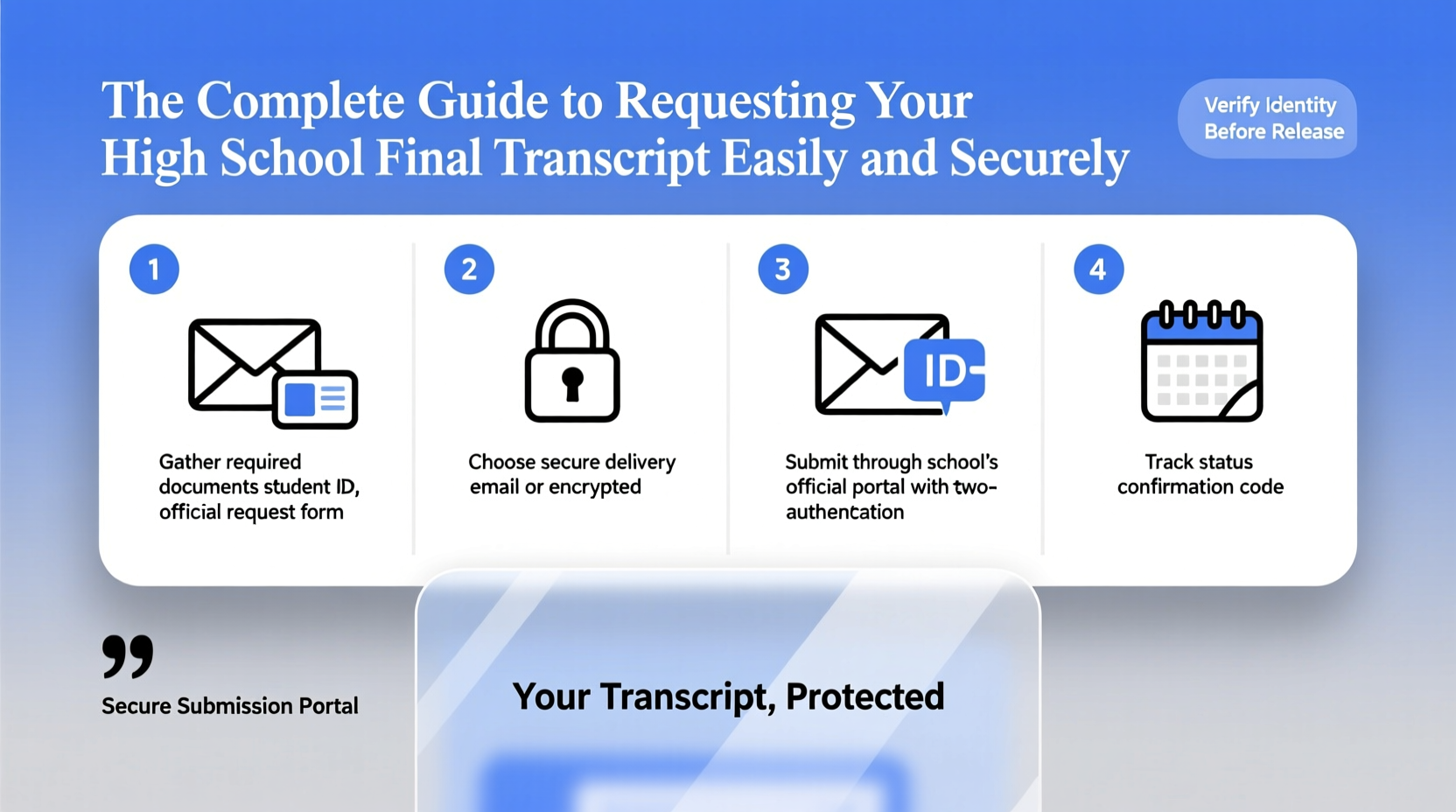
A high school final transcript is more than just a list of grades. It’s an official academic record issued after you’ve completed all graduation requirements. Unlike mid-year transcripts, the final version includes:
- All coursework completed across four years
- Final grades for senior-year courses
- Diploma conferral date and type (e.g., standard, honors)
- Graduation status verification
- Credits earned and GPA (cumulative and weighted, if applicable)
- School seal and administrator signature
This document is considered \"final\" because it confirms you have met all institutional and state requirements for graduation. Institutions like colleges and scholarship boards require this version—not a preliminary transcript—to verify eligibility.
“Admissions offices rely on final transcripts to confirm that applicants actually graduated and completed required coursework. A missing or incomplete transcript can delay or even rescind an offer.” — Dr. Linda Ruiz, Director of Admissions at Midwestern State University
Step-by-Step: How to Request Your Transcript
The process varies slightly depending on your school district and whether you’re a recent graduate or an alumnus. However, most follow a consistent sequence. Follow these steps to ensure accuracy and timeliness.
- Identify the issuing office: Most requests are handled by the school’s registrar or counseling department. For older graduates, contact the district’s central records office.
- Determine the request method: Many schools now use online portals (e.g., Parchment, Naviance, or SCOIR), while others accept email, fax, or in-person submissions.
- Gather required information: You’ll typically need your full name, date of birth, student ID (if available), graduation year, and recipient details (e.g., college address).
- Verify authentication needs: Some institutions require transcripts to be sent directly from the school or sealed in an envelope. Never open a transcript marked “Official” if received by mail.
- Submit the request: Complete the form accurately. If using an online service, monitor your email for confirmation and tracking updates.
- Track delivery and follow up: Allow 5–10 business days for processing. Confirm receipt with the receiving institution if critical deadlines are approaching.
Secure Delivery Options: What’s Available and What to Choose
Security and authenticity are paramount when sending official transcripts. Schools now offer several secure methods, each with pros and cons.
| Delivery Method | Speed | Security Level | Best For |
|---|---|---|---|
| Electronic (via Parchment/Naviance) | 1–3 days | High (encrypted, trackable) | College applications, urgent deadlines |
| Mail (official, sealed) | 5–10 days | Medium (trackable via USPS) | Scholarships, employers, international use |
| In-Person Pickup (sealed) | Same day | Low-Medium (risk of tampering) | Local institutions; avoid unless required |
| Fax or Email (unofficial) | Immediate | Low (not accepted for admissions) | Personal records, temporary submissions |
For maximum security and acceptance, opt for electronic delivery through a trusted provider. Over 90% of U.S. colleges now accept digital transcripts as official documents.
Common Pitfalls and How to Avoid Them
Mistakes during the transcript request process are more common than you’d think—and often preventable. Here are frequent issues and how to sidestep them.
- Requesting a mid-year transcript instead of the final: Double-check that your transcript includes spring semester senior-year grades and diploma confirmation.
- Missing fees: Some schools charge $5–$15 per copy. Payment delays halt processing.
- Using outdated contact info: If your school has closed or merged, contact your state’s Department of Education for archived records.
- Not allowing enough time: Rush requests may not be accommodated. Start the process at least three weeks before deadlines.
- Requesting from the wrong office: Alumni should not go to the current school’s front desk. Use the district’s alumni or records division.
“I waited until July to request my transcript, not realizing my alma mater had transferred records to a central archive. It took six extra days to retrieve.” — Jasmine T., college freshmanThis real example underscores the importance of early planning and verifying where your records are stored.
Checklist: Request Your Transcript Without Errors
Use this checklist to ensure a smooth, error-free request:
- ✅ Confirm your school has released final transcripts for your graduating class
- ✅ Locate your student ID number or Social Security number (used for verification)
- ✅ Identify the correct transcript office (school vs. district)
- ✅ Determine if electronic submission is accepted by the recipient
- ✅ Prepare payment (check accepted methods: credit card, check, etc.)
- ✅ Collect recipient information (full mailing address or email portal)
- ✅ Submit request via approved method (online, in person, fax)
- ✅ Save confirmation number and track delivery status
- ✅ Follow up with recipient to confirm receipt
Frequently Asked Questions
Can I request my transcript if I owe money to the school?
While some schools withhold transcripts due to unpaid fines or fees, many states—including California, Texas, and New York—prohibit this practice for academic records. Contact your district directly to understand local policies. In most cases, you can still obtain your transcript even with outstanding balances.
How long do schools keep transcripts?
Most public schools retain student records for 50 to 75 years, and some indefinitely. Private schools may have shorter retention periods. If your school has closed, records are typically transferred to the district or state archives. The National Center for Education Statistics (NCES) provides guidance on locating archived records.
Can I get a transcript if I didn’t graduate?
Yes. Schools issue academic records regardless of graduation status. These are often called “academic histories” or “attendance records” and include all courses taken and grades earned. While they won’t show a diploma, they can still be useful for GED applications or workforce programs.
Conclusion: Take Control of Your Academic Records
Your high school transcript is more than a piece of paper—it's proof of your academic journey and a gateway to future opportunities. By understanding how to request it properly, choosing secure delivery methods, and avoiding common errors, you maintain control over your educational narrative. Whether you're applying to your dream college or building a career portfolio, having timely access to your final transcript ensures you’re never held back by administrative hurdles.




 浙公网安备
33010002000092号
浙公网安备
33010002000092号 浙B2-20120091-4
Comments
No comments yet. Why don't you start the discussion?