
Returning a package is something nearly every online shopper encounters—whether it’s the wrong size, a damaged item, or simply not what you expected. While the process should be straightforward, many people face delays, lost refunds, or frustration due to small oversights. The good news: with the right approach, returning a package can be quick, efficient, and hassle-free. This guide walks you through every stage of the return process, offering practical advice, real-world examples, and expert-backed strategies to ensure your return goes smoothly.
Understanding Your Return Rights
Before initiating any return, it's essential to know your rights and the retailer’s policies. Not all companies offer the same terms. Some provide free returns within 30 days; others charge restocking fees or limit return windows to 14 days. Always check the return policy before purchasing.
Major retailers like Amazon, Target, and Walmart typically have consumer-friendly return policies, but third-party sellers on marketplaces may impose stricter rules. If the item arrived damaged or was misrepresented, federal consumer protection laws in many countries support your right to a refund—even if the store claims “final sale.”
Step-by-Step Guide to Returning a Package
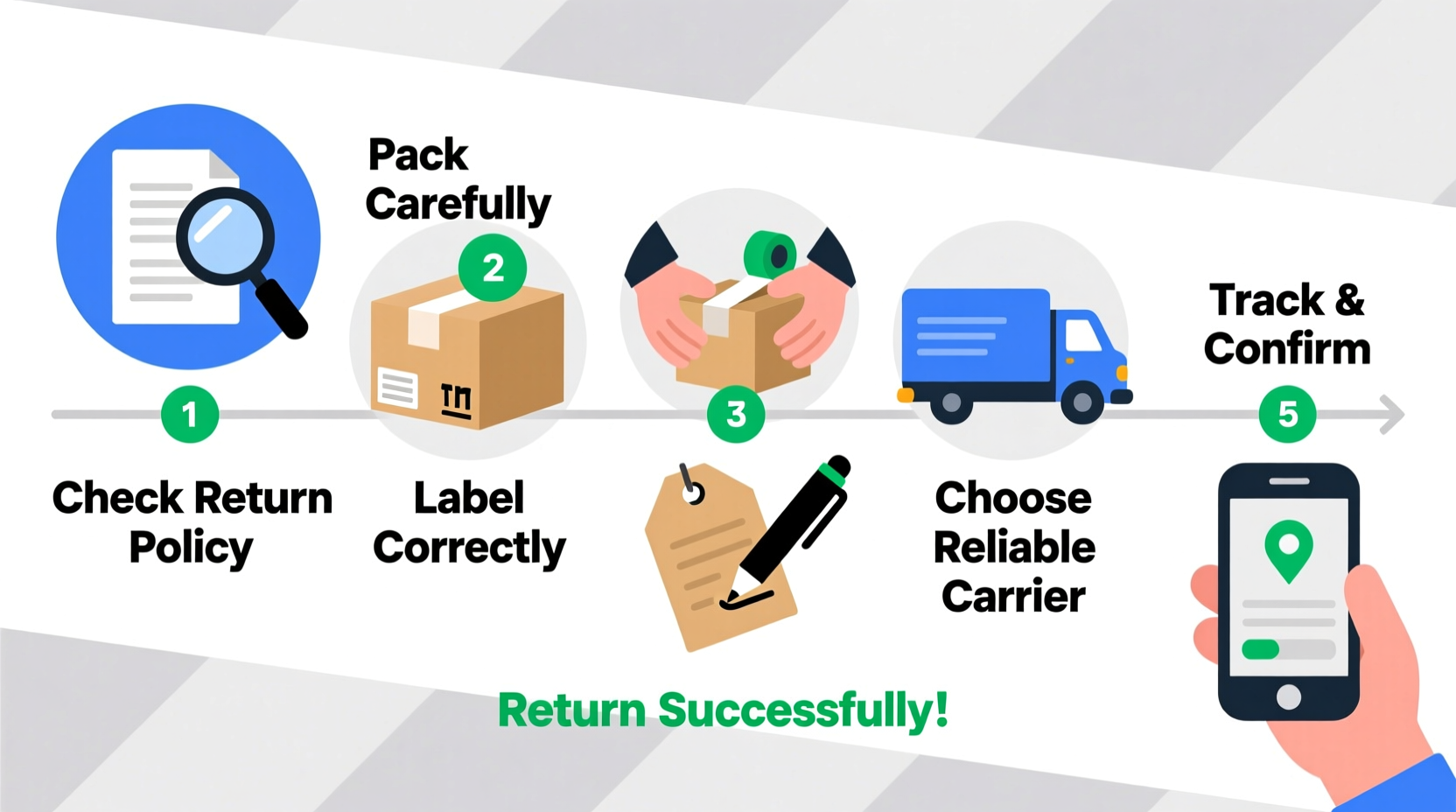
A successful return starts long before you hand over the box to a carrier. Follow this timeline to ensure nothing falls through the cracks.
- Review the return policy – Check time limits, condition requirements (e.g., tags attached), and whether a return label is provided.
- Contact customer service if needed – For damaged goods or incorrect shipments, reach out first. They may expedite approval or issue a prepaid label.
- Pack the item securely – Use the original packaging if possible. Include all accessories, manuals, and tags.
- Print and attach the return label – If using a prepaid label, make sure it fully covers the original shipping label to prevent misrouting.
- Drop off or schedule pickup – Use authorized drop-off points or request carrier pickup if available.
- Track the return shipment – Keep the tracking number until the refund processes.
- Follow up after delivery – If the refund doesn’t appear within the stated timeframe, contact support with proof of delivery.
Essential Tips for a Smooth Return Experience
Small details often make the biggest difference when returning a package. Avoid common pitfalls with these expert-recommended practices.
- Never discard packaging immediately – Hold onto boxes and inserts for at least a week after delivery, especially for high-value items.
- Use sturdy boxes – Flimsy or dented boxes increase the risk of damage during transit, which could void your return.
- Remove personal information – Before reusing a box, cover or remove old labels, addresses, and barcodes to protect your privacy.
- Take photos before shipping – Document the item’s condition and packaging. This helps if the seller claims damage upon receipt.
| Do | Don't |
|---|---|
| Include all original components (chargers, tags, instruction manuals) | Send incomplete sets or missing parts |
| Use bubble wrap or packing paper for fragile items | Ship without internal cushioning |
| Write down the tracking number and save confirmation emails | Assume the system will track everything automatically |
| Follow the retailer’s exact return instructions | Use your own method if it differs from their guidelines |
Real Example: How One Customer Avoided a Refund Denial
Sarah ordered a smartwatch online that failed to sync with her phone. She checked the website and saw returns were accepted within 30 days. However, she noticed the fine print required the original magnetic charger to be included.
Instead of rushing the return, Sarah took photos of the watch, charger, and packaging. She used a rigid mailer, taped the closure securely, and applied the prepaid label over the old one. After dropping it at a UPS Access Point, she saved the tracking number.
Two weeks later, the refund hadn’t posted. She contacted customer service with the tracking info, which showed “delivered.” Within 24 hours, the company confirmed receipt and processed her refund. Her documentation made resolution fast and simple.
“Proper packaging and recordkeeping reduce return disputes by up to 70%. A well-documented return is almost always honored.” — Mark Reynolds, Logistics Operations Manager at National Parcel Services
Checklist: Preparing Your Return
Use this checklist before sending back any item:
- ☑ Confirmed return eligibility and deadline
- ☑ Obtained return authorization or label
- ☑ Packed the item in clean, protective materials
- ☑ Included all accessories, tags, and documentation
- ☑ Removed or covered old labels and barcodes
- ☑ Attached the correct return label securely
- ☑ Recorded the tracking number and drop-off date
- ☑ Set a calendar reminder to follow up if refund is delayed
Frequently Asked Questions
Can I return a package without a receipt?
In most cases, yes—but it depends on the retailer. Major stores like Target or Best Buy may accept returns with a valid ID and credit card used for purchase. Online orders usually require order confirmation or account login. Without proof of purchase, you might only receive store credit or a lower refund value.
What happens if my return gets lost in transit?
If you used a tracked shipping method, the carrier or retailer is typically responsible. Provide the tracking history showing dispatch and attempted delivery. Most reputable companies will issue a refund if the package never reaches them, especially if you followed all instructions. Untracked returns are much harder to resolve.
Do I have to pay for return shipping?
It depends on the reason for return. If the item is defective, damaged, or not as described, the seller should cover return shipping. For buyer’s remorse or sizing issues, you may be responsible unless the retailer offers free returns. Always check the policy before shipping.
Final Thoughts: Make Returns Work for You
Returning a package doesn’t have to be a source of stress. With clear planning, attention to detail, and a systematic approach, you can navigate the process confidently—protecting your rights and ensuring timely refunds. The key is preparation: know the rules, document every step, and use reliable shipping methods. Whether you're returning one item or managing frequent e-commerce returns, these strategies will save you time, money, and frustration.




 浙公网安备
33010002000092号
浙公网安备
33010002000092号 浙B2-20120091-4
Comments
No comments yet. Why don't you start the discussion?