
Maintaining proper tire pressure is one of the most overlooked yet critical aspects of vehicle maintenance. Underinflated tires reduce fuel efficiency, compromise handling, increase stopping distances, and accelerate wear. Overinflation leads to a harsh ride and reduced traction. The solution? A reliable air pump and the knowledge to use it correctly. Whether you're at home, on the road, or at a gas station, knowing how to inflate your tires properly ensures safety, performance, and longevity. This guide walks you through everything you need to know—from selecting the right pump to avoiding common pitfalls.
Why Proper Tire Pressure Matters
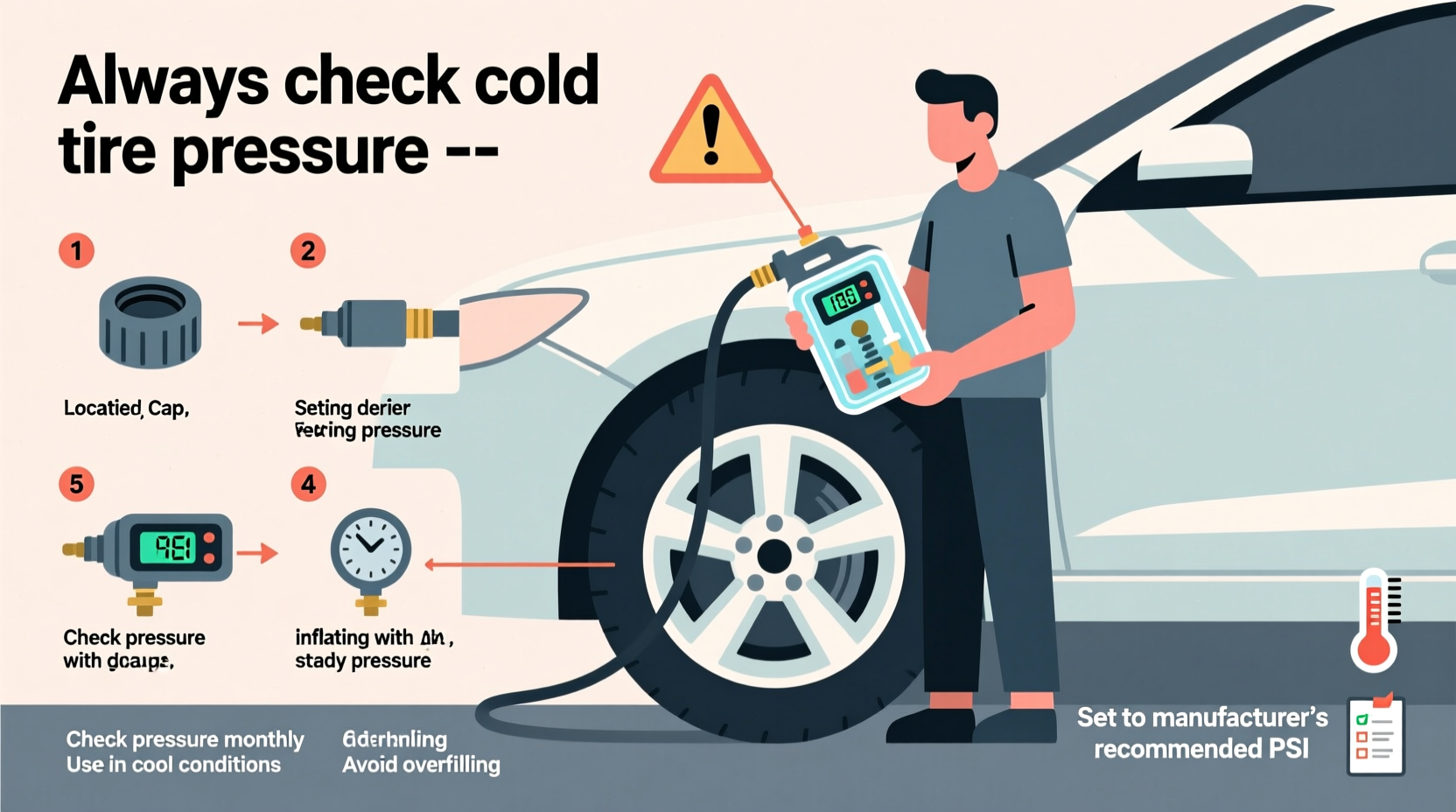
Tire pressure directly affects your vehicle’s performance, safety, and operating costs. The manufacturer's recommended PSI (pounds per square inch) is designed to balance comfort, grip, fuel economy, and tread life. According to the National Highway Traffic Safety Administration (NHTSA), underinflated tires contribute to over 700 fatalities and 40,000 injuries annually in the U.S. alone.
Air naturally escapes from tires over time—even without punctures. Temperature changes also impact pressure: for every 10°F drop in temperature, tire pressure decreases by about 1 PSI. Regular checks, ideally once a month, prevent dangerous deviations.
“Tire pressure isn’t just about inflation—it’s about maintaining the engineered balance between safety, efficiency, and durability.” — Mark Reynolds, Automotive Safety Engineer
Types of Air Pumps and Where to Use Them
Not all air pumps are created equal. Choosing the right one depends on your needs, frequency of use, and access to power sources.
| Type | Best For | Pros | Cons |
|---|---|---|---|
| Portable Battery-Powered | Emergency roadside use | Compact, cordless, easy storage | Limited runtime, slower inflation |
| AC Plug-In (Home/Outlet) | Home garage use | Faster fill, consistent power | Requires electrical outlet |
| DC Car Adapter (Cigarette Lighter) | On-the-go inflation | Uses vehicle power, portable | Slower than AC models, drains battery if engine off |
| Gas Station Compressor | Quick public top-offs | Free or low-cost, powerful | Less precise, exposed to weather |
Digital models with built-in gauges offer greater accuracy than analog versions. Some even allow preset pressure levels, automatically shutting off when reached—a feature that enhances both safety and convenience.
Step-by-Step: How to Safely Inflate Your Tires
Using an air pump correctly involves more than attaching a hose and turning it on. Follow this sequence to ensure precision and safety.
- Check current pressure: Remove the valve cap and press a tire gauge onto the valve stem. Note the reading. Repeat for all four tires and the spare if applicable.
- Find recommended PSI: Consult your vehicle’s door jamb sticker or owner’s manual. Do not rely on the number molded into the tire sidewall—that’s the maximum, not the recommended, pressure.
- Prepare the pump: If using a digital model, set the desired PSI. Ensure the hose is untangled and the nozzle fits your valve type.
- Inflate slowly: Attach the nozzle firmly to the valve. Listen for a secure seal. Inflate in short bursts, especially with high-powered compressors, to avoid overshooting.
- Recheck frequently: After 10–15 seconds, disconnect and re-measure. Repeat until you reach the target pressure.
- Replace valve caps: These small components keep dirt and moisture out of the valve core, preventing slow leaks.
- Repeat for all tires: Don’t assume all tires lose air at the same rate. Check each individually.
If you’re using a gas station air pump, coins may be required. Many accept quarters or have digital payment options. Always bring exact change or a credit card.
Common Mistakes and How to Avoid Them
Even experienced drivers make errors when inflating tires. Awareness prevents costly or dangerous outcomes.
- Overinflation: Especially common with powerful gas station compressors. Inflate in short intervals and recheck pressure often.
- Ignoring cold vs. hot tires: Measure pressure when tires are cold—meaning the car has been parked for at least three hours or driven less than a mile. Hot tires give falsely high readings.
- Using incorrect PSI values: Never use the tire’s max pressure instead of the vehicle manufacturer’s recommendation.
- Forgetting the spare: A flat spare is useless in an emergency. Check it during routine maintenance.
- Not checking for leaks: If a tire consistently loses pressure, inspect for punctures or faulty valves.
Real-World Scenario: A Weekend Trip Saved by Preparedness
Jason, a father of two, was driving to a mountain cabin when his tire pressure warning light blinked on. He pulled over and used a portable air pump he kept in his trunk. His front passenger tire was at 24 PSI—well below the recommended 32. With the pump connected to his car’s 12V socket, he brought it up gradually, checking every 10 seconds. By catching the issue early, he avoided uneven wear and maintained safe handling on winding roads. Later, he discovered a small nail in the tread. “If I hadn’t checked it right then,” he said, “I might have blown the tire on the way back.”
This scenario underscores the importance of carrying a reliable pump and knowing how to use it—not just when you remember, but when it matters most.
Frequently Asked Questions
How often should I check my tire pressure?
At minimum, once a month. More frequently in extreme temperature shifts or before long trips. Seasonal changes—especially from summer to winter—are critical times to verify inflation levels.
Can I use any air pump on my SUV or truck?
Most passenger vehicle pumps work for SUVs and light trucks, but larger tires require more air volume. Check that your pump can deliver sufficient CFM (cubic feet per minute) and reach the required PSI. Heavy-duty models are better suited for trucks with higher pressure needs.
Is it safe to leave the air pump running unattended?
No. Even automatic shut-off features can fail. Stay present during inflation to monitor pressure and prevent overinflation or overheating, especially with cheaper models.
Essential Checklist for Safe Tire Inflation
Keep this checklist handy—print it or save it on your phone for quick reference.
- ✅ Locate recommended PSI (door jamb or manual)
- ✅ Use a calibrated tire gauge to check current pressure
- ✅ Choose the right air pump for your situation
- ✅ Inspect valve stems for damage or leaks
- ✅ Inflate in short bursts, rechecking often
- ✅ Replace valve caps securely
- ✅ Record pressures and date for future tracking
Conclusion: Take Control of Your Vehicle’s Safety
Proper tire inflation is a simple task with profound implications. Using an air pump safely and efficiently isn’t just about convenience—it’s a fundamental act of vehicle stewardship. With the right tools, knowledge, and routine, you protect your investment, improve fuel economy, and most importantly, keep yourself and others safe on the road. Make tire checks part of your monthly ritual. Carry a quality pump. And never underestimate the power of a few pounds of air in the right place at the right time.




 浙公网安备
33010002000092号
浙公网安备
33010002000092号 浙B2-20120091-4
Comments
No comments yet. Why don't you start the discussion?