
Gold has long been a symbol of wealth, stability, and timeless value. Whether you've inherited jewelry, found an old coin in a drawer, or purchased something secondhand, knowing whether it's genuine is essential. While professional appraisal remains the gold standard, several reliable techniques can help you assess authenticity at home. This guide walks through scientifically sound, practical methods to identify real gold with confidence—without damaging your items or relying on guesswork.
Understanding Gold: Purity, Hallmarks, and Common Imitations
Before testing, it’s crucial to understand what you’re looking for. Real gold is measured in karats (k), which indicate purity. Pure gold is 24k, but most jewelry is alloyed with other metals like copper, silver, or nickel to improve durability. Common standards include 18k (75% gold), 14k (58.3%), and 10k (41.7%).
Genuine gold items often bear hallmarks—small stamped numbers or symbols indicating karat weight. Look for stamps like “14K,” “585” (European code for 14k), “750” (18k), or “999” (24k). However, absence doesn’t automatically mean fake; older pieces or handmade items may lack markings.
Fake gold typically falls into three categories:
- Gold-plated items: A thin layer of gold over base metal like brass or copper.
- Gold-filled: Thicker than plating but still not solid gold.
- Fool’s gold: Pyrite or other shiny minerals mistaken for gold.
Step-by-Step Guide: Proven Home Tests for Real Gold
No single test is foolproof, but combining multiple methods increases accuracy. Follow this sequence to minimize risk and maximize reliability.
- Visual Inspection: Examine under bright light and magnification. Look for wear spots where plating may have worn off, revealing a different-colored base metal underneath.
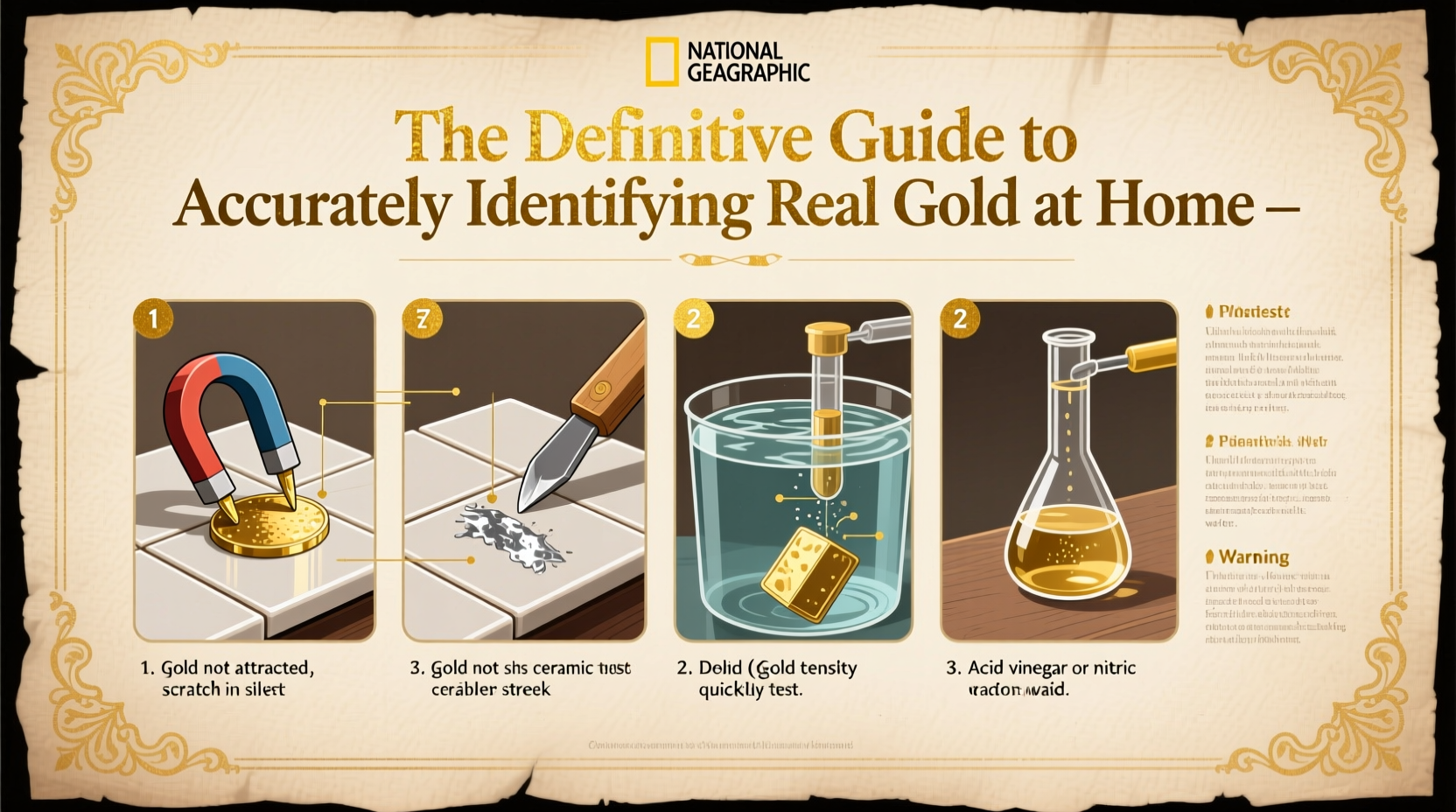
- Magnet Test: Hold a strong neodymium magnet near the item. Real gold is non-magnetic. If it attracts, it’s likely fake or plated over magnetic metal.
- Scratch Test (Streak Plate): Gently rub the item on an unglazed ceramic tile. Real gold leaves a golden-yellow streak; pyrite or brass leaves a black or greenish mark.
- Float Test: Drop the item into a glass of water. Real gold is dense and will sink immediately. Lightweight fakes may float or hover.
- Nitric Acid Test: Make a small, inconspicuous scratch and apply a drop of nitric acid. No reaction suggests real gold; green indicates base metal, milky points to silver underneath.
- Aqua Regia Test (Advanced): A mix of nitric and hydrochloric acid dissolves gold. Only use with proper safety gear and ventilation. Genuine gold will dissolve slowly, forming a yellow-orange solution.
“Home testing isn’t about replacing professionals—it’s about making informed decisions before investing in an appraisal.” — Dr. Alan Reyes, Metallurgist and Precious Metals Analyst
Comparison Table: Gold Testing Methods at a Glance
| Method | Accuracy | Speed | Risk of Damage | Best For |
|---|---|---|---|---|
| Magnet Test | Low-Medium | Instant | None | Quick screening of obvious fakes |
| Float Test | Medium | Instant | None | Dense metal verification |
| Scratch/Streak Test | Medium | 1–2 min | Minor (surface scratch) | Distinguishing pyrite from gold |
| Hallmark Check | Low (if no stamp) | Instant | None | Preliminary assessment |
| Nitric Acid Test | High | 2–5 min | Medium (etching possible) | Confirming karat-level authenticity |
| Electronic Gold Tester | Very High | Instant | None | Precise, repeatable results |
Using an Electronic Gold Tester: The Most Reliable Home Tool
For those serious about accuracy, an electronic gold tester offers lab-grade precision without damage. These handheld devices pass a small electrical current through the metal and measure conductivity—a property unique to each metal. Gold conducts electricity differently than brass, tungsten, or silver.
To use one:
- Calibrate the device according to manufacturer instructions.
- Clean the test area thoroughly.
- Place the probe tip firmly on the surface.
- Read the result: most testers display karat value directly.
These testers cost between $50 and $200 but pay for themselves if you regularly buy, sell, or inherit gold. They are especially useful for detecting tungsten-core fake gold bars, which mimic weight and density but fail conductivity tests.
Real Example: Identifying a Family Heirloom Ring
Sarah inherited a vintage ring from her grandmother, marked only with “1/20 12K GF.” Unsure if it was solid gold, she began testing. First, the magnet test showed no attraction—promising. It sank instantly in water. Under magnification, she noticed slight flaking near the band’s edge. She used a ceramic plate: the streak was golden-yellow, not black. Finally, she applied a drop of 12k nitric acid to a discreet scratch. No reaction occurred. Based on these results, she concluded the gold layer was authentic 12k, though the piece was gold-filled, not solid. Satisfied, she had it appraised and insured as a sentimental keepsake.
Common Mistakes That Lead to False Results
Even careful testers can misinterpret outcomes. Here are frequent errors to avoid:
- Testing dirty surfaces: Oils or oxidation can block acid reactions or skew electronic readings.
- Using weak magnets: Some counterfeit gold uses non-magnetic alloys like brass or tungsten, so a negative magnet test alone proves nothing.
- Over-relying on appearance: Modern fakes can look remarkably like real gold under casual inspection.
- Skipping calibration: Electronic testers require regular calibration for accurate results.
- Testing in high humidity: Moisture interferes with conductivity and acid performance.
FAQ: Your Top Questions Answered
Can vinegar tell if gold is real?
Vinegar is not a reliable test. While some claim real gold won’t react, the acetic acid is too weak to produce consistent results. It may tarnish lower-karat alloys but won’t confirm authenticity.
Does real gold leave a black mark on skin?
No. Real gold does not tarnish or rub off. If a piece leaves a black or green residue, it’s likely plated or made with reactive base metals that interact with skin acidity.
What should I do if my item passes all home tests?
If your gold passes multiple tests—especially acid or electronic verification—it’s highly likely genuine. For high-value items, consider professional assay or XRF (X-ray fluorescence) analysis for absolute certainty.
Final Checklist: How to Confidently Identify Real Gold at Home
- Check for hallmarks or stamps indicating karat weight.
- Clean the item thoroughly with mild soap and water.
- Perform the magnet test—real gold should not attract.
- Conduct the float test—gold sinks rapidly.
- Use the ceramic streak test to rule out pyrite or brass.
- Apply nitric acid to a small scratch for karat-specific verification.
- Verify with an electronic gold tester for precise results.
- Document findings and consider professional appraisal for valuable pieces.
Conclusion: Trust, But Verify
Identifying real gold at home doesn’t require a laboratory, but it does demand attention to detail and the right tools. By combining visual inspection, physical tests, and chemical or electronic verification, you can separate truth from illusion with high confidence. Knowledge protects you from scams, preserves family heirlooms, and empowers smart buying decisions. Don’t rely on luck—verify your gold with science, care, and clarity.




 浙公网安备
33010002000092号
浙公网安备
33010002000092号 浙B2-20120091-4
Comments
No comments yet. Why don't you start the discussion?