
Mother of pearl, or nacre, has long been prized for its iridescent luster and organic elegance. Found lining the insides of certain mollusk shells, it’s used in everything from luxury watch dials to intricate earrings and pendants. However, as demand grows, so does the prevalence of imitations—resin, plastic, and even painted glass made to mimic the real thing. Distinguishing genuine mother of pearl from fakes is essential for collectors, buyers, and anyone investing in fine jewelry. This guide equips you with the knowledge and tools to make informed decisions with certainty.
Understanding Mother of Pearl: Nature’s Iridescent Armor
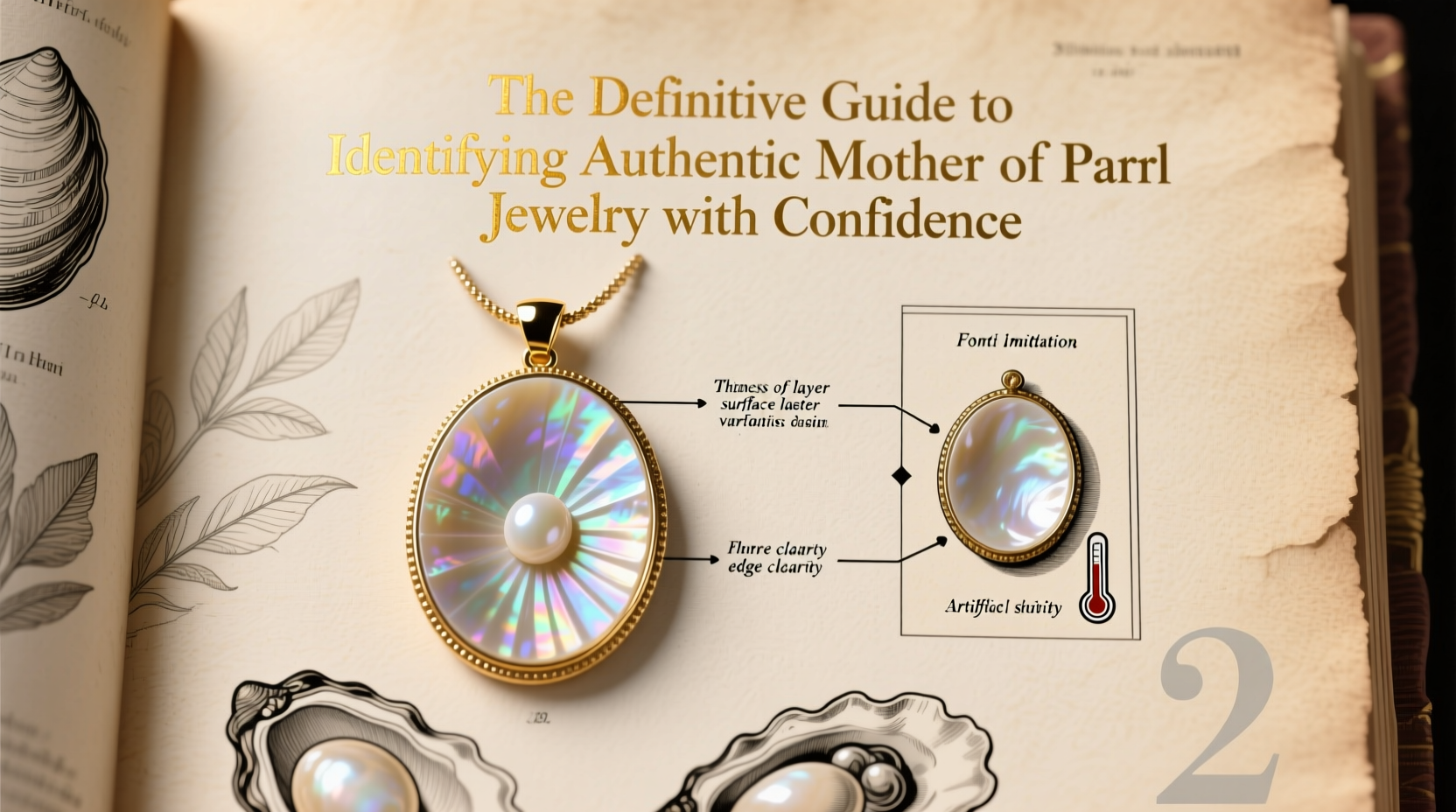
Mother of pearl forms when mollusks like oysters, abalones, and mussels secrete layers of calcium carbonate and conchiolin to coat irritants inside their shells. Over time, these microscopic layers stack into a smooth, shimmering substance that diffracts light, creating a rainbow-like play of color known as orient. Unlike pearls, which form around free-floating particles, mother of pearl is part of the shell itself and is typically flat or slightly curved.
Genuine nacre is durable but not indestructible. It scores between 2.5 and 4.5 on the Mohs hardness scale, making it softer than many gemstones. Its natural origin means no two pieces are identical—each exhibits subtle variations in color, texture, and luster.
Key Characteristics of Genuine Mother of Pearl
Recognizing real mother of pearl begins with understanding its physical and optical traits. Here are the hallmarks to look for:
- Iridescence with depth: Real nacre displays a deep, multi-dimensional glow. The colors shift subtly depending on viewing angle, revealing blues, greens, pinks, and golds beneath a creamy base.
- Natural surface texture: Under magnification, genuine mother of pearl shows a fine, tile-like structure—a signature of its layered formation. Fakes often have a uniform, overly smooth surface.
- Weight and density: Nacre is heavier than plastic or resin. If a piece feels unusually light, it may be synthetic.
- Temperature response: As an organic material, it conducts heat slowly. Hold it against your cheek—it should feel cool at first, then gradually warm.
- Edge inspection: In inlaid or cabochon pieces, examine the edges. Real mother of pearl may show thin, concentric growth lines. Fakes often have sharp, artificial seams or painted edges.
“Nacre’s beauty lies in its imperfections. Uniform perfection is a red flag.” — Dr. Lena Torres, Marine Biomineralization Researcher, University of Victoria
Step-by-Step Guide to Verifying Authenticity
Follow this systematic approach to assess any piece of mother of pearl jewelry:
- Examine under natural light: Move the piece in sunlight or near a window. Observe how the colors change. Fake versions often have static, one-dimensional shine.
- Use a 10x loupe or jeweler’s magnifier: Look for the crystalline, brickwork-like pattern unique to nacre. Plastic imitations lack this microstructure.
- Perform the scratch test (cautiously): On an inconspicuous area, gently scratch with a pin. Real mother of pearl may show minor resistance; plastic scratches easily. Avoid this test on finished surfaces.
- Check for backing materials: Many modern pieces use mother of pearl veneers glued to metal or plastic bases. Gently inspect the back—if it’s a thin layer bonded to another material, it’s still authentic, but less valuable.
- Consult a professional appraiser: For high-value items, obtain certification from a gemological lab like GIA or AGS, which can confirm origin and treatment history.
Common Imitations and How to Spot Them
Manufacturers use various materials to replicate mother of pearl’s appearance. Familiarize yourself with the most common substitutes:
| Material | How to Identify | Tell-Tale Signs of Fake |
|---|---|---|
| Plastic Resin | Uniform color, lightweight, warm to touch immediately | Lacks depth in iridescence; often has air bubbles or mold lines |
| Painted Glass | Heavy but with unnatural shine | Color sits only on the surface; scratches reveal clear glass underneath |
| Synthetic Nacre | Rare, lab-grown but chemically similar | Too perfect; lacks natural growth patterns; requires lab testing |
| Pressed Shell Powder | Feels grainy under magnification | Breaks unevenly; lacks continuous luster |
Mini Case Study: The Antique Brooch That Wasn’t What It Seemed
A collector in Portland purchased a vintage Art Deco brooch advertised as “solid mother of pearl inlay.” Priced attractively at $320, it featured geometric patterns with a soft sheen. Upon close inspection at home, she noticed the iridescence didn’t shift with movement. Using a jeweler’s loupe, she saw no structural grain—just a smooth, glossy surface. A gentle scratch on the back revealed a dark substrate beneath a thin white layer. She later confirmed it was celluloid, an early 20th-century plastic imitation. Though historically interesting, it wasn’t the nacreous treasure she expected. This case underscores why visual appeal alone isn’t enough—authenticity requires scrutiny.
Caring for Authentic Mother of Pearl Jewelry
Once you’ve verified authenticity, proper care ensures longevity. Mother of pearl is sensitive to acids, heat, and prolonged moisture.
- Clean with a soft, damp cloth after wearing. Never soak in water.
- Avoid exposure to perfumes, hairspray, and cosmetics.
- Store separately in a soft pouch to prevent scratches from harder gems.
- Refrain from ultrasonic or steam cleaning—these can damage the nacre.
“Mother of pearl is alive in memory. It remembers every acid it touches, every impact it endures. Treat it like skin, not stone.” — Rafael Mendez, Master Jewelry Conservator
Frequently Asked Questions
Can mother of pearl be repaired if chipped?
Yes, minor chips can sometimes be polished by a skilled artisan. However, deep damage often cannot be fully restored due to the layered nature of nacre. Prevention through careful wear is key.
Is all mother of pearl white?
No. While classic pieces are cream or silver-white, natural variations include peacock green (from abalone), deep blue, and rose-pink. Color depends on the mollusk species and environment.
Does real mother of pearl yellow over time?
Not significantly. Unlike plastics, genuine nacre doesn’t degrade into a yellow hue. If a piece turns yellow, it’s likely a resin imitation exposed to UV light or smoke.
Essential Checklist for Buyers
Before purchasing, run through this checklist to minimize risk:
- ✅ Examine the piece under natural and angled light for shifting iridescence.
- ✅ Use a magnifier to check for natural surface structure.
- ✅ Feel the weight and temperature—should be cool and moderately heavy.
- ✅ Inspect edges and backings for signs of lamination or bonding.
- ✅ Ask for documentation or certification if buying high-value items.
- ✅ Purchase from reputable jewelers with return policies.
Conclusion
Identifying authentic mother of pearl jewelry is both a science and an art. It demands attention to detail, an understanding of natural materials, and a willingness to question appearances. Armed with the right knowledge, you can confidently distinguish the genuine from the counterfeit, preserving both your investment and appreciation for this timeless organic gem. Whether you’re adding to a collection or selecting a meaningful gift, let authenticity be your foundation.




 浙公网安备
33010002000092号
浙公网安备
33010002000092号 浙B2-20120091-4
Comments
No comments yet. Why don't you start the discussion?