
Purchasing gold earrings is more than just selecting a style that flatters your face—it’s an investment in craftsmanship, material integrity, and long-term value. Whether you're buying for yourself, as a gift, or as part of a growing jewelry collection, knowing how to distinguish high-quality gold earrings from inferior ones is essential. Many consumers are misled by flashy appearances or misleading labels, but with the right knowledge, you can evaluate gold earrings with the confidence of a seasoned jeweler.
Understanding Gold Purity: The Karat System Explained
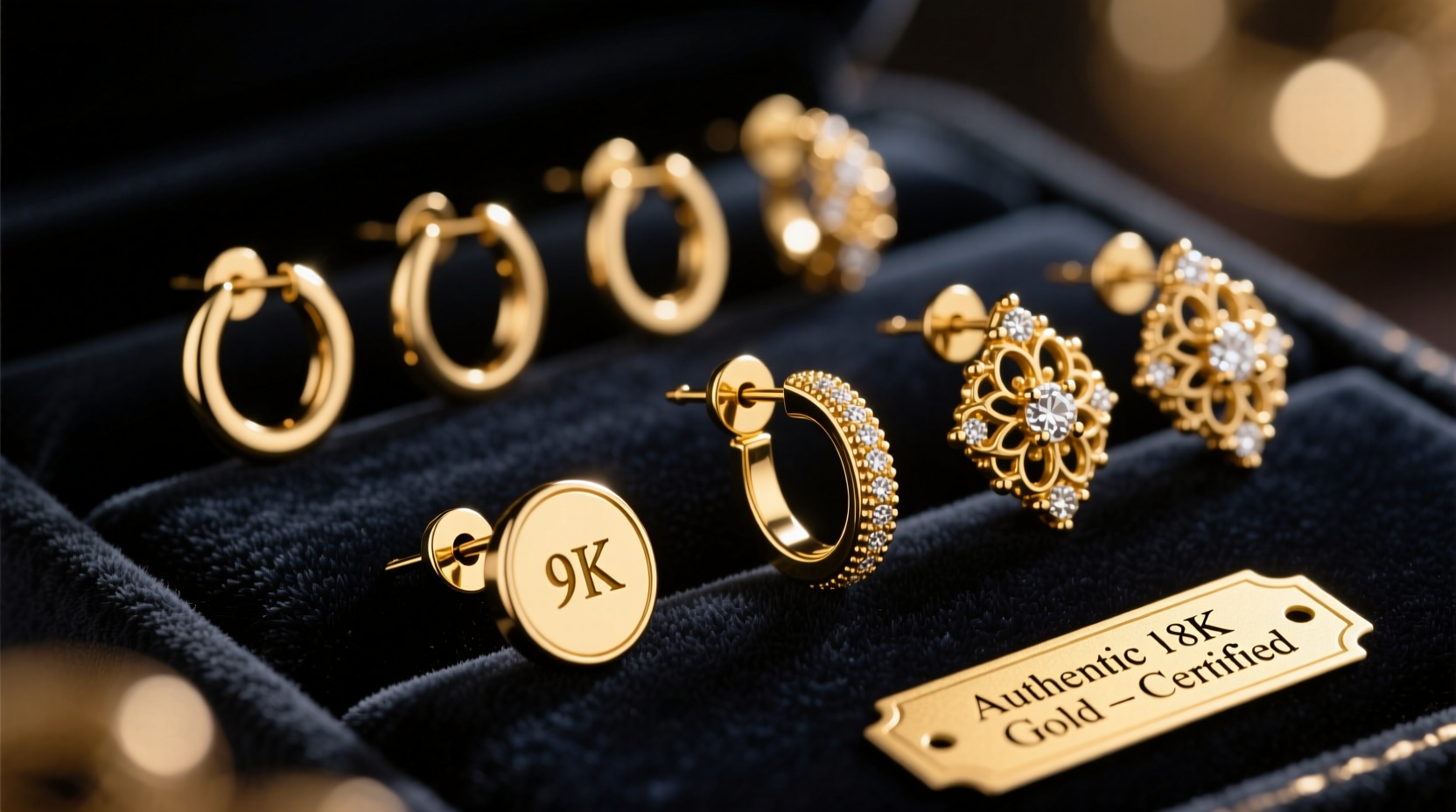
Gold purity is measured in karats (k), representing the proportion of pure gold in a 24-part alloy. For example, 24k gold is 99.9% pure, while 18k gold contains 18 parts gold and 6 parts other metals such as silver, copper, or zinc. The most common gold earring types fall between 10k and 18k.
| Karat | Gold Percentage | Durability | Suitability for Earrings |
|---|---|---|---|
| 24k | 99.9% | Soft, prone to scratching | Rarely used; best for ceremonial pieces |
| 18k | 75% | Moderate durability | Ideal for fine jewelry; rich color |
| 14k | 58.3% | High durability | Most popular for everyday wear |
| 10k | 41.7% | Very durable | Budget-friendly; lighter gold hue |
While higher karat gold offers a richer yellow tone, it’s softer and less suitable for active lifestyles. For earrings, which are less exposed to impact than rings, 14k or 18k often strikes the perfect balance between luster and resilience.
Decoding Hallmarks and Stamps
Every authentic gold earring should carry a hallmark—a tiny stamp indicating its metal content. These marks vary by country but generally follow standardized formats:
- 14K, 14KT, or 585: 14-karat gold (58.5% pure)
- 18K, 18KT, or 750: 18-karat gold (75% pure)
- 10K or 417: 10-karat gold (41.7% pure)
- GP: Gold plated – not solid gold
- GF: Gold filled – thicker than plating but still not solid
Look closely near the post, clasp, or backing of the earring using a jeweler’s loupe or magnifying glass. Absence of a hallmark is a red flag, especially in regions where hallmarking is legally required, such as the UK or EU.
“Always verify the hallmark before purchase. A missing or inconsistent stamp is one of the first signs of counterfeit gold.” — Daniel Reyes, Certified Gemologist and Appraiser
Assessing Craftsmanship and Construction Quality
Even with high-karat gold, poor craftsmanship can compromise both aesthetics and longevity. Examine the following elements under good lighting:
- Finish and Polish: High-quality gold earrings have a smooth, even surface without pitting, roughness, or discoloration.
- Soldering Joints: Check where components are joined (e.g., stone settings to base). Clean, seamless soldering indicates skilled workmanship.
- Backing and Posts: Screw backs or push backs should be sturdy and properly aligned. The posts should be securely attached and straight.
- Weight: Solid gold has noticeable heft. If earrings feel unusually light, they may be hollow or gold-plated.
For gemstone-set earrings, ensure stones are evenly spaced, securely set, and free of chips. Prong settings should fully encircle the stone without gaps.
Mini Case Study: The $300 “18K” Earrings That Were Worth $30
A client brought in a pair of “18K” gold hoop earrings purchased online for $300. The product listing claimed “solid 18k gold with diamond accents.” Upon inspection, the hallmark read “18K GP,” meaning 18k gold-plated. A scratch test revealed a base metal core, and the “diamonds” were cubic zirconia with worn prongs. The actual melt value was under $30. This case underscores the importance of verifying stamps and sourcing from reputable vendors.
Step-by-Step Guide to Authenticating Gold Earrings
Follow this practical sequence to confidently assess any pair of gold earrings:
- Inspect the Hallmark: Use a magnifier to locate and decode the stamp.
- Check the Magnet Test: Genuine gold is non-magnetic. If the earrings cling to a magnet, they contain ferrous metals and are not pure gold.
- Conduct a Scratch Test (if possible): On a testing stone, rub the earring gently and apply nitric acid. A green reaction indicates base metal; no change suggests real gold. (Best done by professionals.)
- Evaluate Weight and Feel: Compare with known solid gold pieces. Gold is dense—lightweight earrings are suspect.
- Visit a Reputable Jeweler: For peace of mind, get a professional appraisal. They can use XRF (X-ray fluorescence) analyzers for non-destructive testing.
Common Pitfalls and What to Avoid
Many buyers fall into traps based on misconceptions. Here's what not to do:
| Do’s | Don’ts |
|---|---|
| Buy from jewelers with certifications (e.g., GIA, AGS, BBB-accredited) | Trust vague terms like “gold-toned” or “luxury finish” |
| Request a certificate of authenticity for high-value purchases | Assume a high price guarantees quality |
| Use a jeweler’s loupe to inspect details | Ignore customer reviews or seller history when buying online |
| Store gold earrings separately to prevent scratches | Clean with harsh chemicals like bleach or ammonia |
Frequently Asked Questions
Are gold-plated earrings worth anything?
Gold-plated earrings have minimal intrinsic value since the gold layer is extremely thin (often less than 0.5 microns). While they offer an affordable way to enjoy gold-like appearance, they tarnish over time and cannot be resold for significant amounts. Their value is primarily aesthetic, not financial.
How can I clean my gold earrings at home safely?
Mix a few drops of mild dish soap with warm water. Soak the earrings for 15–20 minutes, then gently scrub with a soft-bristled toothbrush. Rinse thoroughly and dry with a lint-free cloth. Avoid abrasive cleaners or ultrasonic machines unless you’re certain the earrings have no porous stones or weak settings.
Can gold earrings cause allergic reactions?
Pure gold (24k) is hypoallergenic, but lower-karat gold often contains nickel or cobalt, which can trigger sensitivities. If you’re prone to reactions, choose 14k or 18k white or yellow gold labeled as nickel-free, or consider platinum posts for added safety.
Final Checklist Before Buying
- ✅ Hallmark is present and matches the described karat
- ✅ Earrings have substantial weight for their size
- ✅ No magnetic attraction
- ✅ Finish is smooth, polish is even
- ✅ Stones (if any) are secure and well-cut
- ✅ Seller provides return policy and authenticity guarantee
- ✅ Price aligns with market value for the gold content
Conclusion: Confidence Comes From Knowledge
Identifying high-quality gold earrings isn’t about luck—it’s about applying consistent, informed evaluation. From reading hallmarks to assessing construction and avoiding common scams, every step empowers you to make smarter, more satisfying purchases. Whether you’re investing in a timeless pair of studs or upgrading your everyday hoops, the right knowledge ensures you’re getting true value, not just shine.




 浙公网安备
33010002000092号
浙公网安备
33010002000092号 浙B2-20120091-4
Comments
No comments yet. Why don't you start the discussion?