
Pearl bracelets have long been cherished for their timeless elegance and natural beauty. But with the rise of imitation pearls and advanced synthetics, distinguishing genuine pearls from fakes has become increasingly difficult—even for seasoned jewelry enthusiasts. Whether you're purchasing a vintage heirloom, gifting a loved one, or expanding your own collection, knowing how to verify authenticity is essential. This comprehensive guide delivers practical, field-tested methods used by gemologists and jewelers to identify real pearl bracelets with precision.
Understanding Pearl Types: Natural vs. Cultured vs. Imitation
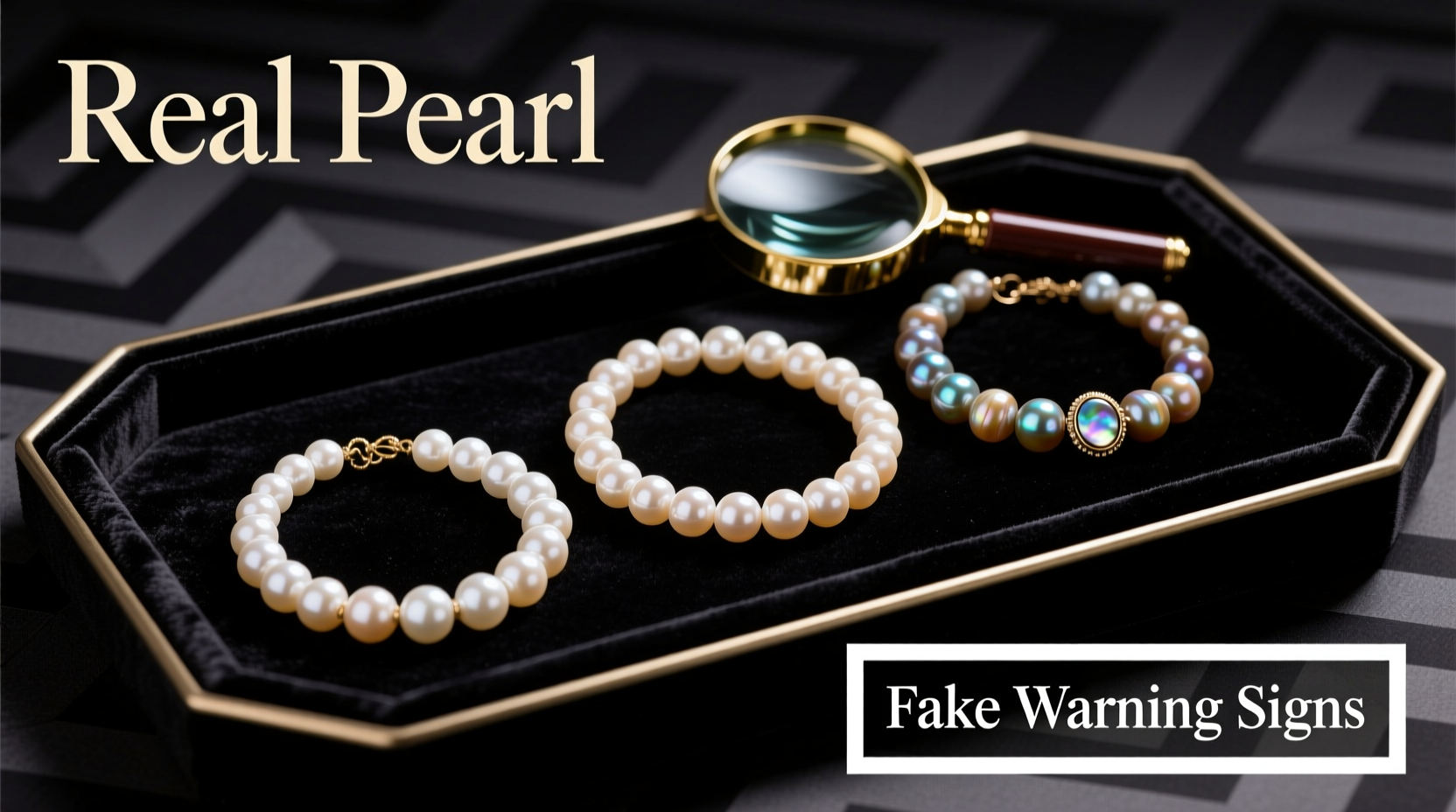
Before diving into identification techniques, it's crucial to understand the different types of pearls available in the market:
- Natural Pearls: Formed without human intervention when an irritant accidentally enters an oyster. Extremely rare and valuable.
- Cultured Pearls: Grown on pearl farms by inserting a nucleus into an oyster. These make up nearly all pearls sold today and are considered genuine.
- Imitation (Simulated) Pearls: Man-made from glass, plastic, or shell beads coated with pearlescent finishes. Not real pearls.
Most “real” pearl bracelets on the market today are cultured—not natural—but still hold value and beauty. The goal is not to dismiss cultured pearls, but to avoid being misled by imitations passed off as authentic.
Visual Inspection: First Clues of Authenticity
The initial assessment begins with careful observation under natural light. While not conclusive on its own, visual inspection can reveal red flags.
Surface Quality: Genuine pearls—especially high-quality ones—have slight irregularities, tiny bumps, or surface texture known as \"bloom.\" Perfectly smooth, flawless spheres may indicate imitation.
Luster: Real pearls reflect light with a deep, soft glow that seems to come from within. Fake pearls often have a flat, shiny surface that lacks depth. Move the bracelet under a light source; authentic pearls should show changing luster with angle shifts.
Color Consistency: Natural variation between beads is normal in real pearl bracelets. If every pearl looks identical in color, size, and sheen, it’s likely synthetic.
Do’s and Don’ts of Visual Assessment
| Action | Do | Don't |
|---|---|---|
| Lighting | Use daylight or bright white LED | Rely solely on dim or yellow-toned light |
| Magnification | Examine with a 10x loupe | Assume naked-eye clarity is sufficient |
| Comparison | Compare with known real pearls | Trust packaging or labels alone |
The Tooth Test: A Quick Field Method
One of the most accessible and widely used techniques among jewelers is the tooth test. It relies on the subtle texture difference between real and fake pearls.
- Gently rub a single pearl against the edge of your front tooth.
- Apply light pressure in a side-to-side motion.
- Observe the sensation.
A real pearl—natural or cultured—will feel slightly gritty or sandy due to microscopic layers of nacre. An imitation pearl, typically made of glass or plastic, will feel perfectly smooth.
This method is fast and effective, though not foolproof. Some high-end simulants mimic texture, so always follow up with additional tests.
Advanced Testing Methods Used by Professionals
For higher-value purchases or estate jewelry, more precise techniques offer greater certainty.
X-Ray Imaging
Jewelers and gem labs use X-rays to examine internal structure. Natural and cultured pearls show concentric growth rings, while glass beads with coating appear solid or have a uniform core. This is the most accurate way to differentiate bead-nucleated cultured pearls from imitations.
Microscopic Examination
Under magnification, real pearls display a distinctive \"nacre staircase\" pattern—layered crystalline structures resembling overlapping tiles. Simulated pearls often show brush marks, air bubbles, or a uniform coating inconsistent with organic formation.
Density and Temperature Test
Real pearls tend to feel cool to the touch initially and warm slowly. Plastics and glass heat up quickly. Additionally, genuine pearls have higher density and will sink in water, whereas many fakes float or hover.
“Pearls are formed over time through biological processes. That history leaves fingerprints—texture, luster, internal structure—that simply can’t be duplicated perfectly.” — Dr. Lena Torres, GIA Certified Gemologist
Real-World Example: Spotting a Counterfeit at an Estate Sale
Sophia attended a local estate sale hoping to find vintage jewelry. She found a beautiful white pearl bracelet labeled “antique, possibly heirloom.” The vendor claimed it was over 50 years old.
She applied the tooth test—no grittiness, just smoothness. Suspicious, she examined the clasp under a loupe and noticed tiny manufacturing seams along one pearl. Further, the luster didn’t shift with movement. She passed on the $120 asking price.
Later, she showed it to a jeweler who confirmed: the pearls were plastic imitations from the 1980s. By applying simple field tests, Sophia avoided a costly mistake.
Step-by-Step Guide to Verifying Your Pearl Bracelet
Follow this sequence to confidently assess any pearl bracelet:
- Inspect Visually: Check for uniformity, luster, and surface imperfections under natural light.
- Perform the Tooth Test: Feel for grittiness on one or two pearls.
- Check Weight and Temperature: Does it feel lightweight? Does it warm quickly?
- Examine Drill Holes: Look for chipped edges or darkened rims—signs of wear in older pieces—or telltale coating buildup in fakes.
- Seek Professional Appraisal: For pieces valued over $300, consult a certified gemologist with access to X-ray or microscopy tools.
Frequently Asked Questions
Can I use vinegar to test if pearls are real?
No. While real pearls react with vinegar due to their calcium carbonate composition, this test damages the nacre and should never be used. It’s destructive and unnecessary.
Are freshwater pearls less valuable than saltwater pearls?
Not necessarily. Value depends on luster, surface quality, shape, size, and nacre thickness—not just origin. High-quality freshwater pearls can rival Akoya or South Sea pearls in beauty and price.
Do real pearl bracelets come with certificates?
Reputable sellers often provide authentication cards or lab reports (e.g., from GIA, IGI, or AGS) for high-value pieces. However, many vintage or secondhand bracelets won’t have documentation, making independent verification essential.
Essential Checklist Before Buying a Pearl Bracelet
- ✅ Conduct the tooth test for texture
- ✅ Examine luster and surface under natural light
- ✅ Compare individual pearls for natural variation
- ✅ Inspect drill holes for coating wear or chipping
- ✅ Ask about origin: natural, cultured, or simulated?
- ✅ Request a professional appraisal for high-value items
- ✅ Avoid deals that seem too good to be true
Final Thoughts: Confidence Comes from Knowledge
Identifying real pearl bracelets doesn’t require a degree in gemology—just attention to detail and a few reliable techniques. From the subtle grit of the tooth test to the nuanced glow of true luster, genuine pearls reveal themselves to those who know what to look for. As demand for authentic jewelry grows, so does the sophistication of counterfeits. Arm yourself with knowledge, trust your senses, and don’t hesitate to seek expert validation when needed.




 浙公网安备
33010002000092号
浙公网安备
33010002000092号 浙B2-20120091-4
Comments
No comments yet. Why don't you start the discussion?