
Casio has built a global reputation for producing durable, accurate, and affordable timepieces that combine functionality with timeless design. From the rugged G-Shock to the sleek Edifice and the versatile Pro Trek, Casio watches are worn by millions—from office workers to adventurers. But their popularity has also made them a prime target for counterfeiters. Fake Casio watches flood online marketplaces and street vendors, often mimicking the look of genuine models but falling short in materials, precision, and longevity.
Knowing how to distinguish a real Casio from a counterfeit isn’t just about protecting your investment—it’s about ensuring reliability, safety, and performance. This guide equips you with the knowledge and tools to verify authenticity confidently, whether you're buying new, secondhand, or vintage.
1. Know the Key Markers of Authentic Casio Watches
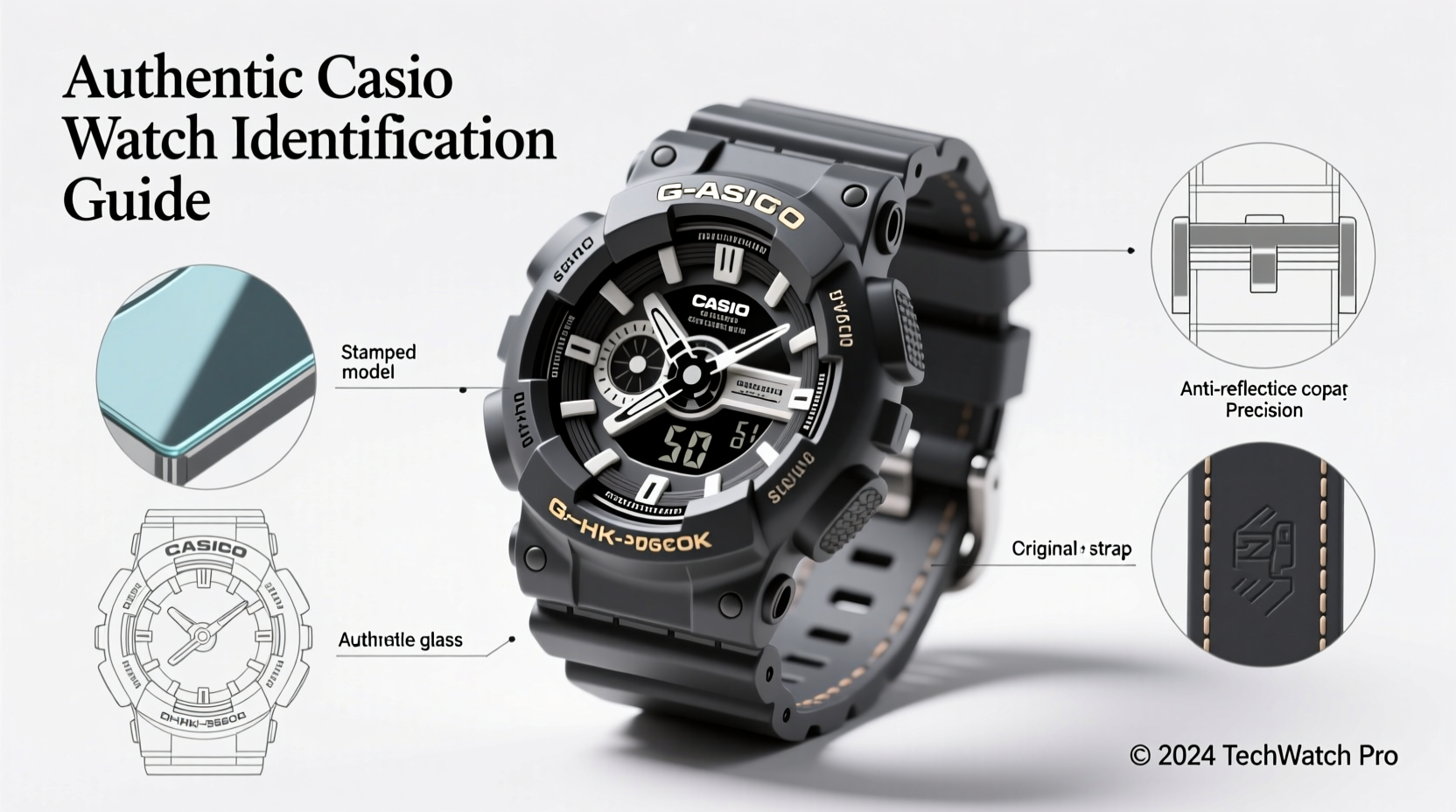
Authentic Casio watches share consistent design, material, and engineering traits across all models. Counterfeits may replicate the silhouette but often fail in subtle yet critical details.
Case Back Engraving: Genuine Casios feature deeply engraved case backs with crisp text, including the model number, country of manufacture (usually Japan, Thailand, or China), water resistance rating, and sometimes FCC or CE certification marks. The engraving is precise and evenly spaced. Fakes often have shallow, uneven, or misspelled engravings.
Model Number Accuracy: Every Casio watch has a unique model number, typically starting with letters like “DW,” “GA,” “GB,” “WVA,” or “EF.” These are always printed on the back and listed inside the user manual. Cross-reference the model number on Casio’s official website to confirm it exists and matches the design.
Dial Details: Look closely at the dial. Authentic models have perfectly aligned logos, clean printing, and consistent font weight. The Casio logo is never blurry or off-center. Hour markers and hands are precisely applied and symmetrical.
2. Verify Serial Numbers and Packaging
The packaging and documentation of a Casio watch can be as telling as the watch itself. While some sellers remove boxes, original packaging remains one of the strongest indicators of authenticity.
Serial Number Matching: A genuine Casio watch has a serial number on the case back, which should match the number on the box label and warranty card. Mismatches or missing numbers are red flags.
Box Quality: Official Casio boxes are sturdy, cleanly printed, and branded with the Casio logo and model information. Counterfeit boxes are often flimsy, use low-resolution printing, or lack proper branding.
Manual & Warranty Card: Authentic watches come with a multi-language instruction manual and a valid warranty card with a dealer stamp. Fake manuals may be poorly translated, contain typos, or omit key diagrams.
“Over 70% of counterfeit Casios we’ve examined had mismatched serials or generic packaging. Always cross-check before purchasing.” — Kenji Tanaka, Senior Watch Authenticator at TimeVerify Asia
3. Assess Build Quality and Functionality
Casio uses high-grade resins, stainless steel, and mineral or sapphire crystals depending on the model. Counterfeits cut corners with cheap plastics and inferior components.
- Weight: Genuine G-Shocks feel solid and slightly heavy due to reinforced resin and internal shock protection. Fakes are often lighter and hollow-feeling.
- Button Resistance: Buttons on real Casios require firm, deliberate presses. Counterfeit buttons are usually loose, wobbly, or overly soft.
- Bezel Movement: On models like the DW-5600 or GA-2100, the bezel should rotate smoothly with audible clicks. Imitations often have stiff or inconsistent rotation.
- Timekeeping Accuracy: Authentic Casios use quartz movements accurate to ±15 seconds per month. If a watch gains or loses minutes weekly, it’s likely fake.
| Feature | Genuine Casio | Fake Casio |
|---|---|---|
| Case Back Engraving | Deep, precise, includes certifications | Shallow, blurry, often missing details |
| Logo on Dial | Clean, centered, consistent font | Off-center, pixelated, incorrect spacing |
| Button Feel | Firm, responsive | Loose, mushy |
| Packaging | Sturdy box, manual, warranty card | Generic box, no manual or fake documents |
| Price | Retail or slightly below (used) | Unrealistically low (e.g., $20 for a G-Shock) |
4. Step-by-Step Authentication Process
Follow this systematic approach when evaluating a Casio watch, especially if buying secondhand or from third-party sellers.
- Inspect the Case Back: Check for deep engraving, correct model number, country of origin, and certification marks (FCC, CE).
- Compare Model Number: Search the model number on Casio’s official site. If it doesn’t appear, it’s not a real model.
- Check Serial Number Consistency: Match the serial on the case, box, and warranty card.
- Test Functions: Press buttons, set the time, activate backlight, and test alarms or chronographs. All functions should work smoothly.
- Weigh the Watch: Compare its weight to the official specs. A G-Shock should weigh around 50–60g; fakes are often under 40g.
- Examine the Crystal: Real Casios use flat or domed mineral crystal. Scratches easily? It might be plastic—a sign of a fake.
- Review Seller Reputation: Buy from authorized dealers or highly rated sellers with return policies.
5. Real-World Example: Spotting a Fake G-Shock GA-2100
In early 2023, a buyer in London purchased a “brand new” Casio GA-2100 Carbon Core from an online marketplace for £85—well below retail. Excited by the deal, he received the watch only to notice inconsistencies immediately.
The box lacked a barcode and felt flimsy. The manual was in broken English. Upon inspection, the case back engraving was shallow and missing the CE mark. The crown was loose, and the time drifted by two minutes within 48 hours. He compared his watch to official product images and found the hour markers were slightly misaligned.
He contacted Casio UK customer service with the model and serial number. They confirmed the serial didn’t exist in their database. The watch was a counterfeit. After filing a dispute, he recovered his money—but lost weeks in the process.
This case underscores why vigilance matters—even popular models like the “CasiOak” are frequently copied.
Common Red Flags Checklist
Use this checklist before completing any purchase:
- ✅ Model number matches Casio’s official database
- ✅ Serial numbers on case, box, and card all match
- ✅ Case back has deep, clear engraving with certifications
- ✅ Weight feels substantial and consistent with specs
- ✅ Buttons are firm and functional
- ✅ No spelling errors on dial, case, or manual
- ✅ Seller provides clear return policy and contact info
- ❌ Avoid if price seems too good to be true
Frequently Asked Questions
Can a Casio watch be authentic without a box or papers?
Yes, especially for used watches. However, absence of original packaging increases risk. In such cases, focus on model verification, build quality, and serial number legitimacy through Casio support.
Are Casio watches made in China fake?
No. Casio manufactures many models in China and Thailand. “Made in China” does not mean counterfeit. Check other authenticity markers instead.
How do I contact Casio to verify a watch?
Contact Casio’s regional customer service via their official website. Provide the model and serial number. While they may not confirm ownership, they can verify if the model and serial format are legitimate.
Final Thoughts: Confidence Comes from Knowledge
Spotting a fake Casio watch doesn’t require a degree in horology—just attention to detail and access to reliable information. By understanding what genuine craftsmanship looks like, knowing where to verify details, and trusting your instincts when something feels off, you protect yourself from deception.
Whether you’re adding a classic F-91W to your collection or investing in a high-performance G-Shock, take the time to authenticate properly. Your wrist—and wallet—will thank you.




 浙公网安备
33010002000092号
浙公网安备
33010002000092号 浙B2-20120091-4
Comments
No comments yet. Why don't you start the discussion?