
For home cooks navigating the vibrant world of Latin American and Caribbean cuisine, two foundational ingredients often appear in recipes: recaito and sofrito. Though they sound similar and are both aromatic flavor bases, they are not interchangeable. Confusing one for the other can alter the taste, color, and authenticity of a dish. Understanding the difference is essential for achieving the intended depth and character in stews, rice dishes, beans, and braises. These mixtures are more than just chopped vegetables—they are culinary cornerstones that carry regional identity, tradition, and layered flavor. Clarifying what sets recaito and sofrito apart empowers cooks to build authentic, well-balanced meals rooted in cultural practice.
Definition & Overview
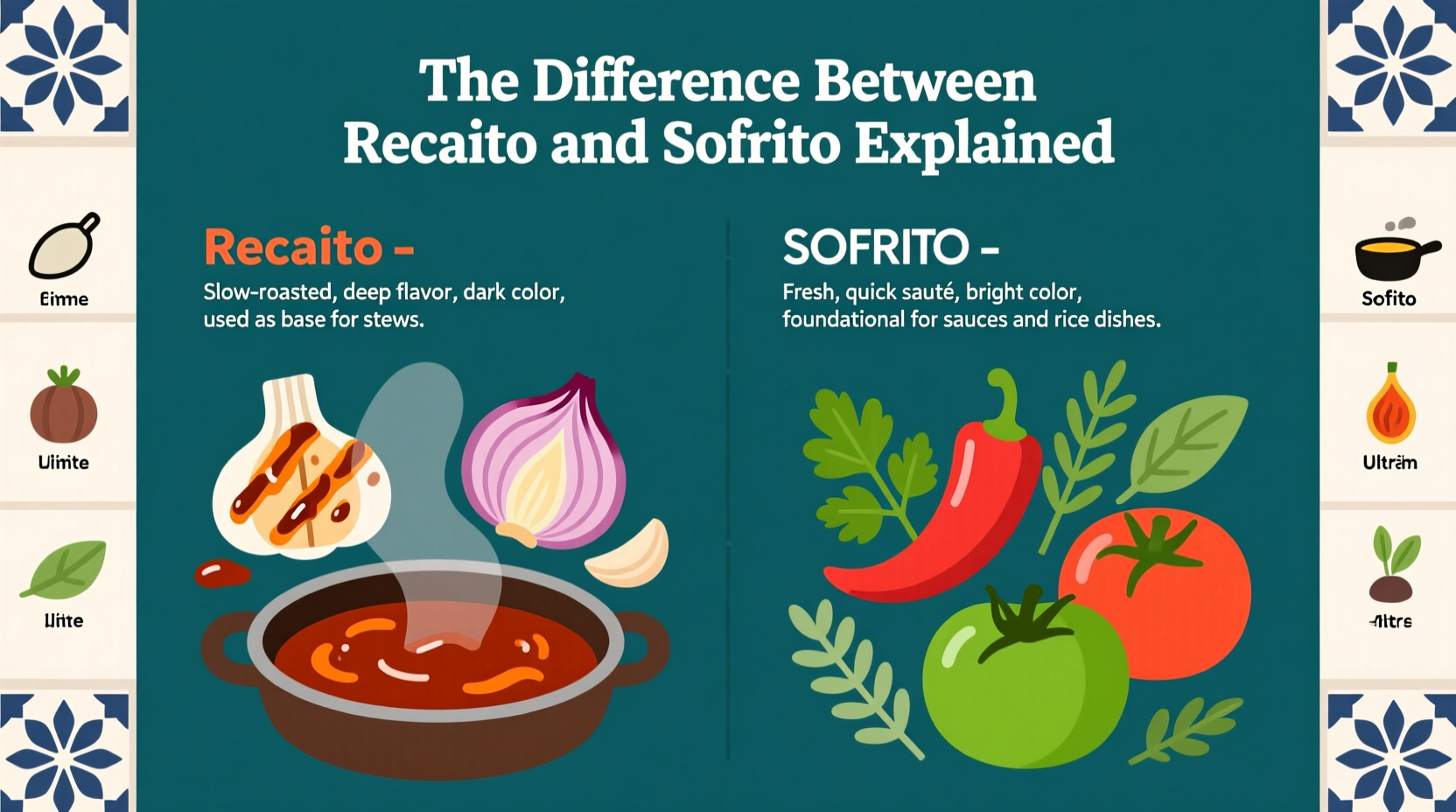
Both recaito and sofrito belong to a broader category of aromatic vegetable blends used as flavor foundations across Latin cuisines. They function similarly to a French mirepoix (onions, carrots, celery) or an Italian soffritto but differ significantly in ingredient composition, preparation, and regional application.
Recaito is a green, uncooked purée originating primarily in Puerto Rican cooking. It is built on a trinity of fresh herbs and vegetables: onions, green bell peppers, and culantro (also known as recao). The absence of tomatoes gives it a bright, grassy profile, making it ideal for dishes where a clean, herbal base is desired without added acidity or red pigmentation.
Sofrito, by contrast, is a more complex and variable mixture that appears throughout Latin America and the Caribbean with distinct regional interpretations. In Puerto Rico and Dominican Republic, sofrito typically includes tomatoes, roasted red peppers, garlic, and sometimes ham or cured pork, in addition to the core aromatics. In Spanish-speaking regions like Spain or Mexico, “sofrito” may refer to a sautéed mixture of onions, garlic, tomatoes, and peppers cooked in oil—a technique as much as an ingredient. However, in the context of Caribbean cooking, sofrito is most often a prepared paste that may be raw or lightly cooked, used to season beans, rice, stews, and meats.
While both serve as flavor amplifiers, their ingredient lists and culinary roles reflect different traditions and taste goals. Recognizing these nuances ensures that your arroz con pollo, feijoada, or sancocho develops the correct balance of savory, sweet, and herbal notes.
Key Characteristics
| Characteristic | Recaito | Sofrito |
|---|---|---|
| Primary Ingredients | Onion, green bell pepper, culantro (recao), garlic | Onion, bell pepper, tomatoes, garlic, culantro, sometimes roasted peppers, herbs, or cured meat |
| Color | Bright green | Reddish-green or deep orange-red |
| Flavor Profile | Grassy, fresh, mildly pungent, herbal | Earthy, sweet, umami-rich, slightly acidic |
| Texture | Smooth or finely chopped purée | Smooth to coarse purée, depending on region |
| Culinary Function | Raw flavor base; adds herbal brightness | Flavor foundation; adds depth, color, and richness |
| Heat Level | Mild (unless extra garlic or hot peppers added) | Mild to moderate (depends on additions) |
| Shelf Life (refrigerated) | 7–10 days | 7–14 days |
| Freezable | Yes, up to 6 months | Yes, up to 6 months |
Practical Usage: How to Use Recaito and Sofrito in Cooking
Understanding when and how to use each blend is critical to successful execution in Latin cooking. Neither is meant to be eaten on its own, but rather to be sautéed at the beginning of a recipe to release flavors and infuse oils before adding proteins, grains, or liquids.
Using Recaito
Recaito shines in dishes where a clean, green, herb-forward base is desired without the sweetness or acidity of tomatoes. Because it lacks tomatoes, it won’t turn your rice red or add tanginess—making it ideal for lighter stews, seafood preparations, or white bean dishes.
To use recaito:
- Heat 1–2 tablespoons of oil (olive, avocado, or vegetable) in a heavy-bottomed pot over medium heat.
- Add ½ to 1 cup of recaito, depending on batch size.
- Sauté for 5–7 minutes, stirring frequently, until softened and fragrant.
- Incorporate garlic (if not already included) and cook for 30 seconds more to avoid burning.
- Proceed with adding protein, broth, or rice.
Common applications include:
- Pernil seasoning base (when combined later with adobo and citrus)
- Arroz blanco (white rice) with a subtle herbal note
- Seafood soups like caldo de pescado
- Bean stews such as habichuelas guisadas (when a lighter color is preferred)
Tip: If your recipe calls for both recaito and tomato sauce (like in many Puerto Rican dishes), add the recaito first, sauté it, then stir in tomato sauce later to preserve its freshness while building layers of flavor.
Using Sofrito
Sofrito delivers a deeper, more complex foundation due to the inclusion of tomatoes and often roasted peppers or cured meats. It contributes color, body, and umami, making it ideal for hearty dishes that benefit from a richer base.
To use sofrito:
- Warm oil in a Dutch oven or large skillet over medium heat.
- Add ½ to 1 cup of sofrito (adjusting for serving size).
- Cook for 8–10 minutes, stirring occasionally, until the mixture darkens slightly and the oil begins to separate.
- Add additional aromatics like garlic or spices if not already incorporated.
- Build the rest of the dish on top—add meats, beans, or grains.
Typical uses include:
- Arroz con gandules (Puerto Rican rice with pigeon peas)
- Feijoada (Brazilian black bean stew)
- Caribbean-style sancocho (hearty stew)
- Dominican habichuelas guisadas (stewed beans)
In professional kitchens, chefs often prepare large batches of sofrito in advance, storing it in portioned containers for consistent flavor across dishes. This ensures efficiency without sacrificing depth.
Variants & Types
Neither recaito nor sofrito is monolithic—both vary widely by country, household, and even family tradition. Recognizing these variations helps cooks adapt recipes authentically.
Regional Variations of Recaito
- Puerto Rican Recaito: The standard version—onion, green bell pepper, culantro, garlic. Sometimes includes cilantro as a substitute or complement to culantro.
- Substitute-Driven Versions: In areas where culantro is unavailable, cooks may use a combination of cilantro and parsley to mimic the sharp, earthy notes.
- Garlic-Forward Recaito: Some families increase garlic content for a more pungent base, especially when using it in meat marinades.
Regional Variations of Sofrito
| Region | Key Ingredients | Distinctive Features |
|---|---|---|
| Puerto Rico | Recaito base + tomatoes, roasted red peppers, garlic, olive oil, sometimes ham | Rich, reddish paste; often includes cured pork for umami depth |
| Dominican Republic | Onion, bell pepper, tomato, garlic, oregano, vinegar | Slightly tangy; used as both seasoning and condiment |
| Spain | Onion, garlic, tomato, olive oil (sautéed) | A cooking technique; forms the base of paella and sauces |
| Mexico | Tomato, onion, garlic, chiles (e.g., guajillo or pasilla) | Darker, spicier; often cooked into moles or salsas |
| Brazil | Onion, garlic, tomatoes, green bell pepper, sometimes bacon | Called \"refogado\"; essential in feijoada and rice dishes |
These variations illustrate that “sofrito” is less a fixed recipe and more a conceptual framework: a flavorful starting point tailored to local tastes and ingredients.
Comparison with Similar Ingredients
Recaito and sofrito are often confused—not only with each other but also with other global aromatic bases. A clear comparison eliminates confusion and enhances precision in cooking.
Recaito vs. Sofrito
- Tomatoes: The most definitive difference. Recaito contains no tomatoes; sofrito almost always does.
- Color: Recaito is green; sofrito is red or orange-red due to tomatoes and roasted peppers.
- Flavor: Recaito is herbal and fresh; sofrito is deeper, sweeter, and more savory.
- Use Case: Use recaito when you want herbal lift without color change; use sofrito when you want richness, color, and body.
Recaito vs. Mirepoix
- Ingredients: Mirepoix uses onion, carrot, celery; recaito uses onion, bell pepper, culantro.
- Flavor Direction: Mirepoix is sweet and earthy; recaito is herbal and pungent.
- Cuisine: Mirepoix is French/European; recaito is Caribbean/Latin.
Sofrito vs. Soffritto (Italian)
- Preparation: Italian soffritto is sautéed as a technique; Caribbean sofrito is often a pre-made paste added during cooking.
- Ingredients: Soffritto includes carrots and celery; Caribbean sofrito rarely does.
- Function: Both build flavor, but sofrito also contributes color and umami from tomatoes and cured meats.
Sofrito vs. Pisto (Spanish Vegetable Stew)
- Form: Pisto is a finished dish (similar to ratatouille); sofrito is a seasoning base.
- Usage: Sofrito is used in small quantities; pisto is served as a main or side.
\"In Puerto Rican kitchens, the choice between recaito and sofrito isn't arbitrary—it's a deliberate decision based on the dish’s final character. Using the wrong one is like substituting basil for oregano in an Italian sauce. The dish might still work, but it won’t be authentic.\" — Chef Marisol Núñez, Culinary Instructor at Instituto del Café y Cocina Latina
Practical Tips & FAQs
Can I substitute recaito for sofrito (or vice versa)?
You can, but with caveats. Replacing sofrito with recaito will result in a paler, less rich dish lacking sweetness and umami. To compensate, add tomato paste and a pinch of sugar. Conversely, using sofrito instead of recaito will tint your dish red and add acidity—fine for stews, but undesirable in white rice or light seafood dishes.
How do I make recaito or sofrito at home?
Homemade versions are superior to store-bought. For recaito: blend 1 large onion, 1 green bell pepper, 1 cup packed culantro leaves, and 4–6 garlic cloves with 2 tablespoons oil until smooth. For sofrito: add 1–2 ripe tomatoes and ½ roasted red pepper to the recaito base, blending until emulsified.
Is culantro the same as cilantro?
No. Culantro (Eryngium foetidum) has long, saw-toothed leaves and a stronger, more persistent aroma than cilantro. It holds up better during long cooking. If unavailable, use ¾ cup cilantro + ¼ cup flat-leaf parsley as a substitute.
Can I freeze recaito and sofrito?
Yes—and you should. Freeze in ice cube trays (1 tablespoon per cube), then transfer to freezer bags. Use directly from frozen; no need to thaw. Properly stored, they last up to six months.
What dishes absolutely require sofrito?
Authentic arroz con gandules, feijoada, and Dominican mondongo (tripe soup) rely on sofrito for their signature depth. Omitting it results in a flat, one-dimensional flavor.
Why does my sofrito taste bitter?
Bitterness usually comes from overcooking or burning the garlic. Always sauté sofrito over medium heat, never high. If using raw garlic, add it after the first few minutes of cooking the base.
Are there vegetarian/vegan versions?
Traditional Puerto Rican sofrito sometimes includes ham or salted pork. For vegan versions, omit animal products and boost umami with tomato paste, mushrooms, or smoked paprika.
Pro Tip: Roast your bell peppers and tomatoes before blending into sofrito. This deepens sweetness and complexity, mimicking the slow-cooked richness found in restaurant-style versions.
Summary & Key Takeaways
Recaito and sofrito are both essential to Latin and Caribbean cooking, but they are not the same. Recaito is a green, tomato-free purée of onion, green pepper, and culantro, prized for its fresh, herbal quality. Sofrito is a richer, reddish blend that includes tomatoes and often roasted peppers or cured meats, delivering depth, color, and umami.
The key distinctions lie in:
- Ingredients: Tomatoes define sofrito; their absence defines recaito.
- Flavor: Recaito is bright and grassy; sofrito is savory and rounded.
- Use: Choose recaito for light, herbal bases; choose sofrito for hearty, colorful stews and rice dishes.
- Storage: Both freeze exceptionally well, making batch preparation a smart kitchen strategy.
Mastering the use of these two bases elevates everyday cooking into something culturally resonant and deeply flavorful. Whether you're simmering a pot of beans or roasting a holiday pernil, knowing which one to reach for—and why—makes all the difference.
Next Step: Try making both recaito and sofrito this week. Store them in labeled jars or freezer cubes. Use them in separate rice dishes to taste the contrast firsthand—this practical experiment will cement your understanding far better than any explanation.




 浙公网安备
33010002000092号
浙公网安备
33010002000092号 浙B2-20120091-4
Comments
No comments yet. Why don't you start the discussion?