
In the world of search engine optimization, few topics generate as much debate as backlinks. For years, they’ve been hailed as one of Google’s top ranking factors—yet many site owners struggle with a simple question: How many backlinks are actually necessary to see real improvements in rankings? The answer isn’t a number—it’s a strategy. Understanding quality, relevance, and velocity is far more important than chasing a magic count.
The Role of Backlinks in Modern SEO
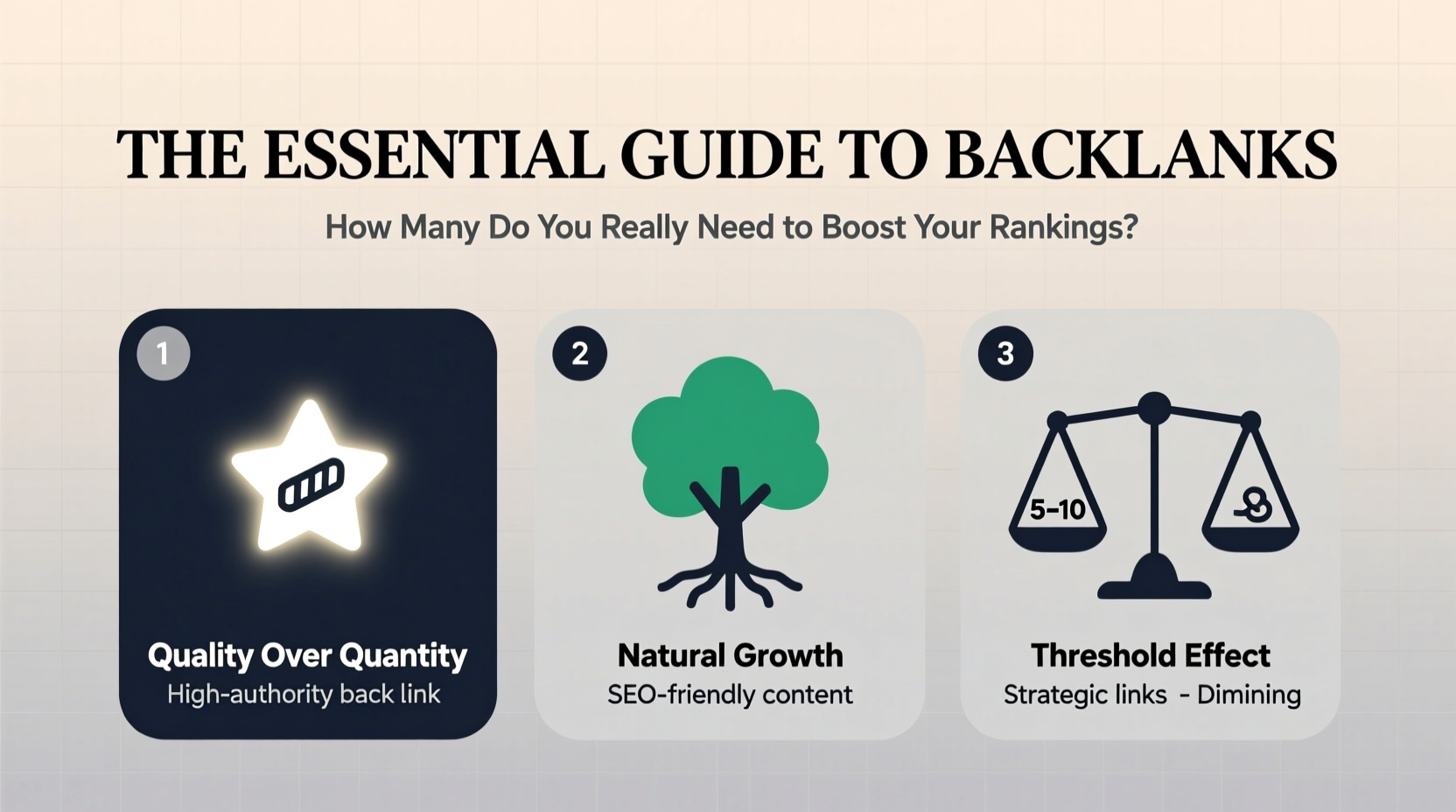
Backlinks—hyperlinks from other websites pointing to yours—are like digital votes of confidence. Search engines interpret them as signals that your content is valuable, trustworthy, and worth referencing. While Google's algorithm has evolved significantly over the past decade, backlinks remain a core component of its ranking system.
However, not all backlinks carry equal weight. A single link from a high-authority, industry-relevant site like Harvard.edu or Forbes.com can outweigh hundreds of links from low-quality directories or spammy blog networks. This shift reflects Google’s focus on E-E-A-T (Experience, Expertise, Authoritativeness, Trustworthiness), where context matters more than volume.
“Backlinks are still one of the strongest signals we have for assessing a page’s credibility. But it’s not about quantity—it’s about who’s vouching for you.” — John Mueller, Webmaster Trends Analyst at Google
How Many Backlinks Do You Really Need?
There is no universal number. Some pages rank on competitive terms with fewer than 10 high-quality backlinks, while others with thousands of poor-quality links remain buried in search results. What matters most is the profile’s overall health and strategic alignment with your niche.
A 2023 study by Ahrefs analyzing over 1 million search results found that the average first-page result has around 36 backlinks. However, nearly 30% of ranking pages had 10 or fewer. In less competitive niches, even 3–5 authoritative links can be enough to gain traction.
The key insight? Focus shifts from “how many” to “which ones.”
Quality vs. Quantity: Building a Sustainable Link Profile
Chasing high-volume link schemes may deliver short-term gains, but Google’s algorithms are designed to detect unnatural patterns. Penalties or deindexing can follow aggressive tactics like buying links, participating in PBNs (Private Blog Networks), or mass guest posting with spun content.
Instead, aim for a natural-looking backlink velocity—the rate at which you acquire new links. Sudden spikes without editorial justification raise red flags. A steady, organic growth pattern aligned with content publishing cycles appears more authentic to search engines.
Here’s what defines a high-quality backlink:
- Relevance: The linking site operates in a related field or topic area.
- Authority: Measured by metrics like Domain Rating (DR) or Authority Score (AS), indicating trustworthiness.
- Editorial Context: The link is placed naturally within informative content, not hidden in footers or widgets.
- Diversity: Links come from multiple domains across different geographies and content types (blogs, news, .edu, .gov, etc.).
- Anchor Text Variation: Avoid over-optimizing exact-match keywords; use branded, generic, and partial-match anchors.
Do’s and Don’ts of Backlink Acquisition
| Do’s | Don’ts |
|---|---|
| Create shareable, data-driven content that naturally attracts links | Buy links from third-party vendors or link farms |
| Reach out to journalists via HARO (Help a Reporter Out) | Automate guest post submissions with low-quality content |
| Earn mentions through original research or expert commentary | Use keyword-stuffed anchor text in every link |
| Monitor your backlink profile regularly using tools like Ahrefs or Moz | Ignore toxic backlinks that could trigger penalties |
Real Example: How One Site Gained Top Rankings with Fewer Than 20 Links
Consider a small B2B SaaS company offering time-tracking software for remote teams. Their main product page initially ranked on page three for “best time tracker for remote workers.” After conducting original research on productivity trends across 12 countries, they published a comprehensive report titled “The State of Remote Work in 2024.”
They distributed the findings via HARO, reaching tech journalists at outlets like TechCrunch and CNET. Within six weeks, they earned 17 editorial backlinks—12 from domains with DR 70+—including two from .edu institutions citing the data in academic articles.
Despite having fewer than 20 total referring domains, the page climbed to position #2 on Google within two months. Traffic increased by 320%, and conversions rose by 67%. The success wasn’t due to volume—it was due to relevance, authority, and newsworthiness.
Step-by-Step Guide to Building Effective Backlinks
Follow this timeline to build a sustainable, high-impact backlink strategy over 90 days:
- Week 1–2: Audit Your Current Profile
Use a tool like Ahrefs or SEMrush to analyze existing backlinks. Identify and disavow toxic or spammy links using Google Search Console. - Week 3–4: Develop Link-Worthy Content
Create assets such as original studies, interactive tools, expert roundups, or in-depth guides that solve real problems. - Week 5–6: Outreach Preparation
Compile a list of relevant bloggers, journalists, and influencers. Personalize outreach emails highlighting mutual value. - Week 7–10: Execute Outreach Campaigns
Submit to HARO, pitch guest posts, and promote content on professional networks like LinkedIn or niche communities. - Week 11–12: Track & Refine
Measure new backlinks, referral traffic, and keyword movement. Adjust messaging based on response rates.
Frequently Asked Questions
Can I rank well without any backlinks?
Possibly, but only for very low-competition or long-tail keywords. Most competitive terms require some level of external validation. Even strong on-page SEO and technical performance usually need at least a few quality backlinks to break into the top 10.
Are internal links as powerful as backlinks?
No. Internal links help distribute page authority and improve crawlability within your site, but they don’t provide the same external trust signal that backlinks do. Backlinks act as third-party endorsements, which search engines value more highly.
How fast should I expect results after gaining backlinks?
Most SEO professionals observe measurable changes in rankings within 4–12 weeks, depending on crawl frequency, domain authority, and content freshness. High-authority sites may see faster results due to quicker indexing.
Final Thoughts: Focus on Value, Not Volume
The obsession with “how many backlinks” misses the point. Google doesn’t reward link counts—it rewards credibility. A handful of relevant, editorially earned links from trusted sources will always outperform thousands of artificial or irrelevant ones.
Your goal shouldn’t be to accumulate links, but to create content so useful, insightful, or groundbreaking that people naturally want to reference it. When you shift from manipulation to contribution, backlinks become a byproduct of excellence—not a target.




 浙公网安备
33010002000092号
浙公网安备
33010002000092号 浙B2-20120091-4
Comments
No comments yet. Why don't you start the discussion?