
Arriving at the right time for a job interview is more than just a matter of punctuality—it's a strategic decision that affects your mindset, performance, and first impression. Too early, and you risk appearing overeager or inconveniencing the hiring team. Too late, and you’ve likely lost the opportunity before speaking a word. The sweet spot lies in careful planning, self-awareness, and understanding workplace culture.
While common advice often suggests arriving 10–15 minutes early, the reality is more nuanced. The \"ideal\" arrival time depends on logistics, company norms, and personal readiness. This guide explores how to strike the perfect balance between timeliness and preparedness, ensuring you walk into the room composed, confident, and ready to perform at your best.
Why Timing Matters Beyond Punctuality
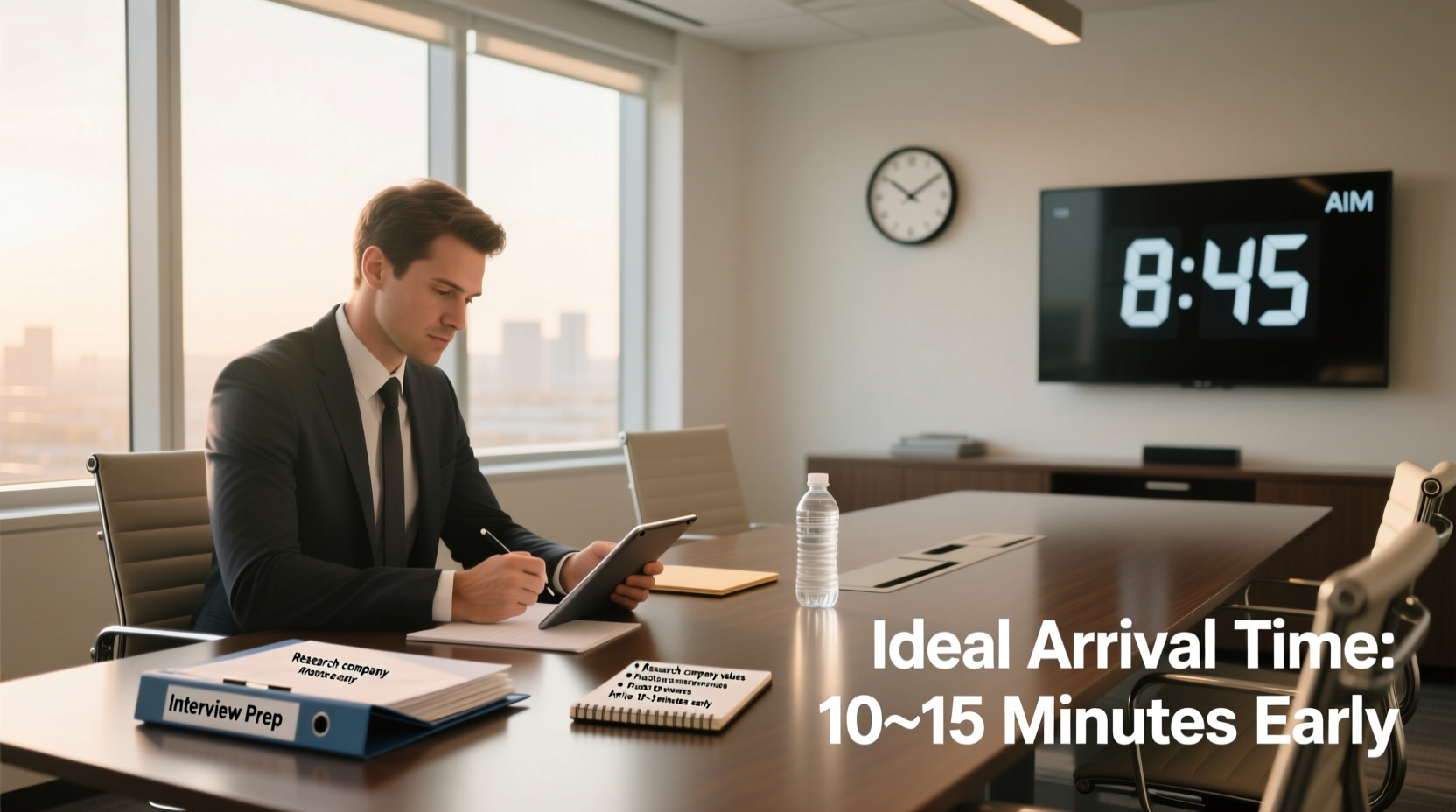
First impressions are formed within seconds. A well-timed arrival signals reliability, respect for others’ schedules, and organizational competence—qualities employers value across roles. However, timing also impacts your internal state. Rushing in flustered or waiting too long in the lobby can increase stress, disrupt focus, and diminish performance.
Research from the Society for Human Resource Management (SHRM) shows that candidates who arrive between 10 and 14 minutes early are perceived as both professional and composed. Those who arrive more than 20 minutes early are sometimes seen as disorganized or anxious, while those arriving late—even by five minutes—are often viewed as disrespectful or unreliable.
“Being on time shows you’re dependable. Arriving *just right* shows you’re thoughtful.” — Laura Simmons, Executive Career Coach and HR Consultant
The Ideal Arrival Window: When to Show Up
The optimal arrival time for most in-person interviews is **10 to 15 minutes before the scheduled start**. This window allows you to:
- Check in with reception or security
- Use the restroom if needed
- Collect your thoughts and review notes
- Engage in brief small talk with staff
- Be led to the interview room without delay
For virtual interviews, \"arrival\" means being fully logged in, camera on, and ready to begin exactly at the scheduled time. Logging in 3–5 minutes early is advisable to troubleshoot tech issues without cutting into the meeting.
Step-by-Step Timeline: From Departure to Doorstep
Planning backward from the interview start time ensures precision. Follow this timeline to avoid last-minute surprises:
- 72 hours before: Confirm the interview time, location, dress code, and contact person. Save directions and parking details.
- 24 hours before: Charge devices, lay out clothes, and pack your bag (resume copies, notebook, ID, portfolio).
- Day of – 90 minutes before (in-person): Leave home with buffer time for traffic, transit delays, or wrong turns.
- 30 minutes before: Arrive in the vicinity. Park, pay for transit, or find a quiet place to wait.
- 15 minutes before: Enter the building and check in.
- 10 minutes before: Be seated in the waiting area, phone on silent, materials ready.
- Interview starts: Greet the interviewer with a smile and firm handshake.
Do’s and Don’ts: Navigating Arrival Etiquette
| Do’s | Don’ts |
|---|---|
| Arrive 10–15 minutes early | Arrive more than 20 minutes early |
| Call ahead if delayed due to unforeseen circumstances | Apologize excessively upon arrival |
| Bring extra copies of your resume | Bring loud snacks or drinks into the lobby |
| Use waiting time to breathe and center yourself | Sit glued to your phone or keep checking the clock |
| Inform reception politely of your arrival | Wander around the office unattended |
Preparation Tips That Enhance Your On-Time Performance
Punctuality is only effective when paired with mental and logistical readiness. Consider these key preparation strategies:
- Rehearse the route: Drive or map the commute during similar traffic conditions a day or two prior.
- Dress the part the night before: Avoid morning decisions that add stress.
- Prepare a pre-interview checklist: Include documents, references, questions for the interviewer, and emergency contacts.
- Practice mindfulness: Use deep breathing or visualization techniques during your final wait to stay calm.
- Have a backup plan: Know alternate routes, have charger and hotspot available, and save the HR contact number.
Real-World Scenario: The Over-Early Candidate
Jamal had secured an interview with a mid-sized tech startup. Excited and eager, he left home two hours early to account for potential delays. He arrived at the office 35 minutes before his scheduled time. With no place to wait comfortably nearby, he sat in the lobby, growing increasingly nervous as time passed. The receptionist, handling multiple tasks, seemed mildly annoyed by his prolonged presence. When the interviewer finally emerged, Jamal fumbled his greeting, appearing tense and slightly apologetic. Though qualified, he didn’t advance to the next round. Feedback later noted he “seemed anxious and possibly unprepared for workplace dynamics.”
The lesson? Early arrival, without proper management, can backfire. Had Jamal waited nearby and entered only at the 15-minute mark, he would have preserved his composure and made a stronger impression.
FAQ: Common Interview Timing Questions
What if I’m running late due to traffic or transit issues?
Call or email the hiring contact as soon as possible. Apologize briefly, state your expected arrival time, and express appreciation for their flexibility. Most professionals understand that delays happen, but accountability matters.
Should I arrive earlier for panel interviews or in-house assessments?
Yes. For interviews involving multiple people or extended sessions (e.g., technical tests or lunch meetings), aim to arrive 15–20 minutes early to accommodate longer check-in processes and setup time.
Is it worse to be five minutes early or five minutes late?
Five minutes late is significantly worse. Even minor lateness can suggest poor time management or lack of commitment. Five minutes early is acceptable but not ideal—use the extra time to collect yourself rather than announcing your presence too soon.
Final Checklist: Are You Truly Ready?
Before leaving for your interview, run through this concise checklist:
- ✅ Confirmed date, time, location, and contact info
- ✅ Planned and tested the commute
- ✅ Prepared professional attire and groomed appropriately
- ✅ Printed resumes, references, and work samples (if applicable)
- ✅ Charged phone and laptop (for virtual or hybrid interviews)
- ✅ Researched the company and rehearsed key talking points
- ✅ Identified a quiet waiting area near the venue
- ✅ Mentally rehearsed walking into the room confidently
“Confidence doesn’t come from showing up first. It comes from showing up *ready*.” — Marcus Tran, Talent Acquisition Lead at Innovatech Solutions
Conclusion: Master the Moment Before the Interview Begins
The moments before an interview set the tone for everything that follows. By aiming for the 10-to-15-minute arrival window and pairing it with thorough preparation, you demonstrate professionalism, self-awareness, and respect. True success isn’t measured solely by answering questions well—it begins with how you manage the unseen details.
Your next opportunity is waiting. Plan your journey, control what you can, and arrive not just on time—but in command of your presence. That’s how careers are won.




 浙公网安备
33010002000092号
浙公网安备
33010002000092号 浙B2-20120091-4
Comments
No comments yet. Why don't you start the discussion?