
The Netflix series 13 Reasons Why, based on Jay Asher’s novel, sparked global conversation about mental health, trauma, and accountability. At the heart of its emotional impact is a tapestry of deeply layered characters, each connected to Hannah Baker’s story through personal choices, missed opportunities, and unresolved conflicts. While the show centers on her suicide and the cassette tapes she leaves behind, understanding “the list” requires more than just knowing who received a tape—it demands context. The real weight lies not in names, but in what those names represent: moments of silence, aggression, complicity, or indifference.
This article unpacks the significance of character context in 13 Reasons Why, exploring how individual backstories, relationships, and moral complexities shape the narrative. By examining motivations beyond surface-level blame, we gain insight into how systemic failures and interpersonal dynamics contribute to tragedy—and why empathy matters even when judgment seems justified.
Why Context Matters in “The List”
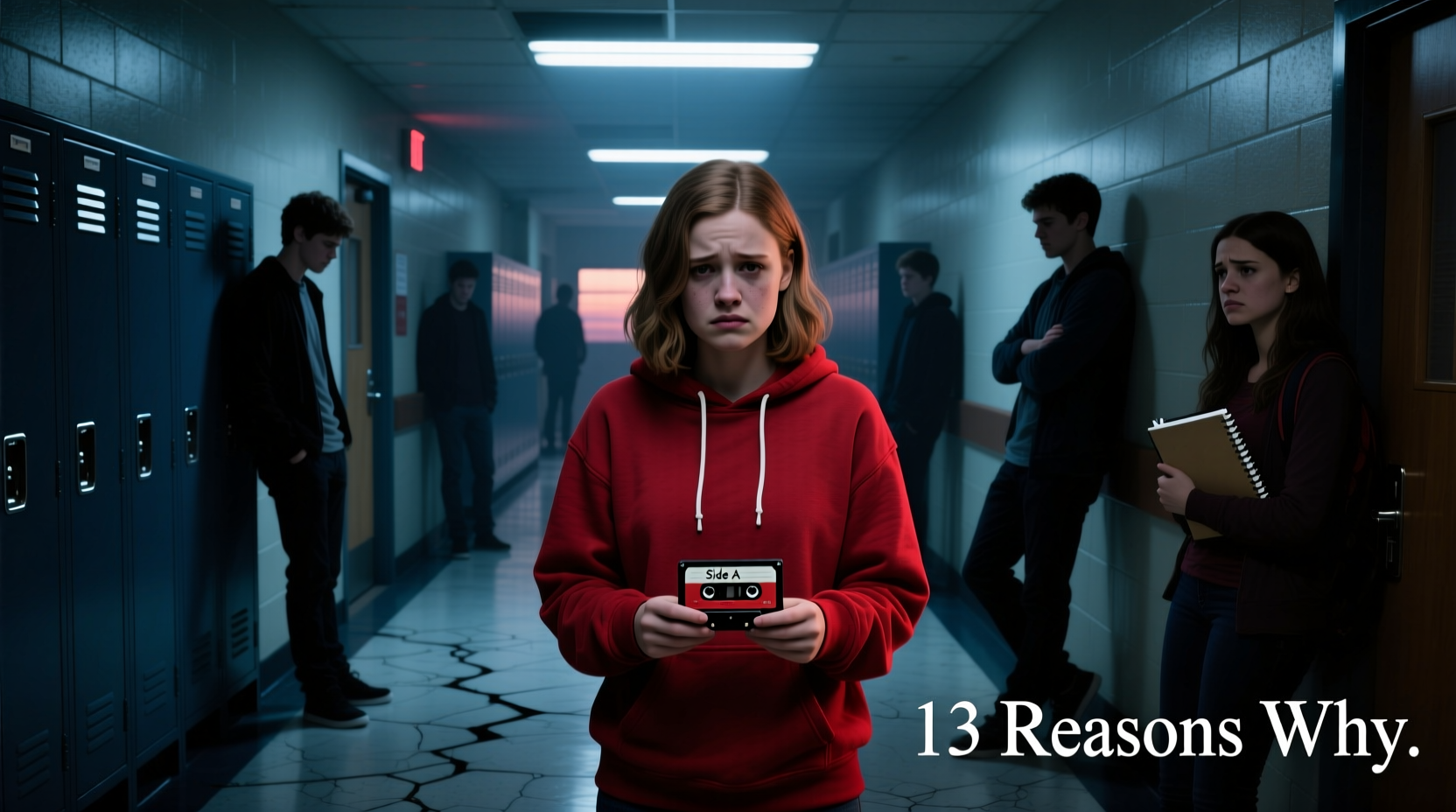
Hannah Baker’s tapes are often interpreted as an accusation. Each episode assigns responsibility to someone on “the list,” building tension around who did what and how it hurt her. But reducing these characters to villains or scapegoats misses the point. The series uses their stories to illustrate how small actions accumulate into emotional devastation. Without context—personal struggles, social pressures, fear, ignorance—the narrative risks promoting retribution over reflection.
For example, Alex Standall’s role isn’t just that of a bully who creates a \"best and worst\" list. His own insecurity, desire for peer approval, and lack of emotional maturity play critical roles. Similarly, Justin Foley isn’t merely the first person on the list; he’s a survivor of abuse trying to navigate a world where vulnerability is punished. These layers don’t excuse harm, but they deepen our understanding of how pain propagates.
Character Breakdown: Beyond the Tapes
Each person on Hannah’s list receives one or more sides of a cassette, detailing how their actions contributed to her downward spiral. Below is a contextual analysis of key figures—not to justify harm, but to humanize the complexity behind their choices.
Clay Jensen – The Listener Who Couldn’t Act
Clay is both protagonist and witness. Unlike others, he never directly harms Hannah—but his inability to intervene, speak up, or comfort her when needed becomes part of the larger failure. His internal struggle reflects a common reality: good intentions aren’t always enough without courage. Clay’s journey shows that passive allyship can still have consequences.
Justin Foley – Survival Over Empathy
As the first entry, Justin sets the tone. His choice to lie about Bryce raping Jessica—a lie that indirectly protects Bryce and silences victims—stems from fear of exposure and rejection. Having endured sexual abuse himself, Justin equates masculinity with silence. His arc illustrates how trauma cycles forward when unaddressed.
Bryce Walker – Privilege as Armor
Bryce embodies unchecked power. Wealthy, athletic, and socially dominant, he operates under the assumption that consequences won’t touch him. His assaults on multiple women—including Jessica and Chloe—are enabled by institutional protection and victim-blaming culture. Yet the show later reveals glimpses of guilt, suggesting even abusers exist within broken systems.
Skye Miller – The Parallel Survivor
Though not on the list, Skye mirrors Hannah’s isolation. Her quiet withdrawal and eventual departure highlight how easily at-risk youth slip through cracks. Clay’s late realization that Skye needs help underscores a recurring theme: we often notice suffering too late.
Do’s and Don’ts When Interpreting Character Motivations
| Do | Don't |
|---|---|
| Consider systemic factors like toxic masculinity, bullying culture, and lack of mental health resources | Label characters as purely “good” or “evil” |
| Analyze how trauma influences behavior across generations (e.g., Tony’s family struggles) | Ignore off-screen contexts that shape decisions |
| Recognize that intent doesn’t negate impact (e.g., Alex didn’t mean to destroy Hannah’s reputation) | Excuse harmful actions simply because someone was hurting too |
| Reflect on how bystander inaction enables harm (Zach, Ryan, Winston) | Focus only on direct perpetrators |
“Understanding doesn’t mean forgiving. It means seeing the full picture so we can prevent similar tragedies.” — Dr. Sarah Lin, Clinical Psychologist & Media Consultant
A Mini Case Study: Jessica Davis’ Transformation
Jessica’s evolution exemplifies how context reshapes perception. Initially portrayed as shallow and dismissive of Hannah, she later emerges as a courageous survivor confronting her rape by Bryce. Her denial early on isn’t cruelty—it’s dissociation, self-protection, and societal conditioning telling her to stay silent.
In Season 2, during the trial, Jessica finally speaks. That moment isn’t just personal healing; it’s a symbolic break from the culture of silence that harmed Hannah. Her journey demonstrates that people can change, grow, and reclaim agency—even after contributing (however unintentionally) to someone else’s pain.
This case reminds viewers: individuals are not static. A single action does not define a life, especially in adolescence, when identity is still forming under immense pressure.
Step-by-Step Guide to Analyzing Character Impact
- Identify the character’s relationship to Hannah. Were they close? Distant? Antagonistic?
- Review their specific incident(s) on the tapes. What did they do or fail to do?
- Examine their personal background. Family issues, trauma, social status, mental health?
- Assess external influences. Peer pressure, school environment, adult neglect?
- Evaluate growth or regression post-tape. Do they take accountability? Deny? Change?
- Ask: Could this have been prevented? What structural supports might have altered outcomes?
Frequently Asked Questions
Was everyone on the list directly responsible for Hannah’s death?
No. Responsibility is distributed unevenly. Some, like Bryce and Mr. Porter, committed severe acts. Others, like Courtney or Marcus, failed in ways that compounded isolation. The show argues that collective neglect plays a role equal to direct harm.
Does understanding a character’s context excuse their behavior?
Understanding ≠ excusing. The series insists accountability remains essential. However, context helps us recognize patterns—like how rape culture or emotional illiteracy enable harm—so institutions and individuals can improve.
Why wasn’t Tyler Down placed higher on the list?
Tyler’s stalking and violent fantasies disturbed Hannah, but his actions didn’t reach the same level of public humiliation or physical violation as others. Still, his arc warns of untreated mental health crises and the dangers of social alienation.
Conclusion: Moving Beyond Blame Toward Awareness
The true power of 13 Reasons Why lies not in assigning fault, but in revealing how interconnected we are. Every character on the list represents a missed chance—to listen, to protect, to care. The context behind their choices doesn’t erase harm, but it invites a more nuanced conversation about prevention, empathy, and systemic change.
Viewers who walk away only hating certain characters miss the show’s deeper call: to reflect on our own roles in others’ lives. Who have we ignored? Whose pain have we minimized? And most importantly, what can we do differently?




 浙公网安备
33010002000092号
浙公网安备
33010002000092号 浙B2-20120091-4
Comments
No comments yet. Why don't you start the discussion?