
When a recipe calls for “one stalk of celery,” many home cooks pause—how much is that, exactly? Is it the entire head or just a single rib? The ambiguity surrounding this common ingredient can lead to inconsistent results in soups, stews, salads, and stocks. Understanding the precise measurement and physical characteristics of one stalk of celery is essential for accurate seasoning, proper texture development, and balanced flavor profiles in cooking. This guide clarifies what constitutes a stalk, provides detailed measurements, and offers practical advice for using celery effectively in both everyday and professional kitchens.
Definition & Overview
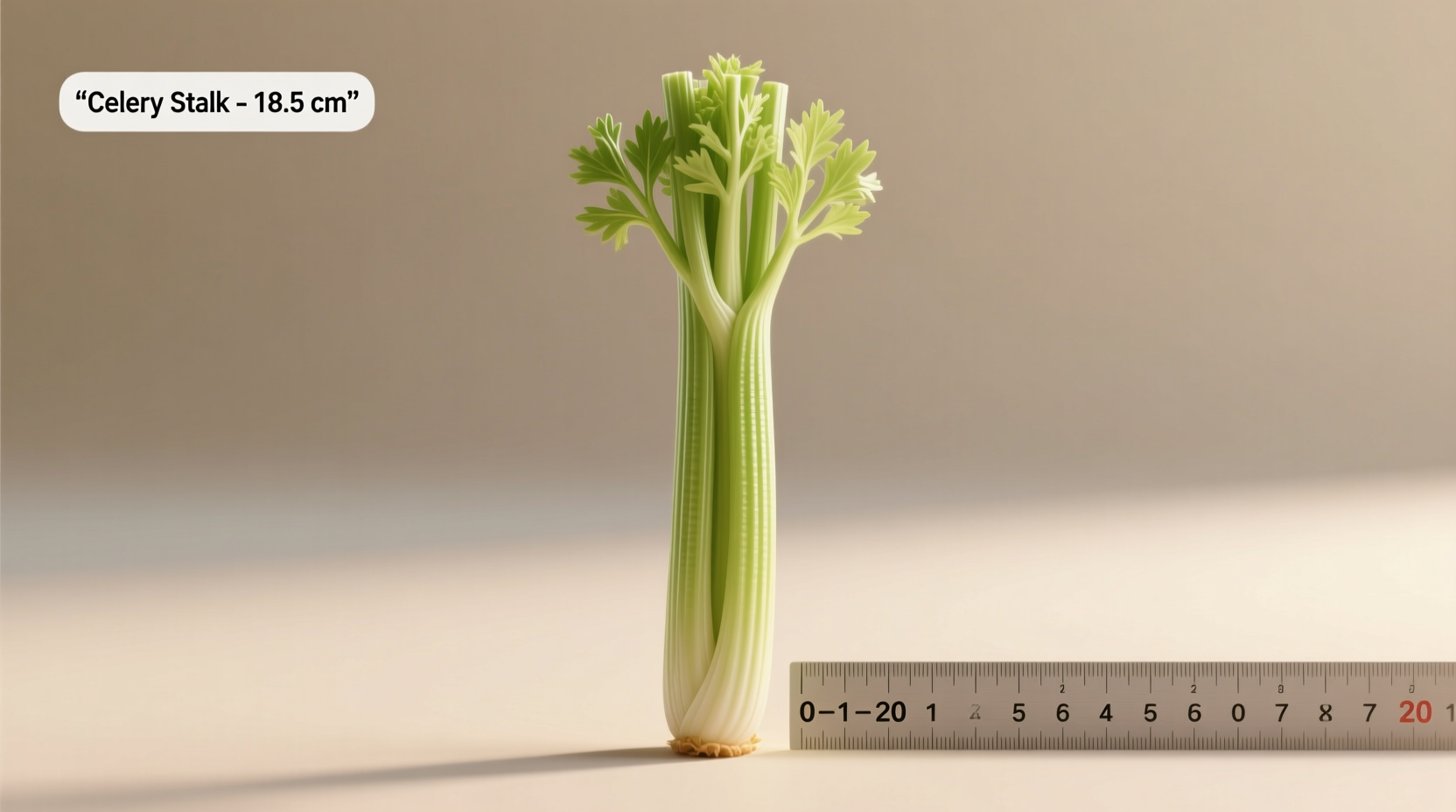
Celery (Apium graveolens) is a marshland plant species in the family Apiaceae, cultivated as a vegetable for its crunchy petioles (leaf stalks) and aromatic qualities. It has been used since ancient times, originally as a medicinal herb before becoming a staple in Western cuisine. Today, it's most commonly found in its familiar green form: a bundle of long, fibrous ribs growing from a dense base known as the corm.
In culinary terminology, confusion often arises between the terms \"stalk\" and \"rib.\" In American English, a single elongated piece—the kind you'd snap off a bunch—is typically referred to as a **stalk**. However, outside North America, especially in British English, that same piece is called a **stick** or **rib**, while “stalk” may refer to the whole plant. For consistency with U.S.-based recipes and food labeling standards—which dominate digital and printed cookbooks—this article defines **“one stalk of celery” as one individual rib** removed from the bunch.
Key Characteristics
Understanding the physical and sensory attributes of a single celery stalk helps ensure consistent use across various dishes:
| Characteristic | Description |
|---|---|
| Average Length | 7–10 inches (18–25 cm), depending on variety and maturity |
| Diameter at Widest Point | ¾ to 1½ inches (2–4 cm) |
| Weight (Untrimmed) | 35–45 grams (1.2–1.6 oz) |
| Weight (Trimmed, Chopped) | Approximately 30 grams (1.05 oz) after trimming ends and leaves |
| Color | Pale to medium green; inner ribs are lighter due to lack of sunlight exposure |
| Texture | Crisp, juicy, with visible longitudinal fibers |
| Flavor Profile | Mildly bitter, earthy, slightly peppery with fresh herbal notes; becomes sweeter when cooked |
| Shelf Life (Refrigerated) | 2–3 weeks if stored properly in crisper drawer wrapped in foil or sealed container |
| Culinary Function | Aromatic base ingredient (part of mirepoix), textural component, flavor enhancer, low-calorie snack vehicle |
“Celery isn’t just filler—it’s a foundational flavor builder. One stalk contributes subtle bitterness and salinity that rounds out savory dishes.” — Chef Elena Rodriguez, Culinary Instructor, Institute of Food Arts
Practical Usage: How to Use One Stalk of Celery
A single stalk of celery plays multiple roles in cooking, depending on preparation method and dish type. Its versatility spans raw applications, slow-cooked bases, and garnishes.
Chopping and Prepping One Stalk
To prepare one stalk for cooking:
- Wash under cold running water to remove dirt trapped in grooves.
- Trim off the tapered end (root side) and the leafy top where it meets the first node.
- Lay flat and inspect for tough strings; peel outer string using a vegetable peeler if desired, especially for raw applications.
- Cut crosswise into slices (¼ inch thick), dice into small cubes (~⅛ inch), or julienne for salads and stir-fries.
Pro Tip: Save celery trimmings—ends, leaves, and tough outer fibers—in a freezer bag to make homemade vegetable stock. A single stalk yields about 1 tablespoon of chopped trimmings, which contribute depth when simmered with onion and carrot.
Common Applications by Quantity
- One stalk in soup or stew: Adds background aroma without overpowering. Ideal for chicken noodle soup, beef bourguignon, or lentil stew. Dice finely and sauté with onion and carrot for mirepoix.
- One stalk in salad: Provides crisp contrast. Slice thinly on diagonal for Waldorf salad or Nicoise. Combine with apple, walnuts, and yogurt dressing for crunch and freshness.
- One stalk in smoothies or juices: Contributes hydration and electrolytes. Blend with cucumber, green apple, lemon, and spinach for a detoxifying drink.
- One stalk as a snack vessel: Fill with peanut butter or cream cheese and top with raisins (“ants on a log”)—a classic children’s snack rich in fiber and protein.
Professional Kitchen Practices
In restaurant settings, precision matters. Chefs standardize celery cuts based on application:
- Mirepoix ratio: Traditionally 2 parts onion : 1 part carrot : 1 part celery by weight. One average stalk (~35g) pairs with 70g onion and 35g carrot for a standard quart of stock.
- Sweating vs. Browning: Celery is typically sweated (cooked slowly over low heat without browning) to extract sweetness and soften fibers. High heat causes burning due to natural sugars.
- Garnish use: Thinly sliced or chiffonade-cut celery leaves add color and mild bitterness to finished plates, such as seafood ceviche or roasted fish.
Variants & Types of Celery
While Pascal celery (the standard green supermarket type) dominates usage, several variants exist, each affecting size, flavor, and suitability for one-stalk applications.
| Type | Size Relative to Standard Stalk | Flavor & Texture | Best Uses |
|---|---|---|---|
| Pascal (Green) Celery | Standard: 8–10\", ~40g per stalk | Firm, fibrous, assertive flavor | All-purpose: stocks, roasts, snacks, salads |
| Golden Celery (Blanched) | Slightly thinner, more tender | Milder, less bitter, pale yellow | Raw preparations, delicate soups, fine dining plating |
| Celeriac (Root Celery) | N/A – root vegetable, not stalk | Earthy, nutty, celery-like aroma | Purees, remoulade, roasted sides; not interchangeable with stalks |
| Leaf Celery (Smallage) | Shorter stalks, highly aromatic | Stronger, more pungent than Pascal | Asian stir-fries, herbal broths, seasoning blends |
| Self-Blanching Celery | Compact growth, shorter ribs (~6\") | Softer texture, lower sodium | Container gardening, raw eating, baby food |
For substitution purposes, **one stalk of leaf celery** should be used at half the volume of Pascal due to its intensity. Conversely, golden or self-blanching types can replace standard celery cup-for-cup in most recipes.
Comparison with Similar Ingredients
Celery is often confused with other crunchy vegetables. Here’s how one stalk compares:
| Ingredient | Visual Similarity | Flavor Difference | Substitution Feasibility |
|---|---|---|---|
| Fennel Bulb (1 slice, ¼” thick) | High – similar crunch and layering | Sweet anise/licorice note instead of earthiness | Acceptable in salads; alters flavor profile significantly in cooked dishes |
| Bunching Onion / Scallion Stem | Moderate – green tubular shape | Sharper, onion-forward taste | Not ideal; lacks celery’s bitterness and structure |
| Cucumber (English, 1 rib-sized piece) | Medium – comparable size and juiciness | Neutral, watery, no herbal complexity | Poor substitute; adds moisture but no aromatic value |
| Cardoon | Very high – large, ribbed, silvery-green | Bitter artichoke-like flavor | Can stand in texturally but requires different prep (peeling, boiling) |
True substitutes must replicate both texture and function. While fennel shares some structural traits, only **celeriac puree** (used sparingly) mimics the deep celery essence in creamy soups or sauces.
Practical Tips & FAQs
How much chopped celery does one stalk yield?
One average stalk yields approximately ½ cup of rough chop (¼-inch pieces) or ⅓ cup fine dice. This makes it easy to scale recipes: two stalks ≈ 1 cup chopped.
Can I substitute celery salt for fresh stalks?
No direct volumetric swap exists, but flavor equivalence can be approximated. One stalk imparts subtle savoriness; replace with ⅛ teaspoon celery salt plus ½ teaspoon water to mimic moisture content. Use cautiously—celery salt is concentrated and sodium-heavy.
Are celery leaves usable?
Yes—and they’re flavorful. Leaves contain higher concentrations of volatile oils than the stalk. Use one tablespoon of chopped leaves per stalk called for in soups, omelets, or herb blends. They wilt quickly, so add late in cooking.
What if my recipe needs more celery flavor?
If using only one stalk but seeking stronger presence, consider adding a pinch of celery seed (¼ tsp max) or a splash of celery juice (1 tsp). These intensify aroma without altering texture.
How do I store leftover stalks?
Wrap cut or whole bunch tightly in aluminum foil and refrigerate. Foil allows ethylene gas to escape while retaining humidity, preventing limpness. Sliced stalks keep 5–7 days in airtight containers.
Is one organic stalk different from conventional?
Organic celery tends to have slightly thinner ribs and more intense flavor due to slower growth and absence of synthetic nitrates. Weight difference is negligible (~3–5g less per stalk), but aroma is often richer. Nutritionally, both provide similar levels of vitamin K, potassium, and antioxidants.
Storage Hack: Revive limp celery by cutting ½ inch off the base and standing it upright in a glass of cold water for 1–2 hours. Cells rehydrate through capillary action, restoring crispness.
Does cooking affect the nutritional value of one stalk?
Raw celery retains maximum vitamin C and polyphenols. Cooking reduces these slightly but increases bioavailability of certain antioxidants like apigenin. Steaming preserves nutrients better than boiling.
Can I freeze a single stalk?
Yes, though texture changes. Frozen-thawed celery becomes soft and is unsuitable for snacking or salads. Best reserved for soups, sauces, or stocks. Chop before freezing for convenience.
Summary & Key Takeaways
One stalk of celery is a standardized unit in modern cooking, averaging 8–10 inches long and weighing 35–45 grams. It serves as a critical building block in flavor development, particularly in combination with onion and carrot. Understanding its dimensions, weight, and culinary role ensures accuracy in recipe execution.
- A single stalk yields about ½ cup chopped, making scaling straightforward.
- It functions as an aromatic, textural agent, and nutrient-rich addition across cuisines.
- Proper storage extends shelf life beyond two weeks; trimmings can be saved for stock.
- Varieties differ in tenderness and potency—adjust usage accordingly.
- No perfect substitute replicates both flavor and crunch, though celeriac and celery seed offer partial alternatives.
Whether you're crafting a simple broth or refining a complex sauce, knowing exactly what “one stalk of celery” means empowers consistent, professional-quality results. Treat it not as filler, but as a deliberate ingredient worthy of attention.
Final Thought: Measure once, cook confidently. Keep a kitchen scale nearby when working with small quantities—especially in canning, preserving, or dietary meal prep—where precision affects safety and balance.




 浙公网安备
33010002000092号
浙公网安备
33010002000092号 浙B2-20120091-4
Comments
No comments yet. Why don't you start the discussion?