
At first glance, a ginger snap cookie might seem like a simple spiced treat—crisp, slightly sweet, and warmly aromatic. But behind its modest appearance lies a complex interplay of ingredients, with one standing decisively at the center: ginger. Far more than just a background note, ginger is the structural, sensory, and chemical cornerstone of the entire cookie. It shapes not only the flavor but also the texture, color, shelf life, and even the spread during baking. Understanding how ginger functions in this classic confection transforms casual baking into informed craftsmanship. For home bakers aiming to perfect their recipe or culinary professionals seeking precision, recognizing ginger’s multifaceted contributions is essential.
Definition & Overview
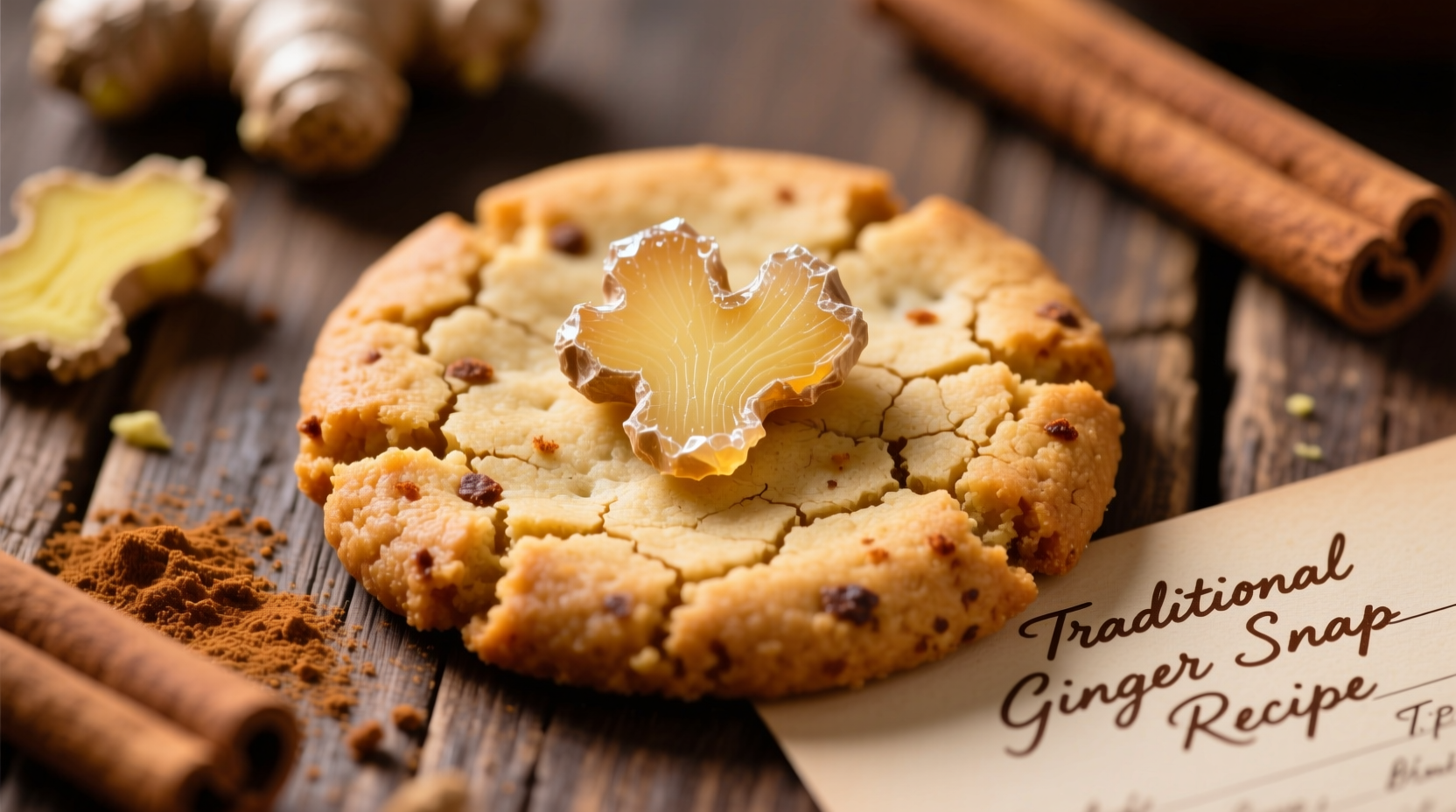
Ginger (Zingiber officinale) is a flowering plant whose rhizome (underground stem) is widely used as a spice and medicinal herb. In the context of ginger snap cookies, ground dried ginger is most commonly used, though fresh ginger, crystallized ginger, or ginger extracts may appear in variations. The spice delivers a sharp, pungent warmth that builds gradually on the palate, distinguishing it from other baking spices like cinnamon or nutmeg.
Ginger snap cookies—also known as ginger nuts or ginger biscuits—are crisp, thin cookies characterized by their deep golden-brown hue and pronounced spicy-sweet profile. Originating in medieval Europe, they evolved from early spiced honey cakes and became especially popular in England, Germany, and Scandinavia before spreading globally. While regional recipes vary, all true ginger snaps rely on ginger as the dominant flavor agent. Without it, the cookie ceases to be a ginger snap and becomes merely a molasses shortbread or spice cookie.
Key Characteristics of Ginger in Baking
Ginger contributes far beyond mere taste. Its influence spans multiple dimensions critical to successful baking:
| Characteristic | Description |
|---|---|
| Flavor Profile | Warm, pungent, slightly citrusy with peppery undertones; intensifies when baked. |
| Aroma | Pronounced, zesty, and penetrating; activates olfactory memory associated with holiday baking. |
| Chemical Activity | Contains gingerol (in raw form) and shogaol (when dried/heat-treated), both bioactive compounds that affect mouthfeel and digestion. |
| Color Contribution | Enhances browning via Maillard reaction synergy with molasses and baking soda. |
| Texture Influence | Dried ginger absorbs moisture, contributing to crispness; particle size affects bite. |
| Heat Level | Moderate pungency (not capsaicin-based); creates lingering warmth without burning. |
| Shelf Life Impact | Natural antimicrobial properties help preserve freshness over time. |
Practical Usage: How Ginger Shapes the Cookie
In a standard ginger snap formula, ginger typically ranges from 1 to 2 tablespoons of ground spice per cup of flour. This may seem modest, but its impact is disproportionate due to volatility and reactivity. Here's how ginger operates at each stage of baking:
Dough Formation
When mixed into the dough—usually composed of butter, sugar, molasses, flour, and leavening—ground ginger disperses unevenly at first. As the mixture creams, fat coats the spice particles, stabilizing volatile oils and preventing premature evaporation. This emulsification ensures even distribution and controlled release during baking.
Leavening Interaction
Ginger works synergistically with baking soda. Molasses is acidic; baking soda requires acid to produce carbon dioxide. Ginger, while not highly acidic itself, contains phenolic compounds that mildly enhance this reaction. More importantly, the heat-induced decomposition of gingerol into shogaol increases pungency precisely when the cookie is expanding in the oven, creating a sensory peak aligned with structural development.
Baking and Browning
As the cookie bakes (typically at 350°F / 175°C), ginger accelerates surface browning. The Maillard reaction—a chemical interaction between amino acids and reducing sugars—is amplified by the presence of reactive compounds in ginger. This results in deeper coloration and richer flavor complexity compared to non-spiced counterparts. Overbaking can lead to excessive bitterness, so precise timing is crucial when working with high ginger concentrations.
Cooling and Texture Development
Upon removal from the oven, ginger continues to influence texture. As moisture evaporates, the hygroscopic nature of ground ginger draws residual water toward the surface, reinforcing crispness. Unlike softer spices such as cinnamon, which can soften over time, ginger helps maintain structural integrity for days, making these cookies ideal for storage and gifting.
Pro Tip: Bloom your ginger before mixing. Heat 1–2 teaspoons of ground ginger in melted butter for 30 seconds over low heat to unlock maximum aroma and integrate flavor more evenly throughout the dough.
Variants & Types of Ginger in Ginger Snaps
Not all ginger is created equal. Depending on origin, processing method, and form, different types deliver distinct outcomes in baking.
- Ground Dried Ginger: Most common in commercial and home recipes. Made from dehydrated rhizomes milled into powder. Offers consistent potency and easy blending. Best for uniform spice distribution.
- Fresh Ginger (Grated): Contains higher levels of gingerol, delivering brighter, more aggressive heat. Adds moisture, which alters spread and texture. Use sparingly—½ to 1 teaspoon per batch—and pair with reduced liquid elsewhere.
- Candied/Crystallized Ginger (Chopped): Provides bursts of sweet-heat contrast. Often added as an inclusion rather than primary flavorant. Ideal for artisanal versions seeking textural complexity.
- Ginger Extract or Tincture: Highly concentrated liquid form. A few drops can boost back-end spice without altering dough consistency. Useful for fine-tuning after baking.
- White vs. Black Ginger: White ginger is bleached and milder; black ginger (unpeeled, sun-dried) is stronger and more fibrous. Professional bakers often prefer black ginger for its robust character.
| Type | Best Used For | Ratio (per 12 cookies) | Notes |
|---|---|---|---|
| Ground dried ginger | Standard baking, consistent results | 1–2 tbsp | Use fine grind for smooth texture |
| Fresh grated ginger | Artisan batches, seasonal editions | 1 tsp | Add extra bake time to compensate for moisture |
| Candied ginger (chopped) | Inclusions, gourmet presentation | ¼ cup | Pair with lower-ground-ginger base |
| Ginger extract | Flavor boosting post-mix | ¼–½ tsp | Add dropwise; very potent |
Comparison with Similar Ingredients
Ginger is sometimes confused with other warm spices used in baking. However, substituting incorrectly leads to fundamental changes in identity and performance.
| Ingredient | Flavor Difference | Functional Role | Substitution Risk |
|---|---|---|---|
| Cinnamon | Sweeter, woody, less pungent | Supports sweetness, rounds edges | Replacing ginger with cinnamon yields snickerdoodles, not snaps |
| Nutmeg | Earthy, delicate, floral | Background complexity enhancer | Too much creates medicinal off-notes |
| Allspice | Combination of clove, nutmeg, cinnamon | Balancing spice in blends | Lacks ginger’s signature heat and bite |
| Galangal | Sharper, more resinous, pine-like | Used in savory Asian dishes | Does not caramelize well in sweet doughs |
“Ginger isn’t just a flavor in ginger snaps—it’s the engine. It drives browning, modulates texture, and defines the sensory arc from first smell to final bite.” — Chef Elena Torres, Pastry Director, Boston School of Culinary Arts
Practical Tips & FAQs
How much ginger should I use in my recipe?
Start with 1 tablespoon of ground ginger per cup of flour. Increase to 1½ or 2 tablespoons for a more assertive profile. Always balance with molasses and sweeteners—too much ginger without sufficient sugar creates harshness.
Can I substitute ground ginger for fresh?
Yes, but adjust ratios. One tablespoon of ground ginger ≈ 1 tablespoon finely grated fresh ginger, but fresh adds moisture and has a brighter top note. Reduce another liquid slightly if using fresh.
Why do my ginger snaps taste flat?
Stale ginger is the most common culprit. Ground spices lose potency within 6–12 months. Test your ginger by rubbing a pinch between fingers—if aroma is faint, replace it.
Do ginger snaps get crispier over time?
They stabilize in texture within 24 hours as residual moisture migrates and evaporates. Store in an airtight container with a silica packet to prolong crispness. Avoid refrigeration, which introduces humidity.
What’s the best way to store ginger for baking?
Keep ground ginger in an airtight glass jar away from heat and light. Whole dried rhizomes last longer—grind only what you need. Fresh ginger can be frozen whole and grated directly from frozen.
Are there health benefits to eating ginger snaps?
While not a health food, the ginger content offers mild digestive support and anti-inflammatory effects. Real ginger—not artificial flavor—provides these benefits. Moderation remains key due to sugar and fat content.
Can I make gluten-free or vegan ginger snaps with the same ginger impact?
Absolutely. Ginger performs identically in alternative formulations. In gluten-free versions, combine xanthan gum with rice or oat flour to mimic structure. For vegan versions, use plant-based butter and blackstrap molasses—the latter enhances both flavor depth and ginger perception.
Storage Checklist:
✔ Store ground ginger in dark glass container
✔ Label with purchase date
✔ Keep away from stove or dishwasher heat
✔ Replace every 12 months for optimal performance
✔ Freeze fresh ginger for long-term use
Expert Insight: A Case Study in Flavor Layering
A 2022 product development trial at the Midwest Bakery Institute tested four ginger snap formulations varying only in ginger type and treatment:
- Control: Standard ground ginger, room temperature mix
- Bloomed: Ground ginger heated in butter for 30 seconds pre-mix
- Fresh-Incorporated: 1 tsp fresh grated ginger + 1 tbsp ground
- Double-Spice: 2 tbsp ground ginger + ¼ tsp extract
Blind tasting by a panel of 40 pastry professionals ranked #2 (bloomed) highest for flavor integration and aromatic lift. Panelists noted that blooming released volatile oils uniformly, avoiding \"hot spots\" of spice. Formulation #4 was deemed too aggressive, while #3 scored well for brightness but suffered from slight sogginess at the core.
The takeaway: Technique matters as much as quantity. Gentle thermal activation maximizes ginger’s potential without compromising texture.
Summary & Key Takeaways
Ginger is not merely an ingredient in ginger snap cookies—it is the defining element. Its role extends across every phase of baking:
- Flavor Architect: Delivers the signature warm, pungent bite that distinguishes the cookie.
- Texture Modifier: Contributes to crispness through moisture absorption and browning enhancement.
- Chemical Catalyst: Interacts with leavening agents and promotes Maillard reactions for deeper color and complexity.
- Preservative Agent: Natural compounds extend shelf life and resist microbial degradation.
- Form Flexibility: Available in ground, fresh, candied, and extract forms—each suited to specific applications.
To master the ginger snap is to understand ginger not as a spice, but as a functional ingredient. Whether adjusting bloom techniques, rotating stock for freshness, or experimenting with layered forms, precision elevates this humble cookie into a study of balance, chemistry, and tradition.
Final Thought: The next time you pull a tray of golden-brown ginger snaps from the oven, inhale deeply. That unmistakable aroma? That’s ginger announcing its dominance—one molecule at a time.




 浙公网安备
33010002000092号
浙公网安备
33010002000092号 浙B2-20120091-4
Comments
No comments yet. Why don't you start the discussion?