
In recent years, social media has been flooded with unconventional life hacks—some clever, others wildly implausible. One of the most bizarre claims to gain traction is that you can charge your cell phone using nothing more than a humble onion. Videos have circulated showing people inserting wires into cut onions, connecting them to USB ports, and claiming the device begins to charge. While these clips attract millions of views, they raise a critical question: is there any scientific validity to this idea, or is it pure fiction? This article separates fact from fantasy by examining the chemistry, physics, and biology involved—and explains why your kitchen should stay out of your charging routine.
The Origin of the Onion Charging Myth
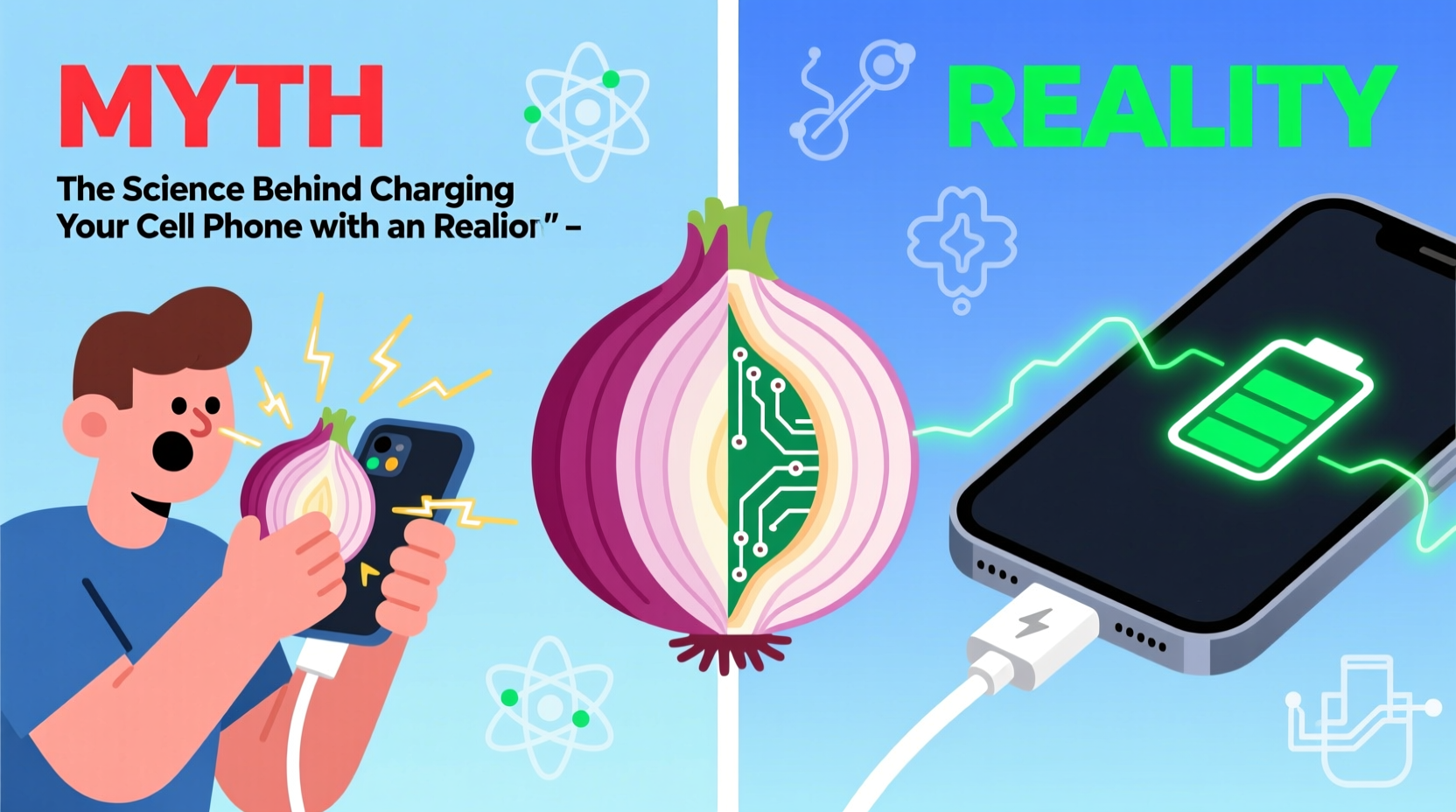
The myth appears to stem from a misunderstanding of basic electrochemistry. Some viral videos suggest that onions contain enough electrolytes to generate usable electrical current when combined with metal electrodes. These demonstrations often use copper and zinc nails inserted into a halved onion, connected via wires to a phone or multimeter. In some cases, a small voltage is detected—leading viewers to believe the onion is \"powering\" the device.
However, detecting a minor voltage does not equate to functional power delivery. The human body, a lemon, or even a potato can produce a tiny voltage under similar conditions due to ionic activity. But generating a few millivolts is far from providing the stable 5 volts and sufficient amperage required to charge a modern smartphone.
How Batteries and Phone Charging Actually Work
To understand why the onion trick fails, it's essential to grasp how smartphones are charged. Modern phones use lithium-ion batteries, which require a precise voltage (typically 5V) and regulated current (measured in amps) delivered through a controlled circuit. Chargers include internal circuitry that manages power flow, prevents overheating, and communicates with the phone to optimize charging speed and safety.
A functional power source must provide consistent energy output. Even weak sources like solar panels or hand-crank generators include capacitors and regulators to stabilize electricity before it reaches the device. An onion, regardless of its chemical composition, cannot regulate voltage or sustain current over time. Any fleeting electron movement it produces is negligible and unstable.
Electrochemical Basics: Why Onions Can’t Replace Power Banks
Onions do contain water, acids (like citric and ascorbic acid), and dissolved ions such as potassium and sodium—all of which can conduct electricity to a minimal degree. When two dissimilar metals (e.g., copper and zinc) are inserted into an ion-rich medium, a galvanic cell forms, producing a small potential difference. This principle is the same used in classic science experiments with lemons or potatoes.
But here’s the catch: while a single \"onion cell\" might generate around 0.8–1.0 volts, it delivers only microamps of current—thousands of times less than what a phone needs. To reach usable levels, you’d need hundreds of such cells connected in series and parallel, with efficient conductors and storage mechanisms. Even then, losses due to resistance and rapid depletion would make the system impractical.
“An onion can act as a weak electrolyte in a homemade battery, but calling it a 'phone charger' is like calling a candle a lighthouse.” — Dr. Alan Reyes, Electrochemist at MIT
Myth vs Reality: A Direct Comparison
| Aspect | Myth Claim | Scientific Reality |
|---|---|---|
| Voltage Output | Enough to charge a phone | Less than 1V per cell; unstable and insufficient |
| Current Delivery | Can power USB devices | Microamps produced—far below the 500mA+ needed |
| Energy Duration | Charges phone over hours | Output drops within minutes; no sustained power |
| Safety | Harmless kitchen experiment | Risk of short circuits, corrosion, or device damage |
| Practicality | Free, eco-friendly alternative | Highly inefficient; resources better spent elsewhere |
Real-World Example: The Viral Video Experiment
In 2022, a TikTok video went viral showing a user \"charging\" their iPhone with a red onion, two metal rods, and jumper wires. The phone displayed a charging icon, leading thousands to believe the hack worked. However, further analysis revealed crucial details: the phone was already plugged into a wall charger, and the onion setup was merely connected in parallel. The onion played no role—the actual power came from the outlet.
This case illustrates how misleading editing and lack of technical knowledge can propagate false information. The phone’s charging indicator responds to any small voltage input, even if it’s not contributing meaningful power. This phenomenon, known as \"phantom charging,\" tricks users into thinking passive setups are active power sources.
Safe and Effective Alternatives to Extend Phone Battery Life
While you can’t charge your phone with produce, there are scientifically sound ways to preserve battery health and extend charge cycles:
- Use OEM-certified chargers and cables to ensure proper voltage regulation.
- Avoid letting your battery drop below 20% regularly; lithium-ion batteries prefer partial discharges.
- Keep your phone away from extreme temperatures—both heat and cold degrade battery capacity.
- Enable battery optimization features built into iOS and Android.
- Turn off unnecessary background apps and reduce screen brightness.
Step-by-Step Guide to Responsible Charging Habits
- Inspect your charger: Ensure cables are undamaged and connectors are clean.
- Plug into a stable power source: Use wall outlets or certified power banks—not improvised circuits.
- Monitor temperature: Remove thick cases during charging to prevent overheating.
- Limit fast charging: While convenient, frequent use of fast charging accelerates battery wear.
- Unplug at 100%: Avoid leaving your phone charging overnight whenever possible.
Frequently Asked Questions
Can any vegetable or fruit actually charge a phone?
No common fruit or vegetable can meaningfully charge a modern smartphone. While citrus fruits or potatoes can power very low-energy devices like LED clocks in educational experiments, they lack the current and stability needed for phones.
Why did my phone show a charging symbol when connected to the onion setup?
Smartphones detect voltage input from any connected source. Even a tiny, unusable current can trigger the charging animation, creating the illusion of power delivery. This does not mean the device is receiving usable energy.
Are there any safe DIY charging methods?
Only if they involve proper components: solar USB chargers, hand-crank generators, or homemade wind turbines with voltage regulators. Raw organic materials alone cannot safely or effectively charge phones.
Conclusion: Rely on Science, Not Social Media Hacks
The idea of charging your phone with an onion is a fascinating example of how misinformation spreads when scientific literacy meets viral content. While the underlying electrochemical principles are real, their application in this context is grossly exaggerated. Understanding the difference between a measurable voltage and usable electrical power is key to avoiding such myths.
Instead of experimenting with kitchen ingredients, focus on proven methods to maintain your phone’s battery and performance. Technology thrives on precision, not gimmicks. By staying informed and skeptical of sensational claims, you protect both your devices and your time.




 浙公网安备
33010002000092号
浙公网安备
33010002000092号 浙B2-20120091-4
Comments
No comments yet. Why don't you start the discussion?