
Changing your last name is more than a paperwork task—it’s a significant personal decision that can reflect marriage, divorce, gender transition, cultural reconnection, or a fresh start. While the process varies slightly by state in the U.S., the core steps remain consistent. Done correctly, a legal name change strengthens your identity across government records, financial accounts, and professional life. Done incorrectly, it can lead to delays, denials, or complications years later. This guide walks you through every phase—from initial research to final updates—with precision and practical advice.
Step 1: Confirm Your Eligibility and Choose Your New Name
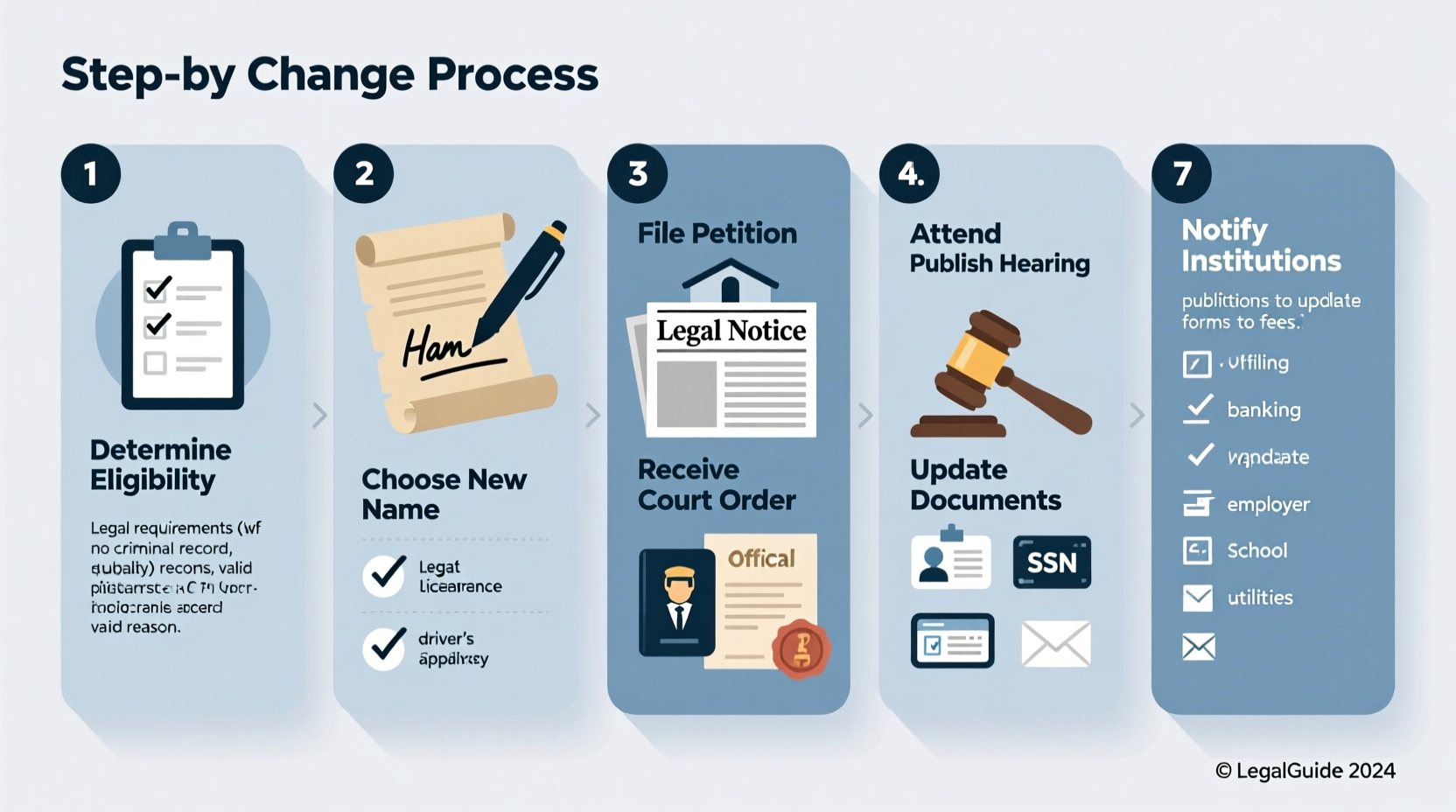
Before filing any forms, ensure you meet the basic eligibility criteria. In most U.S. jurisdictions, you must be at least 18 years old, a resident of the county where you file, and not changing your name for fraudulent purposes—such as evading debt or criminal liability. Courts generally allow name changes as long as they aren’t offensive, confusing, or intended to mislead.
Selecting your new last name requires thoughtful consideration. Common choices include:
- Taking a spouse’s surname after marriage
- Reverting to a maiden name post-divorce
- Combining both partners’ surnames (e.g., hyphenation)
- Choosing a culturally meaningful name
- Adopting a chosen name during gender transition
Some states restrict certain changes—like adopting a celebrity’s name or a brand name—so verify local rules. If you're changing a child’s name, additional consent and court scrutiny apply.
Step 2: Complete the Required Legal Forms
The central document in most adult name changes is the Petition for Change of Name. You’ll file this in your local county superior or circuit court. The exact form name and structure vary by jurisdiction, but all require:
- Your current full legal name
- The requested new name
- Date and place of birth
- Residential address
- Reason for the change (keep it simple: “marriage,” “personal preference,” “gender identity”)
- Confirmation of no criminal intent
You may also need to submit:
- An Order Granting Name Change (prepared in advance for judge approval)
- A Publication Requirement Form (if your county mandates newspaper notice)
- Fingerprint cards (in some counties for background checks)
“Courts are increasingly recognizing name changes as essential to personal dignity, especially in LGBTQ+ communities.” — Judge Lorna E. Schofield, U.S. District Court
Step 3: File With the Court and Pay Fees
Visit your county courthouse’s civil filings department to submit your petition. Bring multiple copies—one for the court, one for your records, and possibly one for publication. Filing fees typically range from $150 to $435 depending on location. Some courts offer fee waivers based on income; ask about in forma pauperis applications if cost is a concern.
After submission, the court assigns a case number and schedules a hearing, usually within 4–8 weeks. You’ll receive official notice of the date. Attendance is often required unless waived by the judge.
Step 4: Attend the Hearing and Obtain the Court Order
The hearing is typically brief—often less than five minutes. A judge will confirm your identity, reason for the change, and ensure there’s no fraud. Bring photo ID and any supporting documents, such as a marriage certificate if applicable.
If approved, the judge signs the Decree of Name Change, which becomes your primary legal proof. Request certified copies (usually $10–$15 each); you’ll need them for DMV, Social Security, banks, and other institutions.
Step 5: Publish Notice (If Required)
Not all states require publication, but many do—including California, Florida, and New York. You must publish your intent to change your name in a local newspaper once a week for three to four consecutive weeks. The paper provides an affidavit of publication, which you file with the court before the hearing.
| State | Publication Required? | Duration | Cost Estimate |
|---|---|---|---|
| California | Yes | 4 weeks | $120–$200 |
| Texas | No | N/A | $0 |
| New York | Yes | 3–6 weeks | $150+ |
| Illinois | Waived if safety concern | Varies | $100–$180 |
Real-Life Example: Maria’s Smooth Transition After Marriage
Maria, a software engineer in Austin, Texas, married her longtime partner and decided to take his last name. She researched the process online and discovered that Texas does not require court petitions for married-name changes—only a certified marriage certificate is needed.
She obtained her marriage certificate from the county clerk within two weeks of the wedding. Then she updated her Social Security record first, waited two weeks, and proceeded to the DMV for a new driver’s license. Within six weeks, she had updated her passport, bank accounts, and employer records. By following the correct sequence, Maria avoided mismatches and completed the entire process without visiting a courtroom.
Essential Checklist: What to Do After the Court Approves
Once you have your certified court order, begin updating key institutions in this recommended order:
- Social Security Administration (SSA): Update your name here first. Use Form SS-5 or apply in person. Processing takes 2–4 weeks.
- Department of Motor Vehicles (DMV): Renew your driver’s license or state ID with your new name and SSA confirmation.
- U.S. Passport Agency: Submit Form DS-5504 (if within one year of issuance) or DS-82 with your court order and photo ID.
- Banks and Credit Cards: Notify all financial institutions. Some allow online updates; others require in-person visits.
- Employer and Payroll: Ensure W-2s and direct deposits reflect your new name.
- Utilities, Insurance, and Subscriptions: Update phone, internet, health insurance, and recurring services.
- Voter Registration: Re-register to vote under your new name via your state’s election website.
- Professional Licenses: If you hold medical, legal, real estate, or teaching credentials, notify the licensing board.
Frequently Asked Questions
Can I change my name without going to court?
Yes—if you’re changing your name due to marriage or divorce. In marriage, use your certified marriage certificate. In divorce, the final decree typically includes a name reversion provision. For all other cases, court involvement is required.
How long does the entire process take?
From filing to final updates, expect 2 to 6 months. Court processing takes 4–10 weeks, and agency updates add several more weeks. Delays occur if forms are incomplete or if publication is required.
Will my name change affect my credit score?
No. Your credit history remains tied to your Social Security number. However, ensure all creditors update your name to avoid confusion. Monitor your credit report for inconsistencies during the transition.
Final Steps and Long-Term Considerations
After completing the official updates, store your certified court order in a secure place—alongside your birth certificate and passport. Consider digitizing a copy for backup, but protect it like sensitive data.
Inform close contacts, update social media profiles, and revise professional platforms like LinkedIn. If you’ve published under your old name, consider adding a note: “Also known as [New Name]” to maintain visibility.
Remember: consistency is key. Every document—from tax returns to airline reservations—should reflect your legal name. Minor variations (e.g., nickname usage) are fine in casual settings, but legal and financial contexts demand precision.
Conclusion: Take Control of Your Identity
Changing your last name is a powerful act of self-definition. With careful planning and attention to detail, the process doesn’t have to be overwhelming. Whether you're embracing a new chapter after marriage, reclaiming heritage, or affirming your true self, each form you sign and agency you update brings you closer to living authentically. Start today—gather your documents, check your county’s requirements, and take the first step toward the name you’ve always wanted.




 浙公网安备
33010002000092号
浙公网安备
33010002000092号 浙B2-20120091-4
Comments
No comments yet. Why don't you start the discussion?