
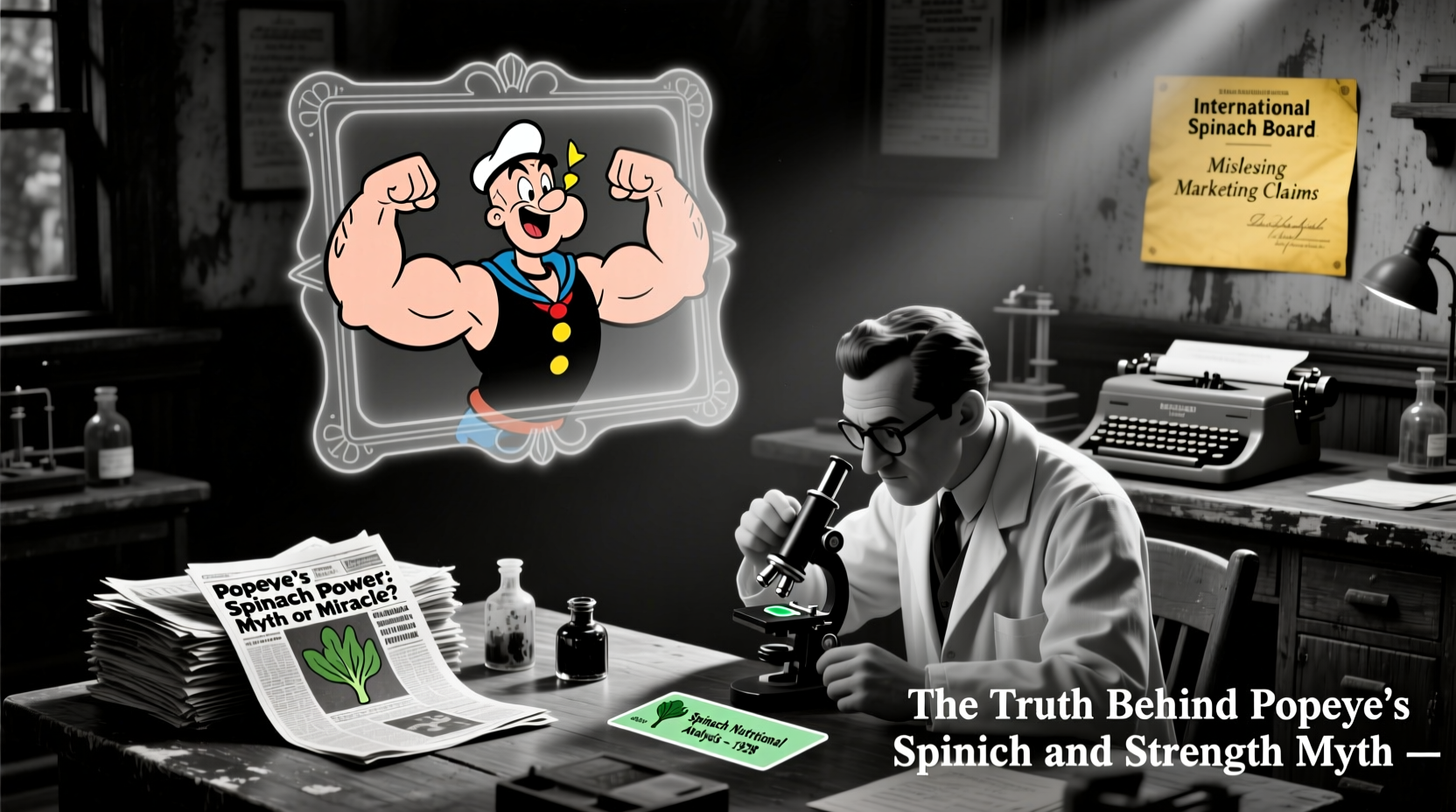
In 1932, a cartoon sailor named Popeye the Sailor Man burst onto movie screens, crushing cans of spinach into his mouth before flexing his biceps and saving the day. His sudden surge of strength after eating spinach embedded a powerful idea in popular culture: spinach is a superfood that builds muscle almost instantly. For decades, parents have used Popeye as leverage to get children to eat their greens, citing spinach as nature’s protein-packed powerhouse. But how much of this is fact, and how much is fiction? The reality is far more nuanced—and scientifically fascinating.
The myth that spinach alone can transform weaklings into muscular heroes stems from a mix of early 20th-century nutritional misunderstandings, wartime propaganda, and clever marketing. While spinach is undeniably nutritious, its reputation for being an iron-rich miracle food capable of fueling brute strength was based on a long-standing error—one that persists in public consciousness despite being debunked by scientists over half a century ago. Understanding the truth requires unpacking not just the history of the myth, but also the actual nutritional profile of spinach, the bioavailability of its nutrients, and what truly supports human strength and endurance.
Definition & Overview
Spinach (Spinacia oleracea) is a leafy green vegetable belonging to the Amaranthaceae family, which includes beets and quinoa. Native to Persia (modern-day Iran), it spread to India, China, and eventually Europe by the Middle Ages. By the 12th century, it was cultivated in Spain, and by the 14th century, it appeared in French cuisine under the name “herbe blanche.” Its mild, slightly earthy flavor and tender texture when cooked made it a favorite among European aristocrats and commoners alike.
Nutritionally, spinach is rich in vitamins A, C, and K, folate, magnesium, and antioxidants like lutein and beta-carotene. It also contains iron—but not in the quantities once believed. The confusion began in the 19th century when German chemist Erich von Wolf conducted nutritional analyses of various vegetables. In a now-infamous decimal point error, he reportedly recorded spinach as containing 35 milligrams of iron per 100 grams instead of the correct figure: 3.5 mg. This tenfold exaggeration cemented spinach’s reputation as an iron-dense food, a status amplified during the Great Depression and World War II, when governments promoted affordable, homegrown greens to combat malnutrition.
Popeye, created by Elzie Crisler Segar in 1929, was initially a minor character in the comic strip Thimble Theatre. His transformation into a spinach-powered hero occurred in 1932, when the writers decided to give him a unique trait that emphasized health and vitality. At the time, canned spinach was being heavily marketed by food companies, and the U.S. government encouraged vegetable consumption through public campaigns. Popeye became an unwitting ambassador for spinach—so effective that U.S. spinach consumption reportedly rose by one-third during the 1930s.
Key Characteristics
| Attribute | Description |
|---|---|
| Flavor Profile | Mild, slightly sweet when young; becomes more earthy and bitter when mature or overcooked. |
| Aroma | Fresh, green, grassy—especially noticeable in raw baby spinach. |
| Color & Form | Deep green leaves; available in flat-leaf, savoy (crinkled), and semi-savoy varieties. |
| Nutritional Highlights | High in vitamin K (120% DV per cup), vitamin A (56% DV), folate, magnesium, and antioxidants. |
| Iron Content (Actual) | Approximately 2.7 mg per 100g (raw), but with low bioavailability due to oxalates. |
| Shelf Life | 3–7 days refrigerated; longer if blanched and frozen. |
| Culinary Function | Used raw in salads, blended in smoothies, sautéed as a side, or incorporated into soups, stews, and casseroles. |
Practical Usage: How to Use Spinach in Real Cooking
Despite not being the iron bomb once claimed, spinach remains a valuable ingredient in both home and professional kitchens. Its versatility allows it to enhance dishes nutritionally without overpowering flavors. When used strategically, it contributes color, texture, and micronutrients to meals.
In raw applications, baby spinach is preferred for its tenderness and milder taste. It works well in mixed green salads, grain bowls, wraps, and sandwiches. Because it wilts less than mature spinach, it holds up better in cold preparations. For smoothies, adding a handful of raw spinach boosts nutrient content without altering flavor significantly—its chlorophyll-rich profile blends seamlessly with fruits like banana, mango, and pineapple.
When cooking, mature spinach reduces dramatically—about 6 cups raw yield 1 cup cooked. This makes it ideal for layering into dishes where volume isn’t key. Sautéing spinach with garlic and olive oil is a classic technique that enhances flavor while reducing bitterness. Blanching first can help remove some oxalic acid, improving mineral absorption.
Pro Tip: To maximize iron absorption from spinach, pair it with vitamin C-rich foods such as lemon juice, bell peppers, or tomatoes. Vitamin C converts non-heme iron (the plant-based form) into a more absorbable state. Avoid consuming spinach with calcium-rich foods (like dairy) at the same meal, as calcium inhibits iron uptake.
In professional kitchens, spinach appears in fillings for ravioli, spanakopita (Greek phyllo pastry), frittatas, and creamy dips. Chefs often wilt it quickly in butter or oil, then squeeze out excess moisture before incorporating it into recipes. This prevents sogginess and concentrates flavor. In Indian cuisine, spinach forms the base of *palak paneer*, a dish combining puréed leaves with soft cheese in a spiced tomato sauce—showcasing how cultural adaptations elevate humble greens into complex, satisfying dishes.
Variants & Types of Spinach
Not all spinach is the same. Different cultivars offer varying textures, flavors, and uses in cooking. Knowing the differences helps cooks choose the right type for each application.
- Baby Spinach: Harvested early, typically 15–30 days after planting. Tender, sweet, and ideal for raw consumption. Commonly sold pre-washed in bags.
- Savoy Spinach: Characterized by dark green, crinkly leaves. More robust in flavor and texture. Best suited for cooking, as the crevices trap dirt and require thorough washing.
- Semi-Savoy: A hybrid between flat-leaf and savoy types. Resistant to bolting and disease, making it popular in commercial farming. Holds up well in both fresh and cooked applications.
- Flat-Leaf Spinach: Smooth leaves that are easier to clean. Often used in processed foods and canned products due to uniform shape and durability.
Canned spinach, the kind Popeye famously consumed, differs significantly from fresh. The canning process degrades heat-sensitive nutrients like vitamin C and folate, and often adds sodium. However, it retains fiber and some minerals. Modern consumers are advised to opt for low-sodium versions and rinse before use.
Comparison with Similar Ingredients
Spinach is often compared to other dark leafy greens, especially in discussions about iron and nutrition. While they share some similarities, key differences affect their culinary and health value.
| Green | Iron (mg per 100g) | Oxalate Level | Best Use |
|---|---|---|---|
| Spinach | 2.7 | High | Raw (baby), sautéed, blended |
| Kale | 1.5 | Low-Moderate | Massaged salads, baked chips, soups |
| Swiss Chard | 1.8 | High | Sautéed, stir-fries, stews |
| Collard Greens | 0.7 | Low | Slow-cooked Southern dishes |
| Beet Greens | 1.1 | Moderate | Sautéed, roasted, added to pesto |
“Spinach is nutritious, but calling it an iron powerhouse is like calling a bicycle a race car because they both have wheels.” — Dr. Maria Chen, Nutritional Biochemist, Cornell University
What sets spinach apart is not its iron content, but its high levels of vitamin K and antioxidants linked to eye health and inflammation reduction. Unlike kale, which has lower oxalate levels and higher bioavailable calcium, spinach’s oxalates bind to minerals, reducing absorption. This means that while spinach contains more iron on paper, your body may absorb less than from lower-iron greens like bok choy or cabbage.
Practical Tips & FAQs
Does spinach really make you strong?
No—not in the way Popeye suggests. Strength comes from protein intake, resistance training, and overall caloric surplus. Spinach lacks significant protein (only 2.9g per 100g) and does not directly build muscle. However, its folate and magnesium support energy metabolism and recovery, indirectly aiding athletic performance.
Is the Popeye spinach myth based on a decimal error?
Yes—though the story is slightly oversimplified. While Erich von Wolf did publish incorrect data in the 1870s, the exact cause (decimal point vs. transcription error) is debated. What’s clear is that the mistake wasn’t corrected until the 1930s, by which time spinach’s iron legend was already entrenched in public health messaging.
How can I cook spinach to preserve nutrients?
Steaming or quick sautéing preserves more nutrients than boiling. Avoid prolonged cooking, which degrades folate and vitamin C. Pairing with healthy fats (like olive oil) increases absorption of fat-soluble vitamins A, D, E, and K.
Can I eat too much spinach?
For most people, moderate consumption is safe. However, those prone to kidney stones should limit intake due to high oxalate content. Individuals on blood thinners (e.g., warfarin) must monitor vitamin K intake, as it affects clotting. Consistency—not elimination—is key.
What are better plant-based sources of iron?
Lentils (3.3 mg per 100g), tofu (5.4 mg), pumpkin seeds (8.8 mg), and fortified cereals offer more usable iron than spinach. Combining these with citrus or fermented foods (like kimchi or sauerkraut) further boosts absorption.
Storage Checklist:
- Store unwashed spinach in a breathable container lined with paper towels.
- Keep in the high-humidity crisper drawer of your refrigerator.
- Use within 5 days for peak freshness.
- To freeze: Blanch for 1 minute, cool in ice water, squeeze dry, and pack in airtight bags.
Summary & Key Takeaways
The Popeye-spinach-strength myth is a compelling example of how misinformation, once amplified by media and culture, can endure long after being corrected. While spinach is a nutritious vegetable packed with vitamins, antioxidants, and modest amounts of iron, it does not possess miraculous muscle-building properties. The belief that it does originated from a 19th-century analytical error that elevated its iron content tenfold—a claim never supported by modern nutritional science.
Today, spinach remains a valuable part of a balanced diet, particularly for its contributions to eye health, bone density (via vitamin K), and cellular function (via folate). However, relying on it as a primary source of iron or strength-building nutrition is misguided. True strength comes from a combination of adequate protein, complex carbohydrates, healthy fats, consistent exercise, and overall dietary diversity.
Cooks should embrace spinach for what it truly is: a versatile, flavorful green that enhances meals nutritionally and aesthetically—not a shortcut to superhero status. Whether tossed into a salad, folded into a frittata, or simmered in a curry, spinach earns its place in the kitchen not through myth, but through practical utility and subtle nourishment.
Final Thought: Let Popeye inspire you to eat your greens—but don’t stop there. Build real strength with a varied diet, mindful preparation, and evidence-based nutrition. The strongest bodies aren’t built on canned spinach alone, but on knowledge, balance, and consistency.




 浙公网安备
33010002000092号
浙公网安备
33010002000092号 浙B2-20120091-4
Comments
No comments yet. Why don't you start the discussion?