
Finding the right shoe size isn’t just about comfort—it’s essential for foot health, posture, and long-term mobility. Yet, many people wear shoes that are too small or too large, often without realizing it. With online shopping on the rise, knowing your exact foot measurements at home has never been more important. This guide walks you through scientifically sound methods to determine your true shoe size using simple household tools, ensuring every pair you buy fits like it was made for you.
Why Shoe Size Accuracy Matters
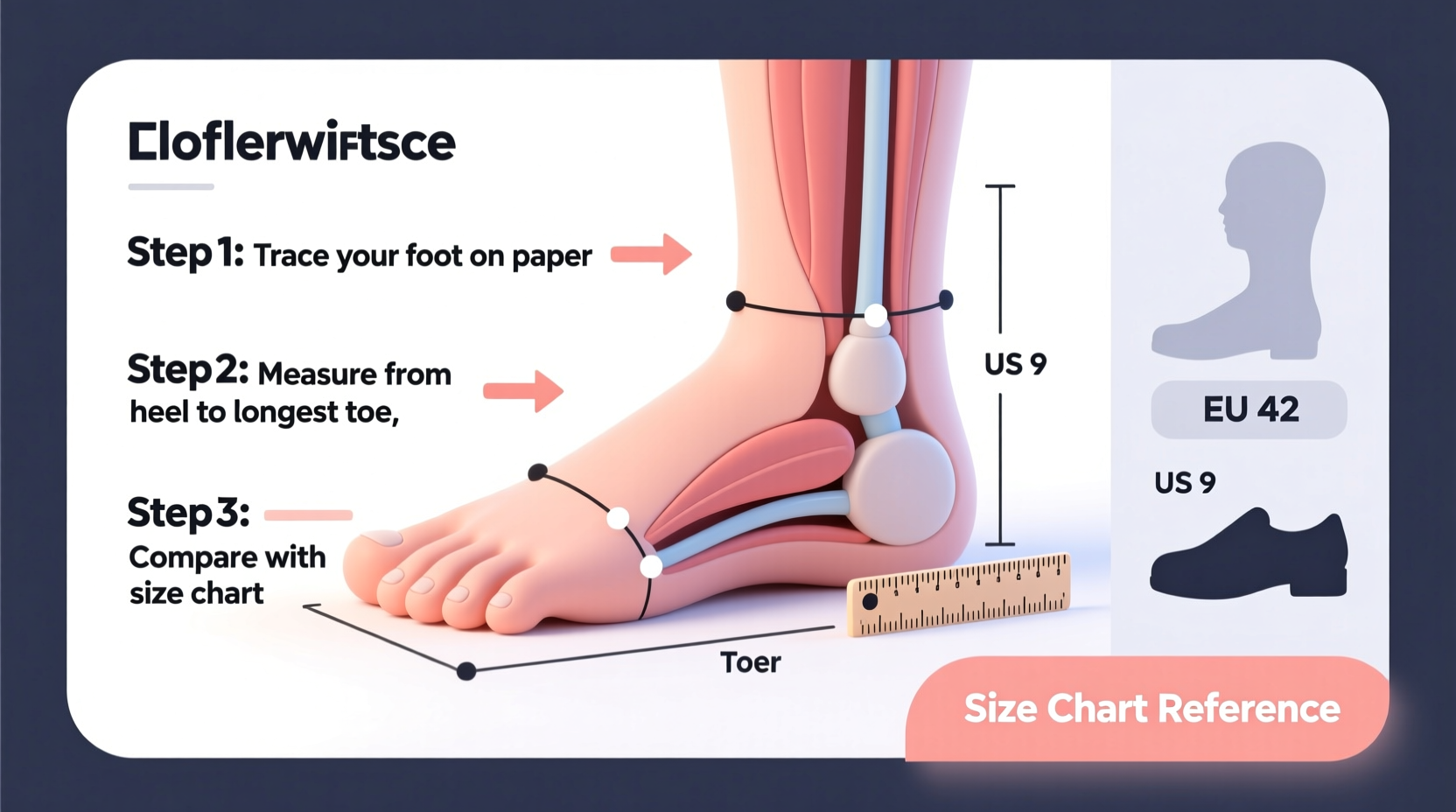
Your feet support your entire body weight with every step. Ill-fitting shoes can lead to blisters, bunions, plantar fasciitis, and even back pain. A study by the American Podiatric Medical Association found that over 75% of Americans experience foot problems, many due to improper footwear. What many don’t realize is that shoe sizes vary significantly between brands and countries—U.S., U.K., EU, and Asian sizing all follow different standards. Relying solely on a number from years ago or assuming your size is the same in every brand leads to avoidable discomfort.
Additionally, feet change over time. Weight gain, aging, pregnancy, and prolonged standing can all alter foot length and width. Measuring your feet regularly—ideally every year—is a proactive way to maintain foot health and ensure optimal shoe fit.
What You’ll Need to Measure Your Feet at Home
The process requires only a few basic items you likely already have:
- A ruler or tape measure (preferably in centimeters and inches)
- A blank sheet of paper larger than your foot
- A pencil or pen
- A flat, hard surface (like tile or hardwood floor)
- A second person (optional but helpful for accuracy)
Step-by-Step Guide to Measuring Your Foot Size
- Prepare the Surface: Place the paper on a hard, flat floor. Avoid carpet, as it can compress underfoot and distort measurements.
- Stand Naturally: Step onto the paper with your heel against a wall or fixed object. Wear the type of socks you’d normally wear with shoes.
- Trace Your Foot: Hold the pencil vertically and trace the outline of your foot, keeping contact with the paper at all points. Have someone help if possible to maintain consistency.
- Measure Length: Use the ruler to measure from the heel to the longest toe (usually the big toe, but sometimes the second toe). Record this in both inches and centimeters.
- Measure Width: Find the widest part of the foot (typically across the ball) and measure side-to-side. Note whether your feet feel narrow, medium, wide, or extra-wide.
- Repeat for Other Foot: Most people have one foot slightly larger than the other. Always size to the larger foot.
- Compare to Size Charts: Use your measurements to reference official conversion charts from major brands or international sizing standards.
Pro Tip: The \"Thumb Rule\" for Fit Check
Once you have a shoe, stand up and check for space at the toe. There should be about a thumb’s width (roughly 0.5–0.7 inches) between your longest toe and the end of the shoe. If your toes touch the front, the shoe is too small—even if the size label matches.
Understanding International Shoe Size Conversions
Shoe sizes aren’t universal. A size 9 in the U.S. differs from a size 9 in the U.K. or EU. Below is a simplified comparison chart based on average foot length:
| U.S. Men | U.S. Women | U.K. | EU | Foot Length (cm) |
|---|---|---|---|---|
| 7 | 8 | 6 | 40 | 25.1 |
| 8 | 9 | 7 | 41 | 25.9 |
| 9 | 10 | 8 | 42 | 26.7 |
| 10 | 11 | 9 | 43 | 27.5 |
| 11 | 12 | 10 | 44 | 28.3 |
Note: This is a general guide. Always refer to the specific brand’s size chart, as design differences (e.g., pointed vs. round toe) affect fit.
Common Mistakes to Avoid When Measuring at Home
- Measuring barefoot on carpet: Soft surfaces compress, leading to shorter readings.
- Using old measurements: Feet can grow or spread over time—especially after age 40.
- Ignoring width: Many focus only on length, but narrow or wide widths drastically impact comfort.
- Assuming unisex sizing: Men’s and women’s shoes differ not just in size numbers but in volume and shape.
- Trusting online reviews alone: “Runs small” comments are subjective. Pair them with actual measurements.
“Many foot issues I see in clinic stem from wearing shoes just half a size too small. A proper home measurement takes five minutes and can prevent years of pain.” — Dr. Lena Torres, Podiatrist and Gait Specialist
Mini Case Study: Sarah’s Running Shoe Dilemma
Sarah, a 34-year-old teacher, ordered her favorite running shoes online using her remembered size: U.S. women’s 8. Within two miles, she developed sharp pain in her left big toe. After returning the shoes, she measured her feet at home and discovered her right foot was 24.8 cm (U.S. 8), but her left was 25.3 cm (U.S. 8.5). She had unknowingly been wearing shoes too short for her larger foot. By switching to size 9 and choosing a wide-width option, her discomfort vanished. Her takeaway: always remeasure before buying performance footwear.
Printable Shoe Size Checklist
Use this checklist each time you measure your feet:
- ✅ Measure both feet in the evening
- ✅ Use a hard, flat surface
- ✅ Trace feet while standing
- ✅ Measure length and width in cm and inches
- ✅ Identify your dominant foot (larger one)
- ✅ Compare results to brand-specific charts
- ✅ Note any swelling, bunions, or arch changes
Frequently Asked Questions
How often should I measure my shoe size?
At minimum, once a year. More frequently if you’re pregnant, have diabetes, experience foot pain, or notice shoes feeling tighter than before.
Do children need regular foot measurements?
Yes. Children’s feet grow rapidly—sometimes up to two sizes per year until age 5. Measure every 3–4 months during growth spurts.
Can I use my current well-fitting shoe to determine size?
You can, but it’s less accurate. Remove the insole and trace it, then measure its length. However, insoles may not reflect true foot dimensions due to padding or compression over time.
Final Tips for Online Shoe Shoppers
When buying shoes online, combine your home measurements with these strategies:
- Search for brands that provide detailed fit guides with insole measurements.
- Look for retailers with free returns—this allows testing fit risk-free.
- Check customer photos and reviews mentioning “fit,” “narrow,” or “runs large.”
- Avoid purchasing dress shoes or athletic footwear based on memory alone.
Conclusion
Accurately determining your shoe size at home is a simple, empowering act of self-care. With a piece of paper, a pencil, and a few minutes, you can eliminate guesswork and protect your feet from unnecessary strain. Whether you're replacing everyday sneakers, investing in work boots, or ordering formal shoes for a special occasion, precise measurements ensure confidence in every step. Don’t let outdated assumptions or inconsistent sizing standards dictate your comfort. Take control today—measure your feet, record the data, and shop with precision.




 浙公网安备
33010002000092号
浙公网安备
33010002000092号 浙B2-20120091-4
Comments
No comments yet. Why don't you start the discussion?