
Selecting the right rolling backpack for a child involves more than just picking a fun color or favorite cartoon character. The fit is critical—not only for comfort but also for spinal health, posture, and ease of movement. A poorly sized bag can lead to strain, fatigue, and even long-term musculoskeletal issues. Yet, most parents overlook precise measurements when making this purchase. This guide provides a comprehensive, step-by-step approach to measuring your child correctly so you can choose a rolling backpack that fits perfectly and supports healthy development.
Why Proper Sizing Matters
A rolling backpack reduces shoulder strain by shifting weight to the ground, but it still needs to be properly matched to a child’s body. If the handle is too high or too low, it forces awkward postures that defeat the purpose of using wheels. Additionally, an oversized backpack—even on wheels—can be cumbersome in hallways, lockers, or public transit. An undersized one may not hold necessary supplies, leading to overstuffing or multiple bags.
The American Occupational Therapy Association recommends that school bags should not exceed 10–15% of a child’s body weight. While rolling backpacks help manage heavier loads, improper dimensions can still cause inefficiency and discomfort during daily use.
Step-by-Step Guide to Measuring Your Child
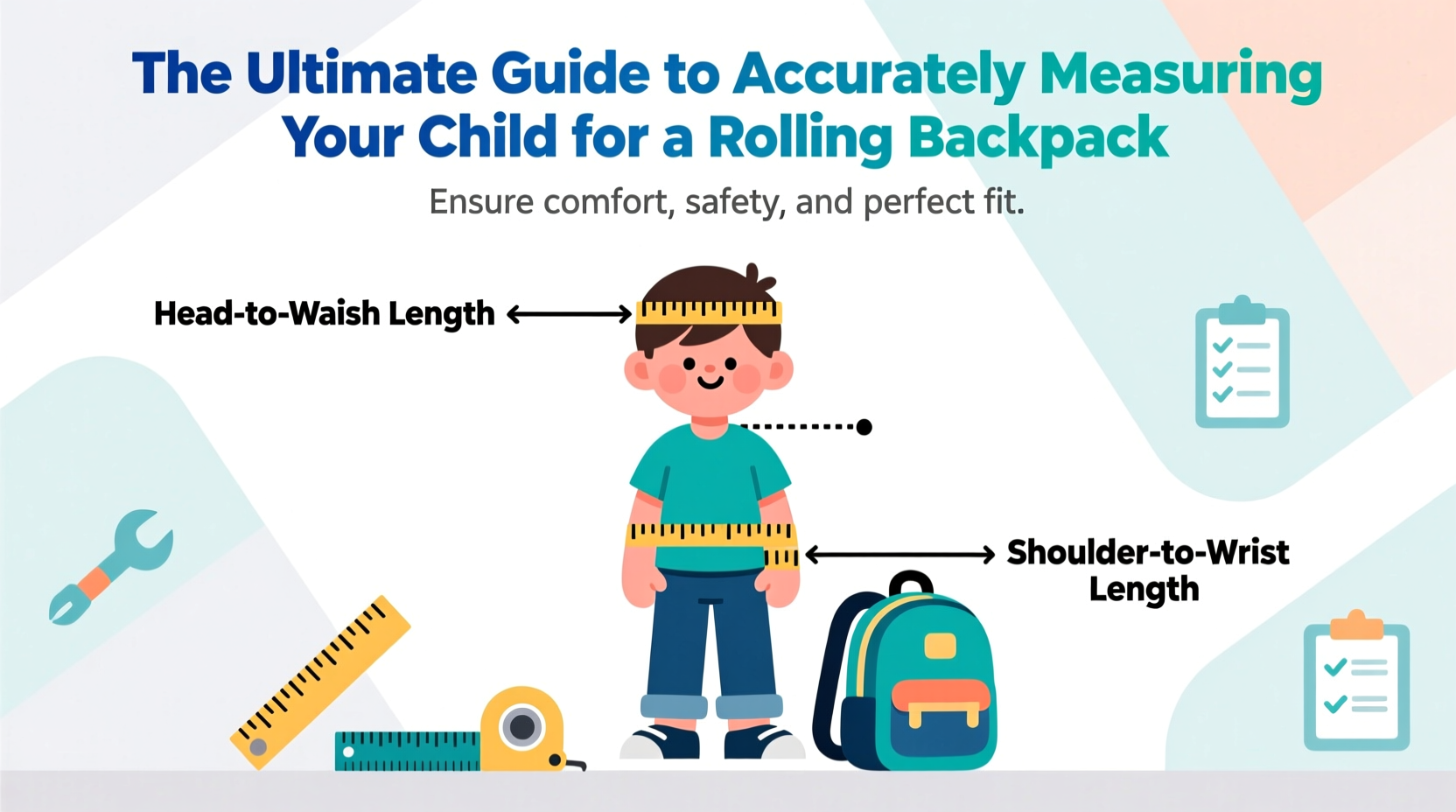
Accurate measurement ensures the backpack aligns with your child’s height and proportions. Follow these steps carefully using a soft measuring tape, a wall, and flat shoes.
- Measure Height from Floor to Shoulder (Handle Height): Have your child stand straight against a wall, wearing shoes. Locate the bony prominence at the base of the neck (C7 vertebra). From there, measure down vertically to the top of the shoulder where a traditional backpack would rest. This point determines optimal handle height.
- Measure Back Length (Torso Length): Starting at the C7 vertebra, run the tape down the spine to the top of the hip bones (iliac crest). This length helps determine whether a small, medium, or large youth-sized rolling backpack will fit best.
- Check Hip Width: Wrap the tape around the widest part of the hips to ensure the backpack won’t extend beyond the body’s natural width, which could cause imbalance when pulling.
- Assess Arm Reach: With arms hanging naturally, measure from the shoulder to the wrist. This gives insight into how far the handle will extend and whether adjustments are needed for comfortable pulling.
- Weigh Your Child: Record current weight to confirm the backpack’s load capacity is appropriate. Most rolling backpacks support up to 25 lbs, suitable for children over 60 lbs.
Record all measurements clearly before shopping. These numbers will serve as your sizing baseline.
Recommended Size Ranges Based on Age and Measurements
Manufacturers often categorize rolling backpacks by age, but relying solely on age can be misleading due to growth variation. Use this table as a reference combining age, height, back length, and recommended backpack dimensions.
| Age Range | Avg. Height (in) | Back Length (in) | Backpack Height (in) | Handle Adjustment Range (in) |
|---|---|---|---|---|
| 5–7 years | 42–48 | 12–14 | 14–16 | 24–30 |
| 8–10 years | 49–54 | 14–16 | 16–18 | 28–34 |
| 11–13 years | 55–61 | 16–18 | 18–20 | 32–38 |
| 14+ years | 62+ | 18+ | 20+ | 36–42 |
Note: Always prioritize actual body measurements over age brackets. A tall 8-year-old may require a model designed for older children.
“Properly fitted rolling backpacks reduce upper body strain by up to 70% compared to traditional packs, but only if the handle height allows for an upright pulling posture.” — Dr. Lena Torres, Pediatric Ergonomics Researcher, Children's Institute of Motion Health
Key Features to Match with Your Measurements
Once you have accurate data, focus on backpack features that complement those dimensions:
- Adjustable Telescoping Handle: Should extend to within 2–4 inches above the child’s shoulder height measurement. Locking mechanisms must be secure.
- Wheeled Base Width: Should not exceed hip width to prevent tripping or snagging in narrow spaces.
- Weight Distribution: Look for dual compartments—top-heavy bags tilt backward, increasing pull resistance.
- Wheel Type: Larger, recessed wheels handle uneven sidewalks better and reduce noise indoors.
- Retractable Pull Handle Grip: Must be ergonomically shaped and positioned so the child’s hand rests naturally without wrist bending.
Real-Life Example: Measuring Emma Before Fifth Grade
Emma, age 10, was transitioning to a larger elementary school with longer hallways and outdoor walks between buildings. Her parents wanted a rolling backpack to ease her load. Instead of guessing based on her age, they measured her back length at 15.5 inches and shoulder height at 47 inches. They discovered many “tween” models had handles starting at 30 inches—too short for her frame.
After comparing specs, they selected a model with a 28–36 inch adjustable handle and a 17-inch torso-friendly body. The result? Emma pulled it effortlessly, maintained good posture, and reported no fatigue after full school days. Her teachers even noticed she wasn’t dragging the bag anymore—a common issue with ill-fitting models.
Do’s and Don’ts When Selecting a Rolling Backpack
| Do | Don’t |
|---|---|
| Use actual body measurements to guide selection | Rely only on age recommendations |
| Choose multi-height handle settings | Pick a fixed-height handle |
| Ensure wheels are recessed and durable | Select flimsy, exposed wheels prone to breaking |
| Check that zippers and seams feel strong | Ignore fabric thickness or stitching quality |
| Let your child test-pull the empty bag | Buy without simulating real-world use |
Frequently Asked Questions
Can a rolling backpack still be too heavy?
Yes. Even though the weight rolls, overloading stresses joints during lifting (e.g., curbs, stairs). Stick to the 10–15% body weight rule. For a 70-pound child, that means no more than 10.5 pounds in the backpack.
What if my child grows quickly—should I buy a larger size?
No. Oversized backpacks compromise handling and balance. It’s better to buy the correct current size and upgrade mid-year if needed. Many brands offer affordable replacement options.
Are 4-wheel rolling backpacks better than 2-wheel models?
Four-wheel models stand upright and don’t tip, which helps in crowded areas. However, they’re wider and harder to maneuver through tight spaces. Two-wheel models offer better control on smooth surfaces but require steadier pulling. Choose based on your child’s environment—four wheels for lots of standing time, two wheels for active walking.
Final Checklist Before Purchase
- ✅ Child has been measured for back length and shoulder height
- ✅ Handle adjustment range matches or exceeds shoulder height
- ✅ Backpack height is proportional to torso length
- ✅ Wheels are sturdy and recessed
- ✅ Total loaded weight stays under 15% of child’s body weight
- ✅ Child can easily lift and maneuver the empty bag
- ✅ Zippers, straps, and seams appear durable
Conclusion
Measuring your child for a rolling backpack isn’t just about convenience—it’s a proactive step toward protecting their physical well-being. With accurate data and informed choices, you can avoid common pitfalls like poor posture, unnecessary strain, and premature wear. Take the time to assess your child’s unique proportions, compare features thoughtfully, and involve them in testing options. The right fit makes all the difference in comfort, confidence, and daily ease.




 浙公网安备
33010002000092号
浙公网安备
33010002000092号 浙B2-20120091-4
Comments
No comments yet. Why don't you start the discussion?