
Selecting the right blinds enhances both privacy and aesthetics in any room. But even the most beautiful design can look out of place if it doesn’t fit properly. Incorrectly sized blinds lead to gaps, uneven coverage, or a frame that overpowers the window. Whether you're outfitting a cozy bedroom or a sun-drenched living area, precise measurements are essential. This guide walks through every step of measuring for blinds across different window types, ensuring a flawless fit every time.
Why Accurate Blind Sizing Matters
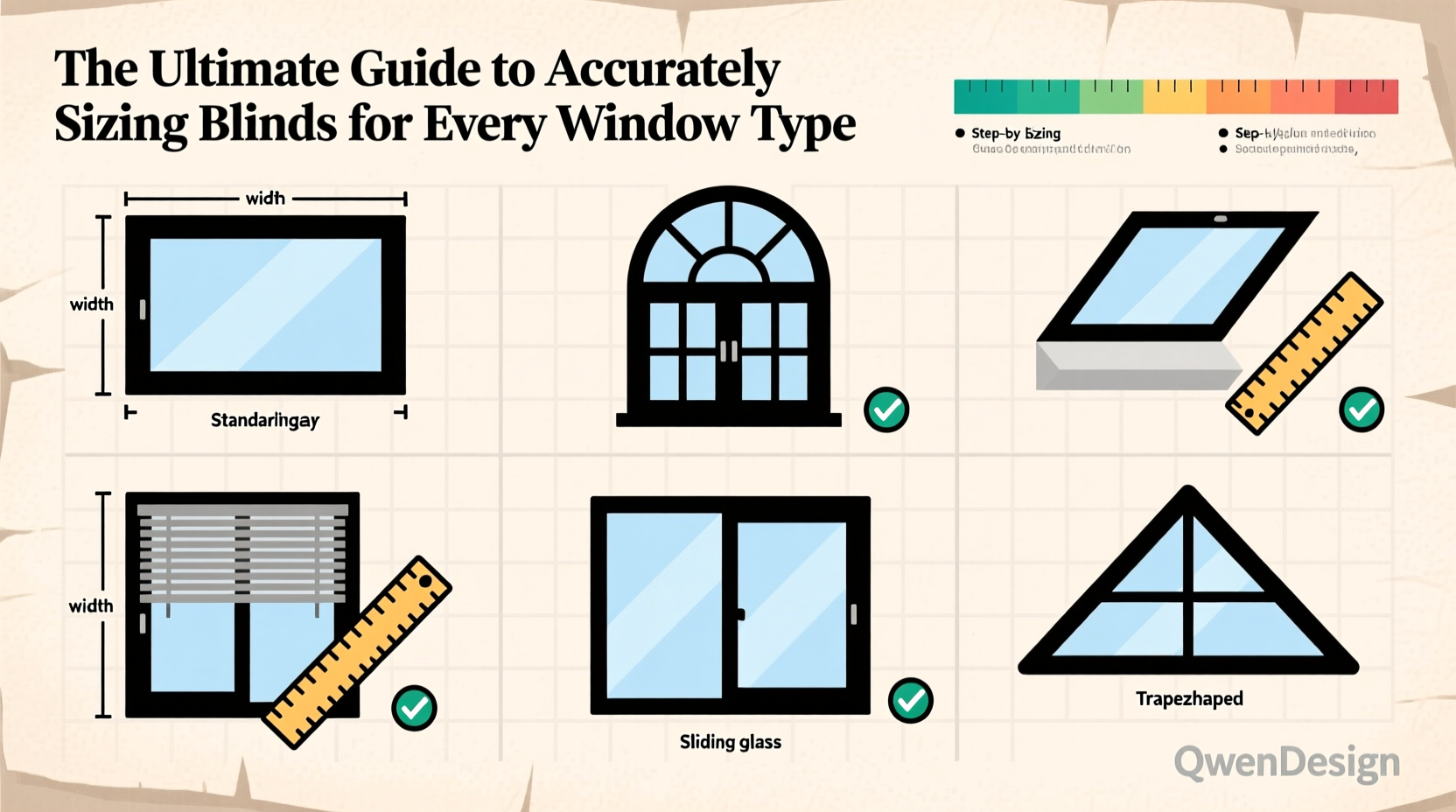
A well-fitted blind does more than block light—it completes the visual harmony of a space. Blinds that are too narrow leave gaps on the sides, allowing unwanted light and reducing insulation. Oversized units may not operate smoothly or could damage your window trim. Beyond function, proportion impacts style: a blind that extends slightly beyond the window frame often looks more balanced and intentional.
Professional interior designers emphasize that measurement precision contributes significantly to perceived quality. As interior architect Marcus Lin stated:
“Proportion is everything in window treatments. A quarter-inch gap can make an otherwise elegant room feel unfinished.” — Marcus Lin, Interior Architect
Step-by-Step Guide to Measuring for Blinds
The method you use depends on whether you’re installing blinds inside or outside the window recess. Each approach has distinct advantages and requirements.
Inside Mount (Recessed Installation)
An inside mount places the blinds within the window frame, creating a clean, built-in appearance. Ideal for windows with sufficient depth and straight edges.
- Choose three vertical points—top, middle, and bottom of the window opening—and measure the width at each location. Use the smallest of these three numbers as your final width.
- Measure height from the top inside edge to the sill at the left, center, and right. Again, use the smallest measurement.
- Note depth: Ensure the window has enough depth to accommodate the blind’s hardware. Most inside-mount blinds require at least 2.5 cm (1 inch) of depth.
Outside Mount (Face-Fit Installation)
Use this method when the window recess is too shallow, uneven, or when you want maximum light blockage and coverage.
- Determine overlap: For optimal coverage, extend the blind 10–15 cm (4–6 inches) beyond the window on each side. This prevents light gaps and makes the window appear larger.
- Measure total width: Add the desired overlap to the window’s actual width. Example: a 90 cm wide window + 15 cm per side = 120 cm total blind width.
- Measure height: From where the top of the blind will sit (typically 10–20 cm above the frame) to where it should end (often just below the sill or at floor level).
Blind Sizing by Window Type
Not all windows are standard rectangles. Here’s how to handle common variations.
Standard Rectangular Windows
Most straightforward. Follow the inside or outside mount steps above. Prioritize inside mounts for a streamlined look unless depth is insufficient.
Bay and Bow Windows
These consist of multiple panels at angles. Measure each window section individually. Use inside mounts if depth allows; otherwise, opt for outside mounts with consistent overlap across all units. Consider motorized options for hard-to-reach sections.
Casement and Awning Windows
These open outward, so inside mounts can interfere with operation. Choose outside mounts with brackets positioned to avoid handles. Measure when the window is closed but ensure clearance when opened.
Skylights and Roof Windows
Install blinds on the inside surface of the glass or use specialized top-down systems. Measure the exact glazing dimensions, not the frame. Remote-controlled or cordless models are safer and easier to operate overhead.
French Doors and Tall Windows
For doors, use outside mounts to prevent obstruction when opening. Match the blind height to the glass panel, stopping just above the handle. Pair with sheer curtains for layered style.
| Window Type | Recommended Mount | Key Measurement Tip |
|---|---|---|
| Standard Double-Hung | Inside or Outside | Use smallest width/height in recess |
| Bay/Bow | Outside (per section) | Measure each pane separately |
| Casement | Outside | Ensure clearance for handle swing |
| Skylight | Inside Glass Surface | Measure glass, not frame |
| French Door | Outside | Stop blind above door handle |
Common Mistakes and How to Avoid Them
- Using average measurements: Never average width or height. Always go with the smallest dimension to avoid binding.
- Ignoring window shape irregularities: Older homes often have non-square frames. Measure at multiple points.
- Forgetting hardware clearance: Brackets and valances add extra width or depth. Confirm product specs before finalizing size.
- Misjudging mounting space: Ensure walls or ceilings around the window can support outside-mount brackets, especially near corners.
Real-World Example: Fitting Blinds in a Historic Home
Sarah Thompson, a homeowner in Boston, struggled to fit blinds in her 1920s colonial. The windows were slightly trapezoidal, with widths varying by up to 1.5 cm between top and bottom. She initially ordered blinds based on the top measurement, only to find they wouldn’t fit at the base.
After re-measuring using the smallest dimension at each point and opting for outside mounts with 12 cm side extensions, she achieved full coverage and a modernized look without compromising the home’s character. Her experience underscores the importance of meticulous measurement—even in seemingly uniform spaces.
Frequently Asked Questions
Should I round my measurements up or down?
Never round unless instructed by the manufacturer. Provide exact figures in millimeters or 1/8-inch increments. Reputable suppliers use your precise numbers to cut the blind.
Can I install blinds on a window with protruding trim?
Yes, but consider an outside mount. If using an inside mount, ensure the blind’s headrail and slats have enough clearance to operate without rubbing against the trim.
What if my window is wider at the top than the bottom?
This is common in older homes. Use the narrowest width measurement to ensure the blind fits throughout its entire height. Gaps on the sides are less noticeable than a blind that won’t close.
Final Checklist Before Ordering
- Measured width at three points and used the smallest number.
- Measured height at three points and used the smallest number.
- Confirmed minimum depth for inside mounts (if applicable).
- Determined ideal overlap for outside mounts (minimum 10 cm per side).
- Checked clearance for window handles, locks, or opening mechanisms.
- Verified mounting surface strength for outside installations.
- Labeled each window with its measurements to avoid mix-ups.
Conclusion: Precision Leads to Perfection
Accurately sizing blinds transforms a simple window covering into a seamless part of your home’s design. Whether you prioritize energy efficiency, privacy, or aesthetic balance, correct measurements are the foundation. Take your time, use the right tools, and don’t skip verification. With careful planning, your blinds will operate smoothly, look professionally installed, and elevate every room they grace.




 浙公网安备
33010002000092号
浙公网安备
33010002000092号 浙B2-20120091-4
Comments
No comments yet. Why don't you start the discussion?