
Sterling silver rings are timeless accessories, valued for their elegance and durability. However, even the most perfectly chosen ring can become too tight or too loose over time due to changes in body temperature, weight fluctuations, or aging. Rather than replacing a cherished piece, resizing offers a practical solution. But unlike more malleable metals, sterling silver requires careful handling to avoid cracking, weakening, or damaging the design. This guide walks you through the safest and most effective methods for resizing your sterling silver ring, whether you're considering a DIY approach or working with a professional jeweler.
Understanding Sterling Silver and Its Properties
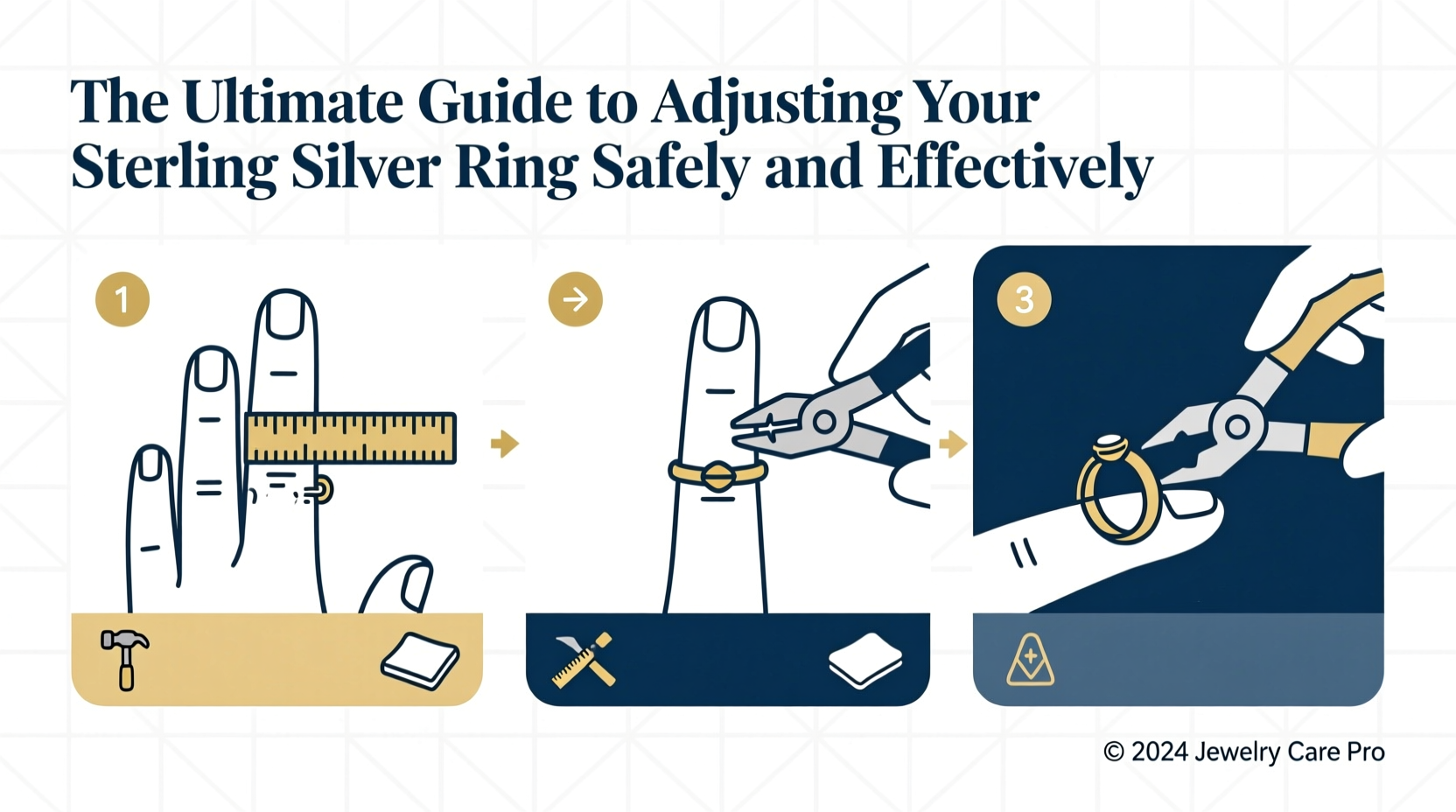
Sterling silver is an alloy composed of 92.5% pure silver and 7.5% other metals—typically copper—which adds strength and durability. While this makes it suitable for jewelry, it also introduces challenges when resizing. Pure silver is soft and ductile, but the addition of copper increases hardness and reduces elasticity. As a result, sterling silver can crack under stress if not properly heated or manipulated.
Another consideration is work hardening: repeated bending or hammering causes the metal’s crystalline structure to stiffen, making it brittle. This is especially relevant during ring resizing, where the band must be stretched or compressed. Without annealing (a controlled heating process), the metal may fracture.
“Sterling silver is beautiful but demands respect during resizing. Skipping proper annealing is the most common cause of breakage.” — Daniel Reyes, Master Jeweler with 25 years of experience
When to Resize: Signs Your Ring Needs Adjustment
Before deciding to resize, confirm that adjustment is necessary. Common indicators include:
- Visible gaps between the ring and finger when worn
- Pain or discomfort after prolonged wear
- The ring slips off easily, especially when fingers are cold
- Indentation or redness on the skin after removal
A well-fitting ring should slide over the knuckle with slight resistance and sit snugly on the finger without pinching. If your ring fails this test consistently across different times of day (fingers swell slightly in heat), resizing is likely warranted.
Professional Resizing: The Safest Option
For most people, taking your ring to a qualified jeweler is the best choice. Professional jewelers have the tools, expertise, and controlled environment needed to resize sterling silver safely. Here's what typically happens during a professional resizing:
- Assessment: The jeweler examines the ring for existing damage, intricate detailing, or stones that could complicate resizing.
- Sizing Decision: They determine whether the ring needs to be enlarged (stretched) or reduced (soldered).
- Preparation: For enlarging, the band is carefully annealed to soften the metal. For reducing, a small section may be cut out and rejoined.
- Adjustment: Using mandrels, pliers, and precision tools, the jeweler reshapes the band.
- Finishing: The ring is smoothed, polished, and cleaned to restore its original appearance.
Most jewelers can adjust a ring by up to two sizes larger or smaller. Beyond that, structural integrity may be compromised.
Choosing the Right Jeweler
Not all jewelers specialize in silver work. Look for someone with experience in precious metal fabrication and ask about their process. Reputable shops often offer warranties on resizing services.
| Resizing Type | Process | Risk Level | Cost Range (USD) |
|---|---|---|---|
| Up 1–2 Sizes | Annealing + Stretching | Low | $30–$60 |
| Down 1–2 Sizes | Cutting + Soldering + Polishing | Moderate | $50–$90 |
| More than 2 Sizes | Rebuilding Band or Remaking | High | $100+ |
DIY Resizing: Risks and Limited Options
While some online tutorials suggest using household tools to resize silver rings, these methods are generally not recommended. Attempting to force a ring larger with pliers or compress it with hammers can lead to cracks, warping, or complete breakage.
That said, minor adjustments (up to half a size) may be possible with extreme caution:
- Use a ring mandrel and rawhide mallet to gently stretch the band.
- Apply even pressure in small increments, rotating the ring as you go.
- Never attempt this on rings with stones, engravings, or textured surfaces.
If you lack experience with metalwork, skip DIY resizing entirely. The risk of permanent damage outweighs any cost savings.
Real-World Example: Resizing a Heirloom Ring
Sarah inherited her grandmother’s vintage sterling silver band, a delicate piece with floral engraving. It was two sizes too large and slipped off daily. Fearing damage, she consulted a local artisan jeweler instead of a chain store. The jeweler explained that stretching would thin the metal and distort the engraving. Instead, they soldered a small section closed and re-polished the surface, preserving the design. Sarah now wears the ring comfortably, and the repair is nearly invisible.
This case highlights the importance of expert assessment—sometimes the safest method isn’t the most obvious one.
Post-Resizing Care and Maintenance
After resizing, your ring may be more susceptible to tarnish or stress at the adjustment point. Follow these steps to maintain its longevity:
- Allow 24 hours before regular wear to ensure any residual flux is fully cleaned.
- Polish gently with a microfiber cloth designed for silver.
- Store separately from other jewelry to prevent scratching.
- Have the ring inspected annually, especially if worn daily.
“Even a perfect resize creates a weak point. Regular check-ups catch problems early.” — Lena Torres, Jewelry Conservator
Frequently Asked Questions
Can all sterling silver rings be resized?
No. Rings with intricate designs, embedded stones, or very thin bands may not withstand resizing. Some styles, like tension settings or those with continuous patterns, cannot be altered without visible seams.
Will resizing weaken my ring?
Any resizing introduces a potential weak point, especially if soldering is involved. However, when done correctly, the reduction in strength is minimal and shouldn't affect everyday wear.
How long does professional resizing take?
Most jewelers complete simple resizings in 3–7 business days. Complex jobs or busy seasons (like holidays) may extend this to 2–3 weeks.
Final Checklist Before Resizing
Before handing over your ring, verify the following:
- ✅ Confirm your exact ring size using a professional gauge
- ✅ Choose a jeweler with sterling silver experience
- ✅ Ask about warranty or repair policies
- ✅ Inquire if polishing or rhodium plating is included
- ✅ Remove any stones or coatings that might be affected
Conclusion: Preserve Value, Fit, and Sentiment
Resizing a sterling silver ring doesn’t have to be risky. With the right knowledge and professional support, you can maintain both the aesthetic and emotional value of your jewelry. Whether it’s a gift, heirloom, or personal favorite, a proper fit ensures comfort and confidence every time you wear it. Don’t let an ill-fitting ring sit unused in a drawer—take the next step with care, precision, and respect for the craftsmanship involved.




 浙公网安备
33010002000092号
浙公网安备
33010002000092号 浙B2-20120091-4
Comments
No comments yet. Why don't you start the discussion?