
Maintaining connections with family, friends, or business contacts in Mexico is easier than ever — but without the right approach, international calling can quickly become expensive. With a mix of outdated information and confusing carrier policies, many U.S. residents overpay for simple calls. Understanding the correct dialing procedure, knowing when to use traditional carriers versus digital alternatives, and leveraging cost-saving tools can dramatically reduce your phone bill while improving call quality.
This guide breaks down everything you need to know about calling Mexico from the U.S., including exact dialing codes, practical calling methods, and smart strategies that can cut costs by up to 90%. Whether you're making occasional personal calls or managing frequent business communication, this comprehensive resource will help you stay connected efficiently and affordably.
Dialing Codes and How to Call Mexico from the U.S.
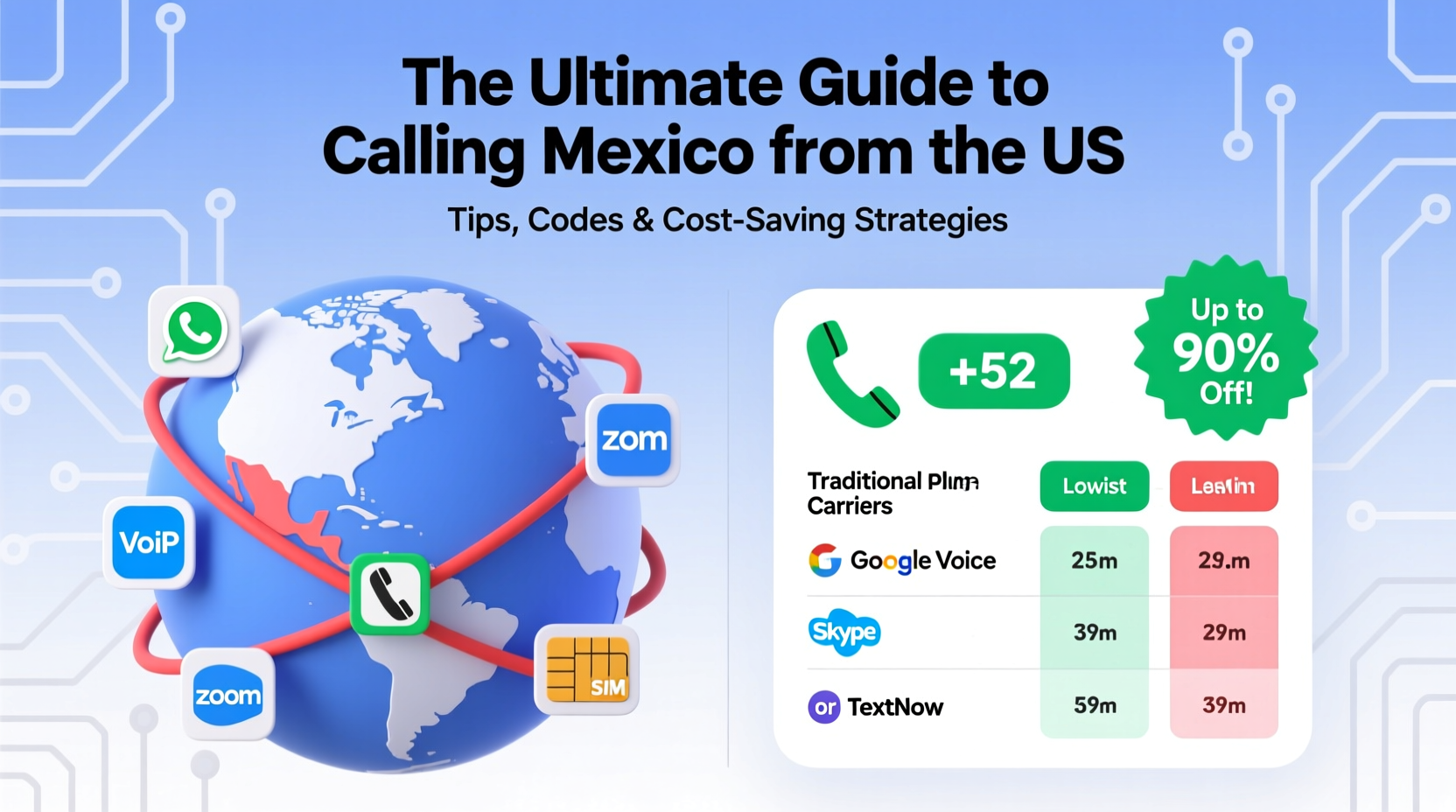
To place a call from the United States to Mexico, you must follow a specific sequence of numbers. The process is standardized but often misunderstood. Here's the correct format:
- Exit Code: Start with
011, the international access code used in the U.S. to dial out of the country. - Country Code: Next, enter
52, which is Mexico’s country code. - Area Code: Dial the Mexican area code (e.g., 55 for Mexico City, 33 for Guadalajara).
- Local Phone Number: Finish with the 10-digit local number.
The full sequence looks like this: 011 - 52 - [Area Code] - [10-Digit Number].
+52 [Area Code] [Number].
Note: Mexican mobile numbers always begin with digits like 1, 2, 3, or 5 after the area code. Landlines may start with other digits depending on the region. Always include the full 10-digit number — omitting any digit can result in failed or misrouted calls.
Cost Comparison: Traditional vs. Digital Calling Methods
Not all calling methods are created equal. While your cell carrier may offer international plans, third-party apps and VoIP services often provide better rates and superior audio quality. Below is a comparison of common options based on average per-minute costs and key features.
| Method | Avg. Cost/min | Call Quality | Setup Required | Best For |
|---|---|---|---|---|
| Traditional Carrier (AT&T, Verizon) | $0.25–$1.00 | Good | None | Occasional callers |
| International Calling Plans (Unlimited Mexico) | $5–$10/month (unlimited) | Very Good | Minimal | Frequent callers |
| Google Voice | $0.07–$0.12 | Excellent | Email account + app | Budget-conscious users |
| WhatsApp / FaceTime Audio | Free (Wi-Fi/data) | Excellent | App download + contact has app | Personal calls |
| Vonage / Skype | $0.05–$0.15 | Good to Excellent | Account setup | Business or long calls |
As shown, internet-based solutions consistently offer lower costs and higher reliability. However, they require both parties to have compatible devices and stable internet connections.
Smart Strategies to Reduce International Calling Costs
Calling internationally doesn’t have to drain your wallet. With a few strategic adjustments, you can maintain regular contact without overspending.
- Use Wi-Fi Whenever Possible: Apps like WhatsApp, Facebook Messenger, and FaceTime Audio are free over Wi-Fi. Avoid data roaming charges by connecting to trusted networks before calling.
- Switch to a VoIP Service: Google Voice allows low-cost international calling starting at $0.07 per minute to Mexico. You can also port your existing number for seamless integration.
- Leverage Unlimited International Plans: Carriers like T-Mobile offer unlimited calling to Mexico and Canada with certain plans. If you make frequent calls, upgrading your plan could save hundreds annually.
- Schedule Calls During Off-Peak Hours: Some providers offer discounted rates during evenings or weekends. Check with your carrier for time-based promotions.
- Use Rechargeable International Calling Cards: Services like Ding or Net10 offer prepaid cards with competitive rates and no expiration, ideal for occasional use.
“VoIP isn’t just cheaper — it’s more reliable. Modern internet infrastructure supports clearer voice transmission than traditional cellular networks across borders.” — Carlos Mendez, Telecommunications Analyst at GlobalCom Insights
Step-by-Step Guide to Making Your First Low-Cost Call
If you're new to international calling or switching from traditional methods, follow this step-by-step process to get started with confidence.
- Choose Your Platform: Decide whether you’ll use a carrier plan, VoIP service, or messaging app. For first-time users, WhatsApp is the easiest entry point.
- Download the App or Set Up an Account: Install WhatsApp, Google Voice, or Skype. For Google Voice, sign in with a Gmail account and complete verification.
- Add the Contact: Save your recipient’s full Mexican number in your phone with the +52 prefix (e.g., +52 55 1234 5678).
- Connect to Wi-Fi: Ensure your device is on a stable network to avoid data charges and dropped calls.
- Initiate the Call: Open the app and select the contact. Tap the voice call icon. Wait for connection — most apps show a “calling” indicator.
- Test Audio Quality: Speak clearly and ask the recipient if they hear you well. Adjust microphone or speaker settings if needed.
- Monitor Usage (if applicable): If using a paid service like Google Voice, check your call history and remaining balance in the dashboard.
Real-World Example: Maria’s Monthly Savings
Maria, a nurse in Chicago, used to spend over $80 a month calling her parents in Guadalajara using her Verizon plan at $0.35 per minute. After researching alternatives, she switched to Google Voice and began using Wi-Fi at home and work.
She now pays a flat rate of $0.09 per minute — less than a quarter of her previous cost. Over a year, Maria saved nearly $700. She also noticed improved call clarity and fewer dropped connections. By simply changing her method, she maintained stronger relationships without financial strain.
Common Mistakes to Avoid
- Forgetting the Country Code: Omitting “52” results in a domestic U.S. call attempt, leading to errors or wrong numbers.
- Using Data Without Wi-Fi: International data roaming fees can exceed $10 per MB. Always disable roaming or use airplane mode with Wi-Fi enabled.
- Assuming All Apps Work Both Ways: FaceTime only works between Apple devices. If your contact uses Android, opt for WhatsApp or Telegram instead.
- Ignoring Time Zone Differences: Mexico spans three time zones. Calling too early or late can disrupt routines. Use a world clock tool to coordinate.
Frequently Asked Questions
Can I call Mexican toll-free numbers from the U.S.?
No, Mexican “800” numbers are not accessible from outside the country. These are domestic-only lines. If you need to reach a business, look for their direct customer service number or international contact option.
Are there any hidden fees with VoIP services?
Most reputable VoIP providers are transparent. Google Voice, for example, clearly lists per-minute rates. However, some lesser-known apps may charge connection fees or bundle services. Always review the pricing page before committing.
Do I need a special plan to text in Mexico?
If texting via SMS/MMS through your carrier, standard international rates apply. To avoid fees, use iMessage (for Apple users) or messaging apps like WhatsApp, Telegram, or Facebook Messenger over Wi-Fi.
Final Thoughts and Action Plan
Calling Mexico from the U.S. should be simple, affordable, and reliable. By understanding the correct dialing format, choosing the right technology, and avoiding common pitfalls, you can stay connected without overspending. Whether you're reaching out to loved ones or managing cross-border business, the tools and strategies outlined here empower you to communicate effectively.




 浙公网安备
33010002000092号
浙公网安备
33010002000092号 浙B2-20120091-4
Comments
No comments yet. Why don't you start the discussion?