
Interior heat buildup in vehicles is more than just uncomfortable—it can degrade materials over time, especially floor mats. Prolonged exposure to high temperatures from direct sunlight and hot surfaces accelerates wear, causes odors, and compromises the structural integrity of standard mats. Heat resistant car mats are engineered to withstand extreme conditions, offering durability, safety, and long-term value. This comprehensive guide walks you through how to select the right type, verify quality, and install them correctly for optimal performance.
Why Heat Resistance Matters in Car Mats
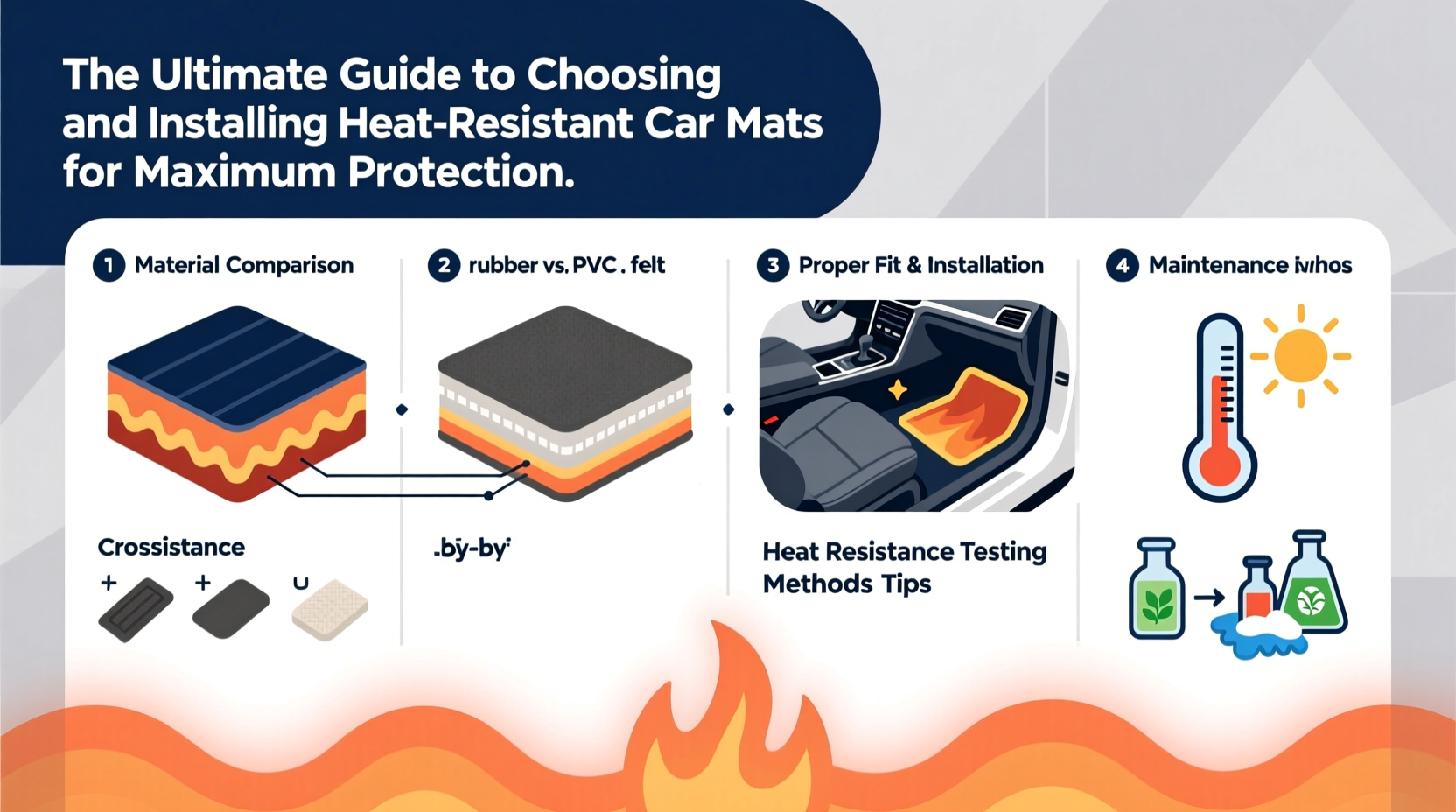
Temperatures inside a parked vehicle can exceed 150°F (65°C) on a sunny day, turning the cabin into an oven. Floor areas near the pedals and footwells absorb radiant heat from metal components and retain it longer. Standard rubber or fabric mats break down under such stress—cracking, warping, or releasing volatile organic compounds (VOCs) that affect air quality.
Heat resistant mats are made from advanced polymers like thermoplastic elastomers (TPE), silicone-infused rubber, or reinforced PVC blends. These materials maintain flexibility and structural strength even after repeated thermal cycling. They resist melting, odor formation, and discoloration, making them ideal for climates with intense sun exposure or frequent stop-and-go driving where engine heat transfers into the cabin.
“High-quality heat resistant mats don’t just protect your floors—they preserve indoor air quality and reduce long-term maintenance costs.” — Dr. Alan Reyes, Automotive Materials Scientist at Midwest Vehicle Research Institute
Key Features to Look For When Choosing Heat Resistant Mats
Selecting the right mat isn’t just about labeling; it requires understanding material composition, design engineering, and fit precision. Here are the critical features to evaluate:
- Material Type: TPE and neoprene composites offer superior heat tolerance compared to basic PVC or recycled rubber.
- Melting Point: Check manufacturer specs—ideal mats should withstand at least 230°F (110°C) without deformation.
- UV Stabilization: Look for UV inhibitors that prevent fading and surface cracking when exposed to sunlight.
- Density & Thickness: Mats between 4mm and 7mm provide cushioning while maintaining stability underfoot.
- Non-Slip Backing: A textured or gripper underside prevents shifting during acceleration or braking.
- Custom Fit vs. Universal: Custom-cut mats align precisely with floor contours, minimizing gaps where heat can accumulate underneath.
Comparison of Common Mat Materials Under High Heat
| Material | Max Heat Tolerance | Pros | Cons |
|---|---|---|---|
| Standard Rubber | ~160°F (71°C) | Inexpensive, widely available | Cracks easily, emits odor in heat |
| PVC-Based | ~190°F (88°C) | Water-resistant, moderate durability | Can soften and deform |
| Neoprene Blend | ~210°F (99°C) | Flexible, good insulation | Higher cost, may stain if not cleaned |
| TPE (Thermoplastic Elastomer) | 230–260°F (110–127°C) | Odorless, recyclable, highly durable | Premium price point |
Step-by-Step Installation Guide for Maximum Protection
Even the best heat resistant mats fail if improperly installed. Follow this sequence to ensure full coverage, secure placement, and effective thermal shielding.
- Remove Existing Mats: Take out old floor liners and vacuum debris from crevices. Wipe down the carpet with a dry cloth to eliminate moisture that could trap heat.
- Verify Fitment: Lay the new mat in place before final installation. Ensure it aligns with pedal positions, seat tracks, and door sills. There should be no bunching or lifting at edges.
- Check Anchor Points: If your vehicle has factory-installed retention clips, confirm the new mat has corresponding cutouts. Never force a mat over anchors—it can cause premature tearing.
- Secure Non-Slip Base: Press firmly along the entire surface, especially around heel zones and accelerator areas. Walk on the mat gently to settle it into position.
- Test Pedal Clearance: Operate brake, clutch, and gas pedals fully. Confirm no part of the mat interferes with full depression or return.
- Final Inspection: Sit in the driver’s seat and visually inspect edge alignment. Recheck after 24 hours of use to ensure no movement occurred.
“Improperly fitted mats are a safety hazard. In one case study, a loosely placed universal mat shifted forward during braking, partially blocking the accelerator pedal.” — National Highway Traffic Safety Administration (NHTSA) Incident Report #CR-2287
Real-World Example: Desert Commuter Protection
Carlos M., a Phoenix-based delivery driver, logged over 40,000 miles annually in his SUV. After two summers with standard rubber mats, he noticed persistent burning smells, warped shapes, and visible cracks near the driver’s footwell. Switching to custom-fit TPE mats rated for 250°F reduced interior temperatures by 12°F near the floor and eliminated off-gassing. Two years later, the mats showed minimal wear despite daily exposure to 115°F+ external temperatures.
His experience highlights a broader trend: drivers in high-heat regions benefit significantly from investing in scientifically tested, heat-resistant solutions rather than replacing low-grade mats every six months.
Essential Checklist Before Buying Heat Resistant Car Mats
- ✅ Confirm compatibility with your vehicle make, model, and year
- ✅ Review independent lab test data for heat resistance
- ✅ Inspect backing texture for anti-slip properties
- ✅ Ensure precise cutouts for bolts, brackets, and pedals
- ✅ Choose odor-free materials, especially if you have sensitivities
- ✅ Opt for easy-to-clean surfaces (wipeable with damp cloth)
- ✅ Verify warranty coverage (minimum 2-year guarantee recommended)
Frequently Asked Questions
Can heat resistant mats prevent fire hazards?
While they are not fireproof, high-performance mats made from non-flammable or flame-retardant composites reduce ignition risk from sparks or extreme heat sources. However, they are not a substitute for proper electrical system maintenance or smoking precautions.
Do I still need to clean heat resistant mats regularly?
Yes. Even durable materials collect dust, sand, and oils that act as abrasives and insulators. Clean every 2–4 weeks with pH-neutral cleaners to maintain breathability and appearance.
Are custom-fit mats worth the extra cost?
Absolutely. Off-the-shelf mats often leave gaps where heat concentrates and debris accumulates. Custom mats maximize coverage, improve comfort, and enhance resale value by protecting original flooring.
Final Recommendations for Long-Term Interior Protection
Protecting your vehicle’s interior starts from the ground up. Heat resistant car mats do more than shield carpets—they contribute to overall cabin longevity, occupant comfort, and safety. By selecting mats built with thermally stable materials, ensuring accurate fitment, and installing them with care, you create a defense layer that performs reliably year after year.
The upfront investment pays off in fewer replacements, better air quality, and preserved resale value. Whether you live in a scorching climate or frequently park under direct sun, upgrading to true heat resistant floor protection is one of the smartest, most overlooked maintenance moves you can make.




 浙公网安备
33010002000092号
浙公网安备
33010002000092号 浙B2-20120091-4
Comments
No comments yet. Why don't you start the discussion?