
Selecting the right cushion covers is more than just a decorative afterthought—it’s a pivotal step in defining the character of your living space. When done thoughtfully, cushion covers can elevate a plain sofa into a focal point, tie together a room’s color scheme, and express your personal style. Yet many homeowners struggle with mismatched textures, clashing colors, or proportions that feel off. The key lies not in chasing trends, but in understanding how design elements interact. From fabric selection to placement strategy, every choice contributes to visual harmony.
Understand Your Sofa’s Design Language
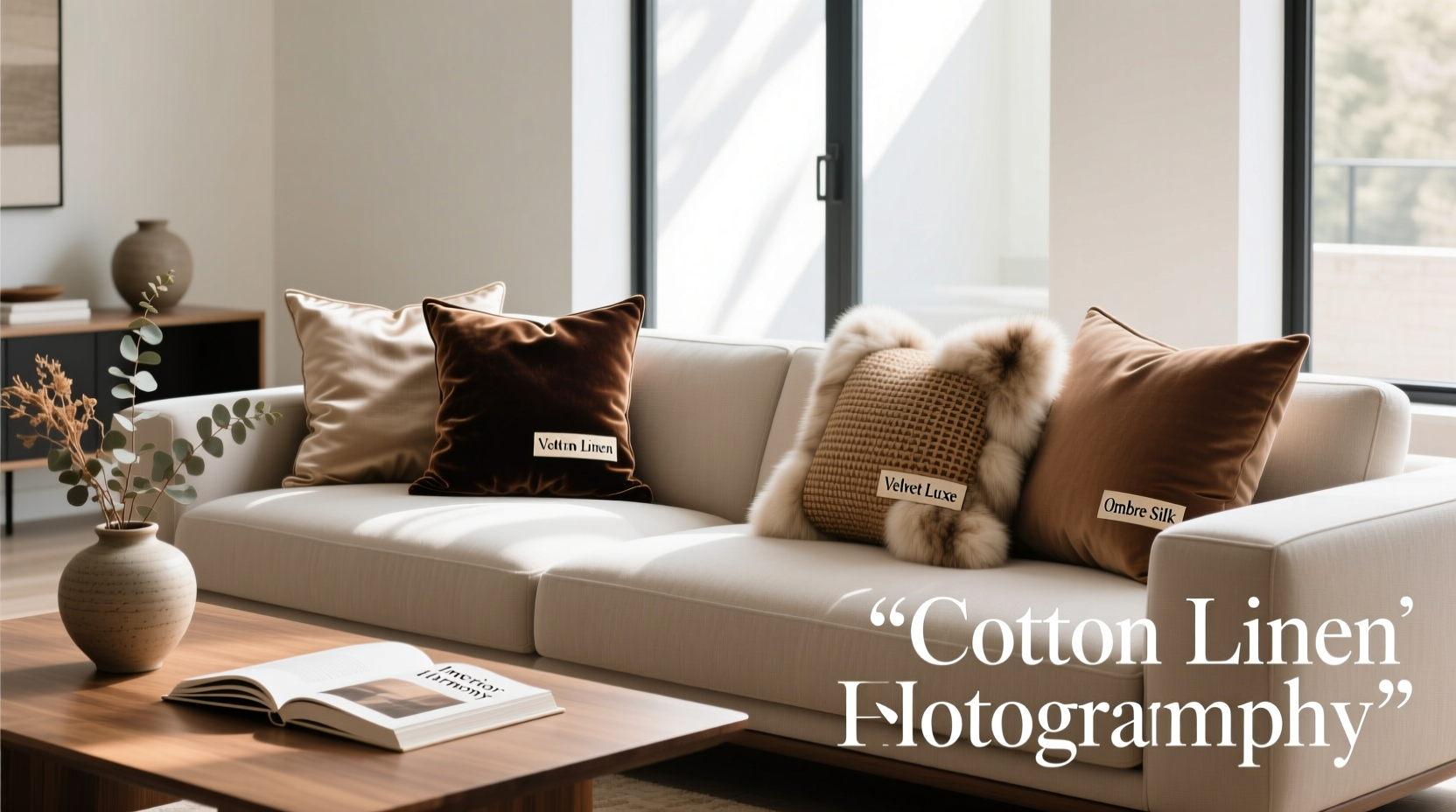
Before introducing any accessory, assess the inherent style of your sofa. Is it mid-century modern with clean lines and tapered legs? Or perhaps a traditional Chesterfield with rolled arms and deep button tufting? The sofa sets the tone, and your cushion covers should respond to it—not compete with it.
A minimalist Scandinavian-style sofa pairs best with soft neutrals and subtle textures like linen or cotton. In contrast, a bold velvet sectional invites richer patterns and jewel tones. Ignoring this foundational step often leads to a disjointed look, no matter how stylish individual pieces may be.
“Cushion covers are like punctuation in a sentence—they don’t define the message, but they shape how it’s read.” — Lila Montgomery, Interior Stylist & Author of *Textile Harmony*
Master Color Coordination
Color is the most immediate way cushion covers influence a room. A well-chosen palette can create cohesion, add contrast, or introduce seasonal flair. Start by identifying your sofa’s dominant hue and its undertones—cool grays versus warm taupes, for example, require different accent strategies.
Use the 60-30-10 rule as a guiding principle: 60% dominant color (your sofa), 30% secondary (rugs, curtains), and 10% accent (cushions). This ensures balance without overwhelming the eye.
| Sofa Color | Complementary Cushion Colors | Colors to Avoid |
|---|---|---|
| Charcoal Gray | Mustard yellow, rust, sage green | Bright white (can clash), cool blue (may feel sterile) |
| Cream Beige | Navy, terracotta, olive green | Yellow (unless muted), pastel pink (can appear dated) |
| Emerald Green | Blush pink, cream, gold-embellished neutrals | Purple (risk of clashing), bright red (overpowering) |
| Navy Blue | White, coral, light gray | Black (too heavy), dark brown (dulls the space) |
Balance Texture and Material
Texture adds depth and tactile interest where color alone falls flat. A sofa in smooth microfiber benefits from layered textures—think nubby bouclé, silky satin piping, or woven jute inserts. However, over-layering can make a space feel chaotic.
Limit your mix to three complementary textures. For example: a base of cotton canvas cushions, one velvet lumbar pillow, and a knitted throw draped nearby. This creates rhythm without clutter.
Natural fibers like cotton and linen offer breathability and a relaxed aesthetic but may wrinkle easily. Synthetic blends resist wear and fading, ideal for homes with pets or children. Consider removable covers for easy washing—this practicality shouldn’t come at the cost of style.
Choose the Right Size and Shape
Proportion matters. Oversized cushions on a small loveseat swallow the furniture; tiny inserts on a sectional disappear into the upholstery. As a general rule:
- Standard square cushions: 18” x 18” work well for most sofas.
- Larger sectionals: Incorporate 20” or 22” squares or 12” x 20” lumbar pillows.
- Small sofas or apartments: Stick to two 16” or 18” cushions max.
Shape also influences mood. Square cushions are classic and balanced. Round or bolster pillows add softness and work well in bohemian or coastal themes. Rectangular lumbar cushions support posture and visually anchor the back of the sofa.
Step-by-Step Guide: Selecting Your Ideal Cushion Cover Set
- Evaluate your sofa: Note its color, material, and design era.
- Define your goal: Do you want contrast, harmony, or seasonal rotation?
- Choose a color scheme: Use a paint swatch or fabric sample to test combinations.
- Select 2–3 textures: Combine matte and sheen, smooth and nubby.
- Determine sizes: Measure your sofa and decide on layout (symmetrical, staggered, etc.).
- Test in natural light: View samples during morning, noon, and evening hours.
- Finalize and layer: Place larger cushions at the ends, smaller or lumbar in front.
Real-Life Example: Transforming a Dated Living Room
Sarah, a homeowner in Portland, had a beige microfiber sofa that made her living room feel bland despite other thoughtful decor choices. She introduced four cushion covers: two in deep terracotta linen and two in geometric black-and-white cotton. She added a lumbar pillow in textured oatmeal bouclé.
The result? Instant warmth and definition. The terracotta echoed the tones in her area rug, while the patterned cushions picked up motifs from a gallery wall. Within a weekend and under $80, the room felt curated and inviting—proof that strategic cushion choices can redefine a space without costly renovations.
Essential Checklist Before You Buy
- ✅ Confirm the sofa’s exact color under different lighting conditions
- ✅ Measure existing cushions or intended placement area
- ✅ Decide on a maximum of three complementary colors
- ✅ Choose fabrics that suit your lifestyle (pet-friendly, washable, etc.)
- ✅ Purchase at least one physical sample to test at home
- ✅ Plan the arrangement: symmetrical, asymmetrical, or gradient?
- ✅ Ensure zippers or closures are discreet and durable
Frequently Asked Questions
How many cushion covers should I use on a standard sofa?
For a three-seater sofa, three to four cushions is ideal. Use odd numbers for a balanced yet dynamic look—three large squares, or two squares plus one lumbar. Avoid overcrowding, which limits seating comfort and visual breathing room.
Can I mix patterns effectively?
Yes, but follow a hierarchy. Pair one bold pattern (like a large floral or tribal print) with a smaller-scale geometric or stripe. Ensure all patterns share at least one common color. Introduce a solid-colored cushion to break up the busyness and prevent visual fatigue.
How do I keep cushion covers looking fresh over time?
Rotate them monthly to prevent uneven sun fading. Wash according to care labels—most cotton and synthetic blends can be machine-washed cold on gentle cycle. Air dry when possible to preserve shape and color. Store off-season covers in breathable cotton bags, not plastic, to avoid moisture buildup.
Bring It All Together
The perfect cushion cover isn’t about finding the most beautiful individual piece—it’s about selecting one that completes a story. When aligned with your sofa’s personality, your room’s palette, and your daily life, cushion covers become functional art. They invite touch, spark conversation, and reflect intentionality.
Don’t wait for a full redecorating project to make a change. Start with one well-chosen cover. Test it. Adjust. Build from there. Small, thoughtful updates often have the most lasting impact.




 浙公网安备
33010002000092号
浙公网安备
33010002000092号 浙B2-20120091-4
Comments
No comments yet. Why don't you start the discussion?