
Selecting the right pillow cover is more than a decorative decision—it’s an opportunity to express personality, elevate comfort, and unify the aesthetic of a space. Among the most enduringly popular designs are flower and leaf patterns, which bring natural elegance and organic warmth into interiors. However, with countless options in fabric, scale, color, and craftsmanship, choosing the ideal one requires thoughtful consideration. This guide walks you through every essential factor to ensure your selection enhances both function and beauty.
Understand the Design Language of Botanical Patterns
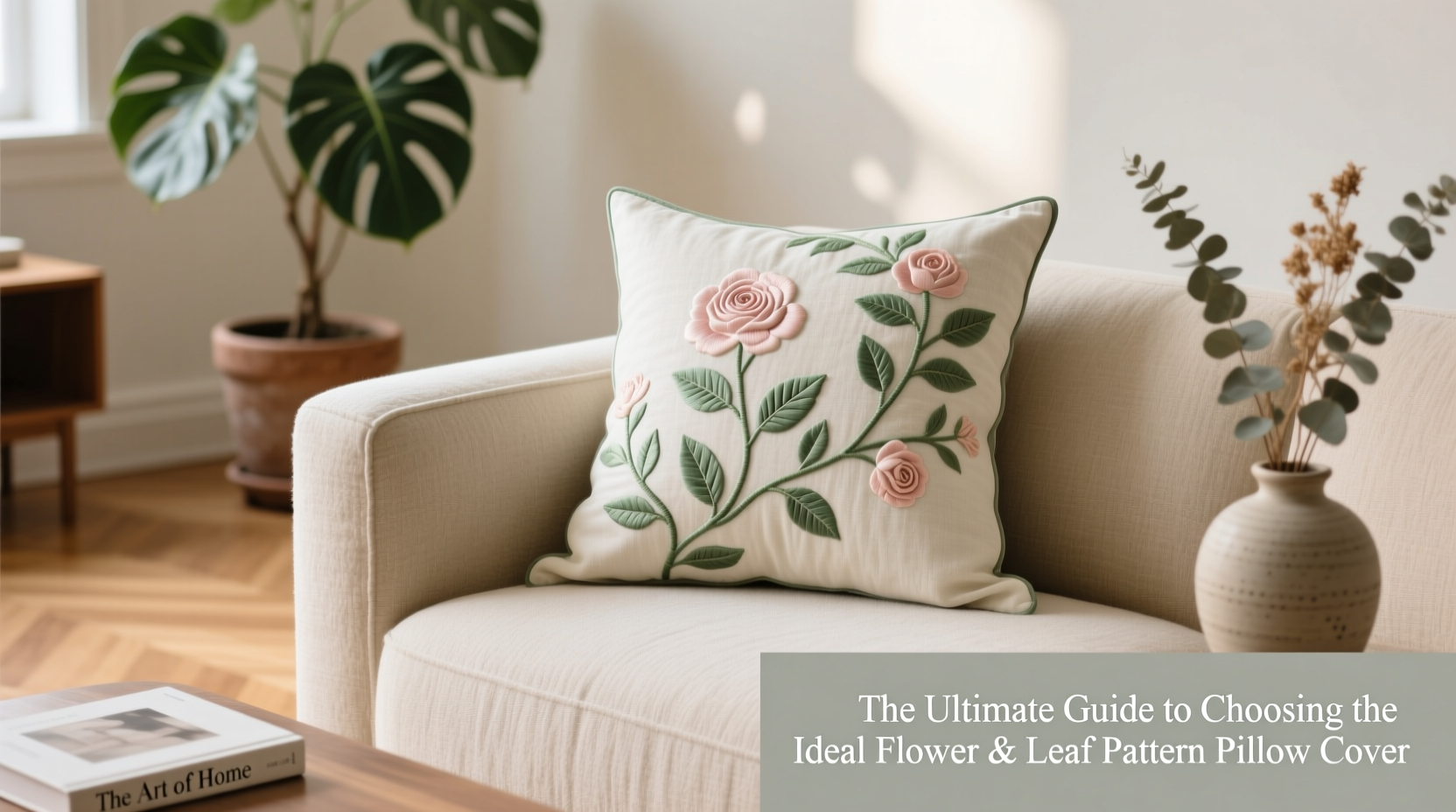
Flower and leaf motifs carry distinct emotional and visual cues. Their appeal lies in their versatility—ranging from romantic vintage florals to minimalist botanical sketches. The key is aligning the pattern’s tone with your room’s character.
- Romantic florals: Large roses or peonies on soft backgrounds suit traditional or cottage-style spaces.
- Tropical leaves: Bold monstera or palm prints add vibrancy and work well in modern or bohemian settings.
- Subtle botanicals: Delicate ferns or eucalyptus trails create calm, ideal for bedrooms or reading nooks.
- Artistic interpretations: Abstract watercolor blooms offer contemporary flair without overwhelming minimalism.
The pattern’s scale also plays a crucial role. Large prints make a statement but can dominate small rooms. Smaller, repeating patterns contribute texture without visual clutter. Always hold a sample swatch against your furniture or walls to assess balance.
Choose the Right Fabric for Comfort and Durability
The material of your pillow cover affects not only aesthetics but also longevity, ease of care, and tactile experience. Each fabric brings different advantages depending on use and environment.
| Fabric Type | Best For | Care Tips | Durability |
|---|---|---|---|
| Cotton | Everyday use, breathable comfort | Machine washable, may wrinkle | Moderate |
| Linen | Rustic, airy, natural look | Wash cold, air dry to prevent shrinkage | High (softens over time) |
| Silk | Luxury accents, formal spaces | Dry clean only; sensitive to sunlight | Low to moderate |
| Polyester blend | Kids’ rooms, pets, high traffic | Resists fading and wrinkles | High |
| Canvas | Outdoor or rustic indoor use | Spot clean or machine wash gently | Very high |
For living rooms or frequently used seating, durable blends or tightly woven cotton offer practicality. Bedrooms benefit from softer, breathable fabrics like linen or cotton sateen. Silk should be reserved for accent pillows where interaction is minimal.
Harmonize Color with Your Existing Palette
A flower and leaf pattern introduces multiple colors, so coordination with your current scheme is vital. Start by identifying the dominant and accent hues in your room—walls, sofa, curtains, and rugs.
Use the 60-30-10 rule as a guide: 60% dominant color (walls, large furniture), 30% secondary (curtains, area rug), and 10% accent (pillows, art). A botanical pillow cover typically serves as part of the 10% accent layer. Pull one or two secondary tones from the pattern into other accessories to create cohesion.
“Color continuity ties a room together. Even if a floral print seems bold, pulling out just one hue for throw blankets or vases grounds the design.” — Lena Torres, Interior Stylist at Bloom & Space
Neutral backgrounds with colored botanicals (e.g., white or beige base with green leaves and pink flowers) are easiest to integrate. For bolder statements, consider dark backgrounds like navy or charcoal with cream-colored foliage—these add drama while remaining sophisticated.
Step-by-Step Guide to Selecting Your Perfect Pillow Cover
Follow this five-step process to confidently choose a pillow cover that complements your space and lasts for seasons to come.
- Evaluate the room’s function: Is it high-traffic? Kid-friendly? Formal? This determines fabric durability needs.
- Assess existing colors and textures: Hold paint chips or fabric samples next to potential covers to test harmony.
- Determine desired mood: Soft pastels with daisies evoke cheerfulness; deep greens with oversized leaves suggest tranquility.
- Check dimensions: Measure your insert. Standard sizes are 18x18”, 20x20”, or 22x22”. A snug fit prevents sagging.
- Review closure type: Hidden zippers allow easy removal and cleaning. Envelope backs are simpler but less secure.
Real-Life Example: Transforming a Dated Living Room
Sarah, a homeowner in Portland, wanted to refresh her beige-toned living room without repainting or replacing furniture. She introduced three 20x20” pillow covers featuring a muted sage leaf pattern on a creamy linen background. The organic motif softened the angular furniture, while the green subtly echoed nearby houseplants. To amplify the effect, she added a matching leaf-print throw blanket and replaced brass lampshades with ceramic ones in earthy terracotta.
Within a weekend, the room felt more cohesive and inviting. “I didn’t expect such a small change to make such a big difference,” Sarah said. “The pillows brought life into the space without clashing with anything we already had.”
Essential Checklist Before You Buy
Before finalizing your purchase, run through this checklist to ensure quality and compatibility:
- ✅ Pattern complements room style (not competing with it)
- ✅ Fabric suits room usage (durable for high traffic, soft for lounging)
- ✅ Colors coordinate with at least one major element in the space
- ✅ Size matches or slightly exceeds insert dimensions
- ✅ Closure is functional and discreet (zipper preferred)
- ✅ Care instructions match your routine (machine-washable vs. dry clean)
- ✅ Backing fabric is consistent in quality (no thinning or mismatched weave)
Frequently Asked Questions
Can I mix flower and leaf patterns with other prints?
Yes, but maintain a unifying color or theme. Pair a leaf-patterned pillow with striped or textured solids in similar tones. Avoid mixing multiple large-scale patterns unless separated by neutral buffers.
How do I keep botanical prints from fading?
Limit direct sunlight exposure. Rotate pillow covers monthly to ensure even light distribution. When washing, turn covers inside out and use cold water with mild detergent.
Are eco-friendly botanical pillow covers available?
Yes. Look for options made from organic cotton, hemp, or TENCEL™, especially when paired with non-toxic, plant-based dyes. Certifications like GOTS (Global Organic Textile Standard) indicate sustainable production.
Final Thoughts
A flower and leaf pattern pillow cover is more than a decorative touch—it’s a bridge between nature and nurture within your home. When chosen with intention, it adds rhythm, warmth, and a sense of grounded beauty. Whether you’re refreshing a single chair or reimagining an entire room, let the details of fabric, color, and design guide you toward a choice that feels both authentic and uplifting.




 浙公网安备
33010002000092号
浙公网安备
33010002000092号 浙B2-20120091-4
Comments
No comments yet. Why don't you start the discussion?