
Knee-high boots are a wardrobe staple that blend elegance with functionality, offering everything from winter warmth to runway-ready flair. Yet, no matter how stylish a pair appears, ill-fitting boots can turn a fashion statement into daily discomfort. The secret to wearing knee boots confidently lies not just in design or material, but in achieving the right fit—especially around the foot, ankle, calf, and shaft height. This guide walks you through every aspect of selecting the ideal knee boot size, ensuring your footwear supports both comfort and personal style.
Understanding Knee Boot Fit Beyond Shoe Size
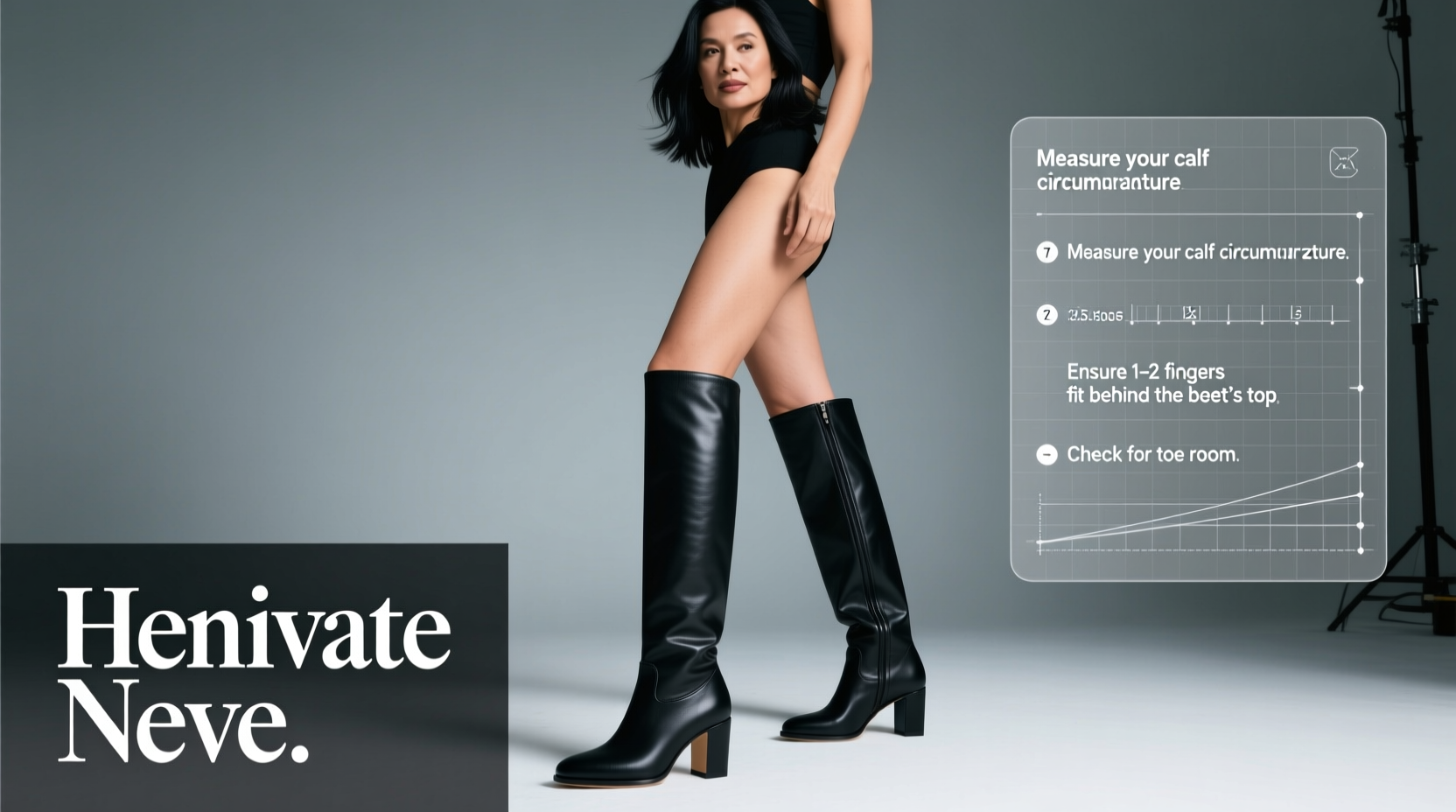
Most people assume that knowing their standard shoe size is enough to buy boots online or in-store. However, knee boots introduce additional fitting variables that go far beyond length. Unlike ankle boots, knee-high styles must accommodate the calf circumference, shaft height, instep volume, and toe box shape—all of which vary significantly between brands and even individual models.
A boot may fit your foot perfectly but pinch at the calf, or it might feel loose around the ankle despite being correct in length. These discrepancies occur because sizing standards aren’t universal. European brands often run narrow, while some American labels offer wide-calf options. Leather stretches slightly over time; synthetic materials do not. Therefore, relying solely on your labeled shoe size can lead to disappointment.
Step-by-Step Guide to Measuring for Knee Boots
To ensure an accurate fit, take precise measurements before purchasing. Follow this timeline for best results:
- Measure at the end of the day – Feet naturally swell throughout the day, so measuring them when they’re largest gives a more realistic sense of fit.
- Trace your foot on paper – Place a sheet on the floor, stand on it barefoot, and trace the outline. Measure from heel to longest toe. Compare this to the brand’s foot-length chart.
- Measure calf circumference – Use a soft tape measure around the widest part of your calf, typically halfway between knee and ankle. Keep the tape parallel to the floor and snug but not tight.
- Check shaft height – Measure from the floor to the desired top of the boot (usually mid-knee). Ensure the boot’s listed shaft height matches your leg proportions.
- Consider sock thickness – If you plan to wear thick wool socks, add about 1/8 inch (3mm) of clearance in both foot and calf dimensions.
Keep these numbers handy when shopping. They serve as objective references, reducing guesswork and returns.
Key Fit Factors by Boot Style
Different knee boot silhouettes demand different fits. A slouchy suede riding boot should feel looser than a sleek leather dress boot designed for tailoring. Understanding style-specific expectations helps set realistic comfort standards.
| Boot Style | Foot Fit | Calf Fit | Shaft Behavior |
|---|---|---|---|
| Riding Boots | Snug heel, roomy toe | Slight ease allowed | Should sit below or at mid-knee |
| Over-the-Knee (OTK) | Precise length match | Tight grip, may require stretch | Must stay upright without slipping |
| Slouchy Suede | Relaxed, flexible | Loose drape preferred | Folds naturally below knee |
| Skinny Heeled Dress Boots | Secure arch support | Form-fitting, minimal gap | Hugs leg cleanly |
For example, if you're buying OTK boots, expect initial tightness—they’ll stretch slightly after breaking in. But if there’s no way to zip them past mid-calf, the size is wrong. Conversely, riding boots should allow slight side wrinkling at the calf, indicating enough room for movement.
“Fit isn’t just about length—it’s about proportion. A well-fitted knee boot complements the leg line, creating balance between shoe and silhouette.” — Lena Torres, Footwear Stylist & Fit Consultant
Real Example: Sarah’s Search for Winter Riding Boots
Sarah, a teacher from Chicago, needed durable yet polished knee boots for commuting during winter. She ordered two pairs online—one standard size based on her usual 7.5, another in wide calf. The first pair fit her foot but compressed her calves painfully after ten minutes of walking. The second had extra room in the calf but felt loose around the ankle.
She returned both and visited a specialty shoe store. There, she learned her instep was higher than average, requiring a larger size for vertical space while needing elastic side panels to adapt to her calf. After trying a size 8 with adjustable side gussets, she found comfort without sacrificing style. Her experience underscores the importance of multidimensional fit assessment—not just length, but volume and flexibility.
Essential Checklist Before Buying Knee Boots
- ✅ Measured foot length and calf circumference accurately
- ✅ Checked brand’s size chart for specific model
- ✅ Considered sock thickness and intended use (casual vs. formal)
- ✅ Verified shaft height suits your leg length
- ✅ Read reviews mentioning “runs small” or “tight calf”
- ✅ Confirmed return policy in case of fit issues
- ✅ Tested heel stability—no slipping at the back
Frequently Asked Questions
How much should my heel slip in new knee boots?
A minimal heel lift of 3–5mm is normal during break-in, especially with stiff leather. However, excessive slipping indicates the boot is too large or lacks proper arch support. Use padded heel grips if needed, but avoid prolonged wear if slippage causes blisters.
Can I stretch knee boots if they’re tight on the calf?
Yes, but only certain materials respond well. Leather and suede can be professionally stretched by 0.5 to 1 inch. Synthetic fabrics and bonded linings rarely stretch and may crack under pressure. Consider using a boot stretcher with calf attachments or consult a cobbler before attempting DIY methods.
Do knee boots fit differently than regular shoes?
Absolutely. While shoe size gives a starting point, knee boots involve multiple zones of fit: footbed, instep, ankle, calf, and shaft height. Some people wear one size up in boots for instep clearance while needing wide calf options regardless of foot length.
Final Thoughts: Confidence Starts with Comfort
The perfect pair of knee boots shouldn’t require enduring discomfort for the sake of aesthetics. When fit aligns with function, your stride becomes easier, your posture improves, and your confidence grows. Whether you're navigating city streets or stepping into a holiday party, well-fitted boots elevate not just your outfit—but your entire presence.
Take the time to measure, research, and try whenever possible. Don’t settle for “close enough.” Your legs deserve footwear that honors both form and comfort.




 浙公网安备
33010002000092号
浙公网安备
33010002000092号 浙B2-20120091-4
Comments
No comments yet. Why don't you start the discussion?