
Selecting a niche bag—whether a crossbody, clutch, sling, or mini backpack—is more than a style decision. It’s about function, comfort, and compatibility with your everyday essentials, especially your phone. With smartphone sizes growing and personal habits evolving, finding a bag that fits your device securely while complementing your lifestyle is essential. Yet many people overlook this critical detail until they’re struggling to close a flap or risk dropping their phone from an ill-fitting pocket.
The right bag doesn’t just carry your phone—it protects it, keeps it accessible, and integrates seamlessly into your routine. This guide breaks down exactly how to match your phone with the ideal niche bag size, factoring in dimensions, usage patterns, material flexibility, and design nuances you might not have considered.
Understand Your Phone’s Exact Dimensions
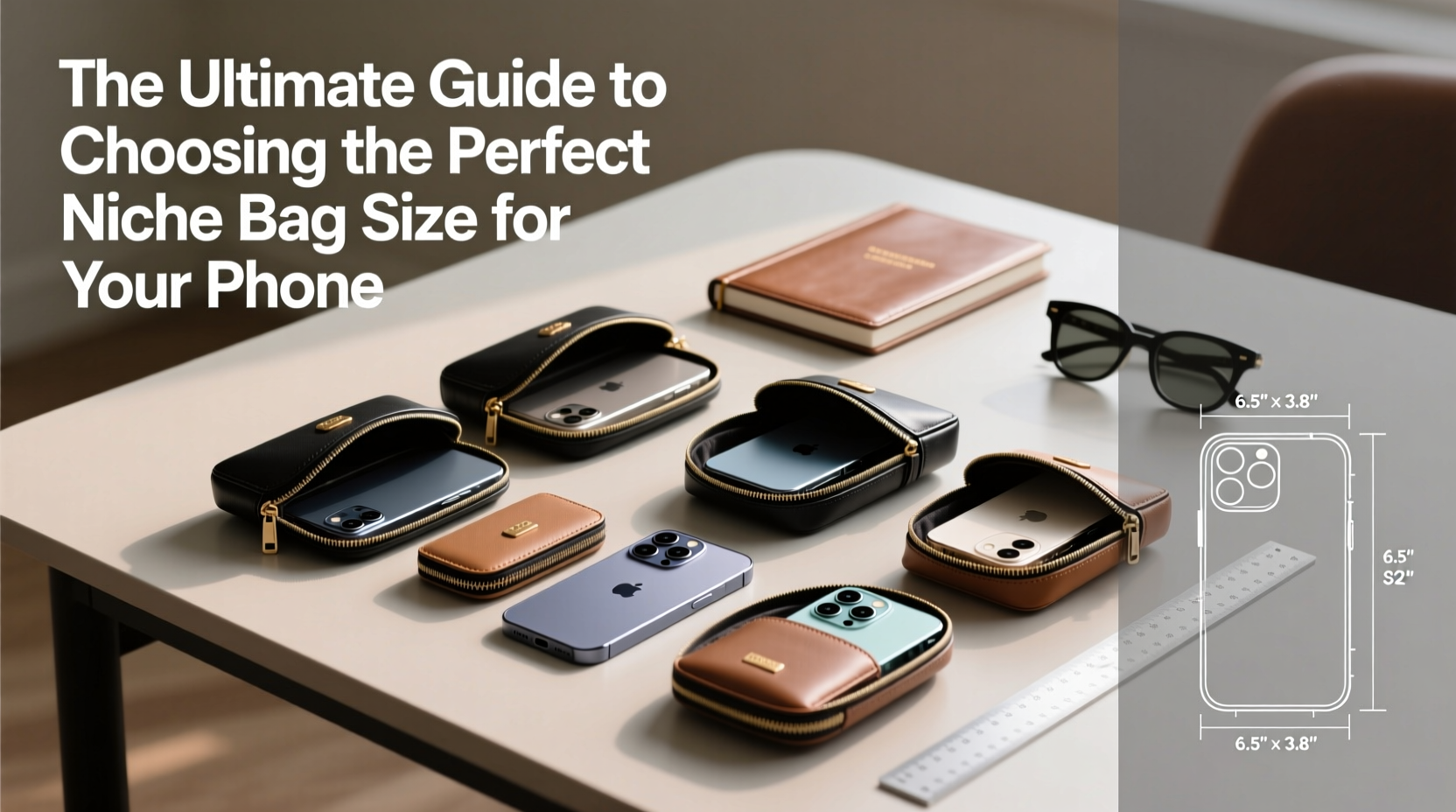
Before evaluating any bag, know your phone’s measurements. Modern smartphones vary drastically in size. An iPhone 15 Mini measures approximately 5.58 x 2.82 inches, while a Samsung Galaxy S24 Ultra reaches nearly 6.33 x 3.07 inches. Even small differences impact fit, especially in snug compartments designed for minimalist carrying.
To get accurate data:
- Check the manufacturer’s official specs (height, width, thickness).
- Measure your phone with a ruler, including any case you regularly use.
- Consider screen curvature and camera bump height, which can prevent smooth insertion into tight slots.
A bag marketed as “fits most phones” may accommodate older models but fail with larger flagship devices. Precision matters—especially when shopping online without physical access to the product.
Match Bag Interior Pockets to Phone Size
Niche bags often feature dedicated phone pockets, but their placement and construction vary. Some are padded and zippered; others are open slip pockets near the exterior. Understanding these types helps avoid misalignment.
| Pocket Type | Fits Phones Up To | Best For | Risks |
|---|---|---|---|
| Structured Zip Pocket | 6.4\" (e.g., iPhone 15 Pro Max) | Urban commuting, travel | Limited stretch; exact sizing required |
| Open Slip Compartment | 6.1\" (e.g., iPhone 14) | Casual outings, quick errands | Phone may fall out if bag tilts |
| Expandable Mesh Panel | 6.8\" (with stretch) | Active lifestyles, variable loads | Less protection against drops |
| No Dedicated Pocket | Depends on main compartment | Stylish clutches, evening bags | Increased chance of scratches or loss |
If your bag lacks a designated phone slot, ensure the main compartment allows upright positioning without forcing. Overstuffed bags increase the risk of screen pressure damage or accidental drops when reaching inside.
Assess Your Daily Routine and Carry Habits
Your lifestyle determines how much space you need—and how safely your phone must be stored. A freelance designer attending back-to-back client meetings has different needs than a student moving between lectures.
“Functionality should never sacrifice security. If your phone slips out during transit, the bag failed its primary job.” — Lena Torres, Accessory Design Consultant at Urban Carry Co.
Consider these scenarios:
Urban Commuters
Those navigating crowded subways or walking long distances benefit from crossbody bags with zippered internal phone sleeves. Security and hands-free movement are priorities. Look for RFID-lined pockets and water-resistant linings.
Social & Evening Use
Clutches or micro bags often prioritize aesthetics over capacity. If you carry only phone, keys, and lipstick, verify the interior layout holds your phone vertically without bending corners. Flexible materials like quilted nylon offer slight give compared to rigid vegan leather.
Active Lifestyles
Hikers, cyclists, or fitness enthusiasts may prefer waist packs or sling bags with shock-absorbing padding. These should feature secure closures (magnetic flaps or zippers) and breathable backs to prevent overheating devices.
Step-by-Step: How to Choose the Right Bag Size
Follow this five-step process to confidently select a niche bag that fits your phone and lifestyle:
- Measure your phone with its case. Record height, width, and thickness.
- Determine your essential load. List what you carry daily: wallet, earbuds, sunglasses, etc.
- Identify your dominant usage scenario. Work, leisure, travel, or hybrid?
- Research bag interior dimensions. Check product descriptions for pocket sizes—not just overall bag measurements.
- Verify return policy before purchasing. Especially important when buying online without trying first.
This method prevents disappointment and reduces returns, saving time and environmental waste.
Mini Case Study: From Frustration to Perfect Fit
Jamie, a marketing consultant in Chicago, purchased a sleek leather crossbody promoted as “perfect for city life.” Excited by the minimalist design, she didn’t notice the phone pocket was labeled for “up to 6 inches.” Her Pixel 8 Pro (6.35 inches tall with case) wouldn’t fit without excessive force. After two weeks of awkward bulging and fear of damaging the stitching, she returned it.
She then applied the step-by-step guide above: measured her phone, reviewed interior specs, and chose a waxed canvas sling with a 7-inch expandable side pocket. The new bag held her phone securely, offered room for a small notebook, and matched her professional-casual wardrobe. Most importantly, she could access her phone one-handed while managing train doors and coffee cups.
Her experience underscores a simple truth: aesthetics mean little without practical compatibility.
Do’s and Don’ts When Evaluating Bag Size
| Do | Don’t |
|---|---|
| Use a paper cutout of your phone to test bag interiors in-store | Assume all “medium” bags fit the same |
| Choose slightly roomier interiors if you switch cases seasonally | Overstuff the bag regularly—this strains seams and damages phones |
| Opt for lined pockets to reduce screen scratches | Ignore the depth/thickness of the pocket—bulky phones need at least 0.75” clearance |
| Prioritize zipper closures in high-movement environments | Trust influencer reviews without verifying dimensions |
FAQ
Can I use a bag meant for smaller phones if I don’t mind a tight fit?
Not recommended. Forcing your phone in can strain fabric, distort shape, and increase friction on the screen. Over time, this leads to premature wear and potential damage to both bag and device.
Are modular bags a good solution for changing phone sizes?
Yes. Brands offering interchangeable inserts or adjustable dividers allow future-proofing. If you upgrade phones frequently, modular systems provide long-term value despite higher initial cost.
What if my ideal bag doesn’t have a phone pocket?
You can still use it, but create a habit of placing your phone in a consistent spot—preferably against the back panel to prevent shifting. Consider a protective sleeve or pop socket for easier retrieval.
Final Checklist Before You Buy
- ✅ Measured phone with case
- ✅ Confirmed internal pocket dimensions (not just external)
- ✅ Evaluated closure type (zipper, magnet, snap)
- ✅ Tested accessibility while wearing
- ✅ Verified return policy in case of fit issues
- ✅ Assessed material flexibility (leather vs. neoprene stretch)
- ✅ Matched bag style to at least 80% of weekly activities
Conclusion
Choosing the perfect niche bag size for your phone isn’t about chasing trends—it’s about aligning design with daily reality. The best bag feels invisible in its ease of use: your phone slips in effortlessly, stays protected, and comes out exactly when needed. By focusing on precise measurements, understanding your routines, and respecting functional details, you invest in convenience, safety, and long-term satisfaction.




 浙公网安备
33010002000092号
浙公网安备
33010002000092号 浙B2-20120091-4
Comments
No comments yet. Why don't you start the discussion?