
Applying fake nail patches has become one of the fastest and most convenient ways to achieve polished, elegant nails without spending hours in a salon. However, even the highest-quality press-ons can look amateurish if they don’t fit properly. Ill-fitting patches lift at the edges, chip prematurely, or simply look unnatural. The key to a flawless finish lies not in the brand or design—but in selecting the correct size for each individual nail.
While many assume that one-size-fits-all kits are sufficient, the truth is that natural nail beds vary widely in shape and width. Choosing the right size isn't just about aesthetics; it's also crucial for longevity and comfort. This comprehensive guide breaks down everything you need to know—from measuring your nails accurately to avoiding common pitfalls—so you can achieve a professional-looking manicure every time.
Why Nail Patch Size Matters More Than You Think
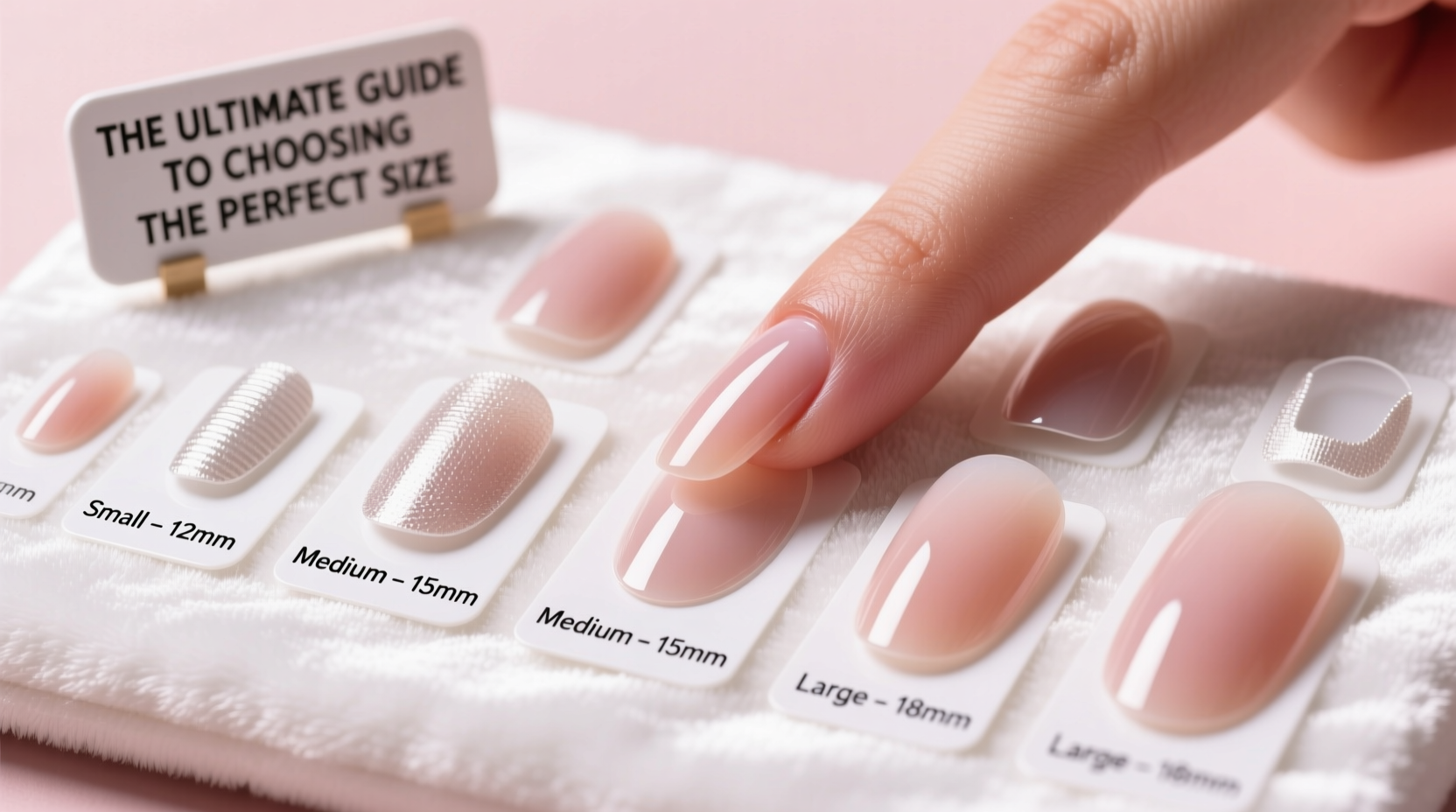
A well-fitted nail patch adheres evenly across the entire surface of your natural nail, minimizing air pockets and preventing moisture buildup underneath. When a patch is too large, it extends beyond the nail bed, making it prone to snagging and peeling. If it’s too small, gaps form along the sides, allowing water and bacteria to seep in, which shortens wear time and increases the risk of lifting.
Beyond durability, improper sizing affects appearance. A slightly oversized patch may create an artificial, bulky silhouette, while undersized ones make nails appear uneven or poorly groomed—even if the color and design are stunning.
“Fit is 80% of the game when it comes to realistic-looking press-on nails. No matter how high-end the material, poor sizing will always compromise the result.” — Lila Nguyen, Professional Nail Technician & Educator
How to Accurately Measure Your Natural Nails
The first step toward a flawless fit is understanding your nail dimensions. Unlike shoes or clothing, nail sizes aren’t standardized globally, so relying on kit labels like “medium” or “large” can be misleading. Instead, use direct measurement for precision.
Follow this simple process:
- Wash and dry your hands thoroughly to remove oils and ensure clean nail surfaces.
- Use a soft ruler or digital caliper (available online) to measure the width of each nail at its widest point—the base near the cuticle.
- Record measurements in millimeters. Most adult nail widths range from 8mm to 18mm.
- Compare your results with the size chart provided by the manufacturer.
Some brands include printable nail templates. Place your fingertip over the outlined shapes to see which matches best. Always test multiple fingers—you might find that your ring finger needs a different size than your index or pinky.
Sizing Charts and Brand Variations: What to Watch For
Not all nail patch brands follow the same sizing standards. One company’s “M” may align with another’s “L.” To avoid confusion, refer to actual millimeter dimensions rather than letter codes.
| Nail Width (mm) | Common Label | Typical Finger Match | Notes |
|---|---|---|---|
| 8–10 mm | XS / Petite | Pinky, sometimes ring | Often missing in basic kits |
| 11–13 mm | S / Small | Ring, middle (slender nails) | Most common for average-width nails |
| 14–15 mm | M / Medium | Middle, index | Best seller size; often overused |
| 16–17 mm | L / Large | Index, thumb | Needed for wider nail beds |
| 18+ mm | XL / Wide | Thumb, dominant hand index | Rare in budget sets; check specialty brands |
Always verify whether the kit includes a full range of sizes. Premium brands often offer 10–14 variations per set, while cheaper options may only provide three or four, increasing the likelihood of a poor match.
Step-by-Step Guide to Fitting Fake Nail Patches Perfectly
Even with the right sizes, application technique plays a major role in achieving a seamless look. Follow this detailed sequence for optimal results:
- Prep your natural nails: Remove old polish, file into desired shape, and gently buff the surface to improve adhesion. Wipe with alcohol to eliminate oil residue.
- Select the correct patch: Test each nail individually. Hold the patch above the nail without touching—align the base with your cuticle line and check side-to-side coverage.
- Adjust if necessary: If no exact match exists, go slightly smaller rather than larger. A marginally narrow patch is less noticeable than an overhanging edge.
- Apply adhesive: Use either the included glue tabs or a dot of nail-safe adhesive. Avoid excess, which can squeeze out and weaken the bond.
- Press and hold: Position the patch carefully, then apply firm pressure for 15–20 seconds. Start from the center and move outward to eliminate bubbles.
- Seal the edges: After all nails are applied, run a wooden stick around the perimeter to ensure complete contact.
- Finish with top coat (optional): Blending the edges with a clear gel or regular top coat helps disguise any minor discrepancies.
Real-World Example: Fixing a Common Sizing Mistake
Sophie, a frequent user of press-on nails, consistently struggled with her middle nails lifting within two days. She assumed it was due to poor glue quality and tried stronger adhesives, but the problem persisted. Upon closer inspection, she realized the \"medium\" patches she’d been using were actually 14.5mm wide, while her natural middle nails measured 13.2mm. The 1.3mm overhang created tension points where the patch curled upward.
She switched to a brand offering more granular sizing and selected 13.5mm patches instead. With proper prep and application, her manicure lasted nine days without lifting. The difference wasn’t in the product quality—it was in the precision of fit.
Checklist: How to Ensure Flawless Nail Patch Application
- ✅ Clean and dry all natural nails before starting
- ✅ Measure each nail individually in millimeters
- ✅ Choose a kit with at least 8–10 size options
- ✅ Match each finger to its ideal patch—don’t default to one size
- ✅ Test fit without adhesive first
- ✅ Apply even pressure during placement
- ✅ Seal edges and consider a blending top coat
- ✅ Avoid water exposure for the first hour after application
Frequently Asked Questions
Can I reuse nail patches if I get the size wrong?
Yes, as long as the glue tab remains intact or you used minimal liquid adhesive. Gently peel off, clean with alcohol, and store flat in the original case. Avoid reusing more than 2–3 times to maintain structural integrity.
What should I do if my nails are between sizes?
Opt for the smaller size. An undersized patch can be blended visually with a top coat, but an oversized one will always catch and lift. You can also lightly file the sides of a slightly large patch to better match your nail shape.
Do nail shapes affect sizing?
Yes. Oval and almond-shaped patches tend to run narrower at the base compared to square or squoval styles. Always consider both width and shape when matching. Some brands offer separate kits for different silhouettes.
Final Thoughts: Precision Leads to Perfection
Choosing the perfect size fake nail patches isn’t guesswork—it’s a deliberate process rooted in observation and accuracy. Investing a few extra minutes in measuring and selecting the right fit transforms a temporary beauty hack into a durable, elegant enhancement. Whether you're preparing for a special event or simply want polished nails on demand, mastering this skill elevates your self-care routine.




 浙公网安备
33010002000092号
浙公网安备
33010002000092号 浙B2-20120091-4
Comments
No comments yet. Why don't you start the discussion?