
Finding the ideal ring and bracelet set isn’t just about style or metal type—it’s about fit. A poorly sized set can slip off, pinch the skin, or simply feel awkward during daily wear. Whether you're shopping for yourself, a partner, or a gift, understanding how to measure and match sizes accurately ensures comfort, longevity, and confidence in your jewelry choices. This guide walks through every essential step—from measuring techniques to material considerations—so your set fits flawlessly from day one.
Understanding Ring Sizing Systems
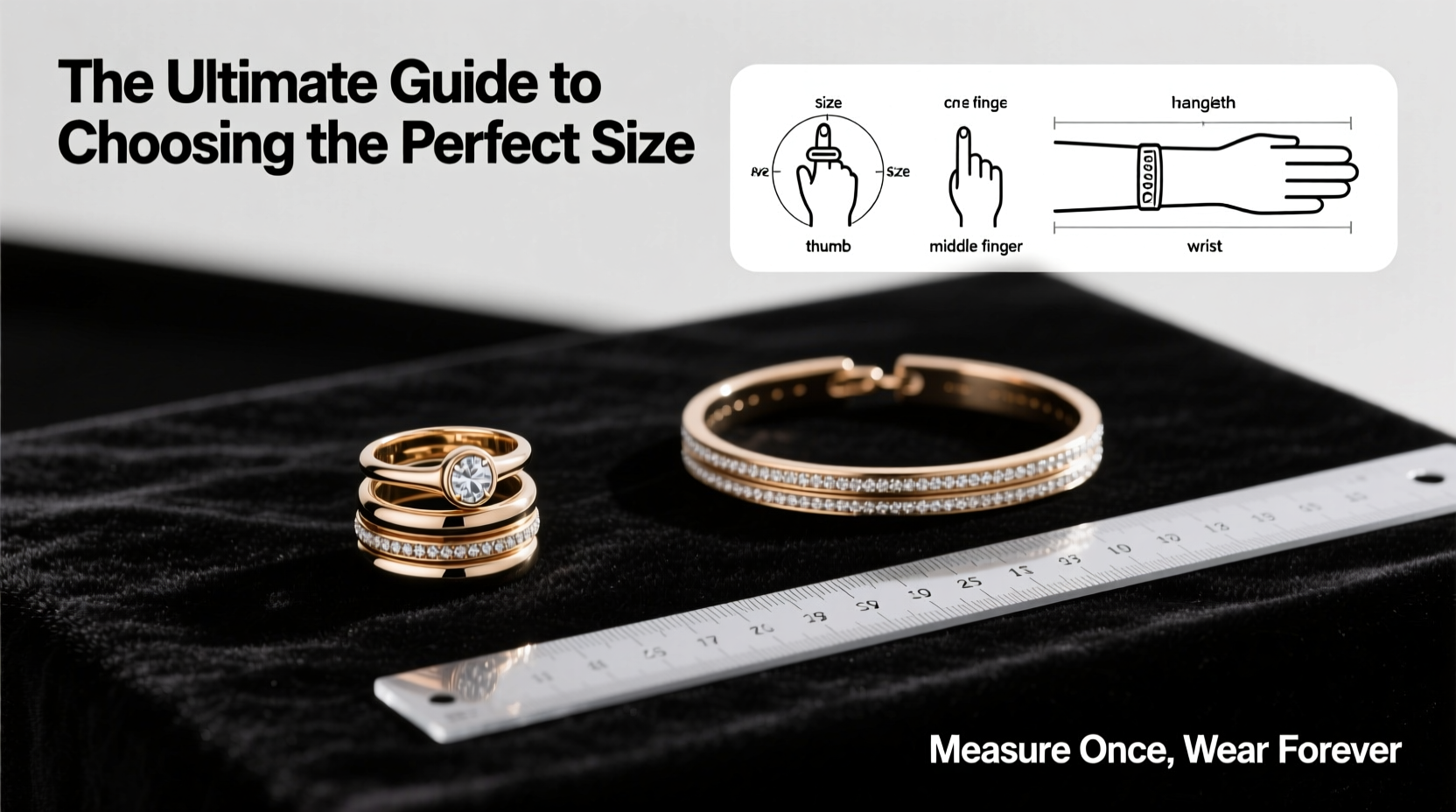
Rings are sized using standardized systems that vary by region. The most common include the US numeric scale (e.g., size 6), UK letter system (e.g., L½), and millimeter-based inner diameter measurements. Converting between these requires precision, as even half a size can impact comfort.
The standard method measures the internal diameter of the ring in millimeters or uses a circumference-based calculation. For example, a US size 7 corresponds to an inner diameter of approximately 17.3 mm. Jewelry retailers often provide conversion charts, but relying solely on them without physical verification can lead to errors—especially when purchasing online.
“Half a size might seem negligible, but in rings, it determines whether the piece stays securely on your finger or becomes a constant worry.” — Daniel Reyes, Master Jeweler at Lumina & Co.
How to Accurately Measure Your Ring Size
Accurate measurement is the foundation of a well-fitting ring. While many turn to online guides, the best results come from consistent, real-time testing under normal conditions.
Step-by-Step Guide to Measuring Ring Size at Home
- Gather tools: Use a flexible measuring tape, paper strip, or printable ring sizer from a reputable jeweler.
- Choose the right time: Fingers swell slightly throughout the day. Measure in the evening when fingers are at their largest for a more accurate, comfortable fit.
- Wrap around the base: Position the tape or strip snugly around the base of the intended finger, avoiding the knuckle unless the ring design must pass over it.
- Note the circumference: Mark where the ends meet and measure the length in millimeters.
- Convert to size: Use a reliable conversion chart. For instance, 54.4 mm circumference equals US size 6.
- Repeat 2–3 times: Ensure consistency across multiple readings taken on different days.
If possible, compare your result to a ring you already own and wear comfortably. Measure its internal diameter with a ruler or caliper and cross-reference with a sizing chart.
Bracelet Fit: Circumference, Style, and Wrist Proportion
Unlike rings, bracelets allow for more flexibility—but not all styles fit the same way. Bangle, chain, and cuff bracelets each demand unique fitting approaches based on structure and closure type.
Wrist size is measured just below the wrist bone, where most bracelets naturally rest. However, personal preference plays a role: some prefer a snug fit, others a looser drape. As a general rule:
- Snug fit: Add 0.5 cm (0.2 inches) to your wrist measurement.
- Comfortable fit: Add 1–1.5 cm (0.4–0.6 inches).
- Loose fit: Add 1.5–2 cm (0.6–0.8 inches), especially for bangles or layered looks.
| Wrist Size (cm) | Wrist Size (inches) | Recommended Bracelet Length (cm) | Common US Size Equivalent |
|---|---|---|---|
| 15 | 5.9 | 16–16.5 | Small |
| 16.5 | 6.5 | 17.5–18 | Medium |
| 18 | 7.1 | 19–19.5 | Large |
| 19.5 | 7.7 | 20.5–21 | X-Large |
Matching Ring and Bracelet Sets: Harmony in Proportion
A matching set should feel cohesive, not overwhelming. The key lies in balancing proportions between the ring width, bracelet thickness, and the wearer’s hand size.
For delicate hands or narrow wrists, opt for slim bands (under 3 mm) and fine chains. Broader fingers or larger wrists can carry wider rings (5 mm+) paired with chunkier cuffs or link bracelets. Mismatched proportions—such as a thick eternity band with a dainty chain—can visually unbalance the overall look.
Material also affects perceived fit. Tungsten and platinum have weight and rigidity, making them feel tighter over time. Sterling silver and gold-filled metals are lighter and may require slightly snugger sizing to prevent slippage.
Mini Case Study: Choosing a Bridal Set
Sophia was shopping for her bridal ring and bracelet set. She typically wears a US size 6 ring and has a 16.8 cm wrist. After trying on samples, she realized her engagement ring had a high setting that made it harder to slide off—but also required extra care when pairing with a bracelet.
She chose a comfort-fit wedding band in size 6¼ to accommodate slight swelling during warmer months. For the bracelet, she selected a 18 cm hinged bangle with a subtle gap, allowing room for movement while keeping both pieces secure. The final look was elegant, coordinated, and functional for daily wear.
Essential Checklist Before Purchasing
Before finalizing your purchase, run through this checklist to ensure long-term satisfaction:
- ✅ Measured finger size at the end of the day, not in the morning
- ✅ Verified size using both a string method and existing well-fitting ring
- ✅ Accounted for seasonal swelling (fingers expand in heat)
- ✅ Considered ring profile—high settings may need slightly larger size
- ✅ Matched bracelet length to preferred fit (snug, average, loose)
- ✅ Checked return policy or resizing options, especially for online orders
- ✅ Ensured metal type aligns with lifestyle (e.g., hypoallergenic for sensitive skin)
Frequently Asked Questions
Can I resize any ring after purchase?
Most metal rings can be resized, but limitations apply. Tungsten, ceramic, and titanium cannot be resized due to their hardness. Gold and silver bands can usually be adjusted up or down by one full size. Stones near the band edges may complicate resizing, so consult a professional first.
How do I know if my bracelet is too tight?
A properly fitted bracelet should slide on with slight resistance but not require force. You should be able to fit one finger between the bracelet and your wrist for a secure yet breathable fit. If circulation feels restricted or leaves marks, it’s too tight.
What if I’m buying a surprise gift and don’t know the size?
Borrow a frequently worn ring or bracelet and trace its inner circle or measure its length. Alternatively, choose a flexible style like an adjustable bangle or leather wrap bracelet. Many jewelers also offer gift receipts with free initial resizing.
Final Thoughts: Confidence Starts with Comfort
The perfect ring and bracelet set doesn’t just catch the eye—it feels natural on the skin. Taking the time to measure correctly, understand fit nuances, and balance aesthetics with function transforms jewelry from mere accessories into enduring expressions of personal style.
Whether you’re marking a milestone or treating yourself, don’t rush the sizing process. Use the tools and insights above to make informed decisions that last far beyond the first wear.




 浙公网安备
33010002000092号
浙公网安备
33010002000092号 浙B2-20120091-4
Comments
No comments yet. Why don't you start the discussion?