
A well-fitted sofa cover can extend the life of your couch, protect it from spills and pets, and refresh your living room’s look without a full reupholster. But no matter how high-quality the fabric, a poorly sized cover will slip, bunch, or stretch awkwardly. Choosing the right size isn’t guesswork—it’s precision. Whether you’re shopping online or in-store, understanding how to measure your sofa and interpret sizing labels ensures a seamless fit that looks custom-made.
Why Sofa Cover Size Matters More Than You Think
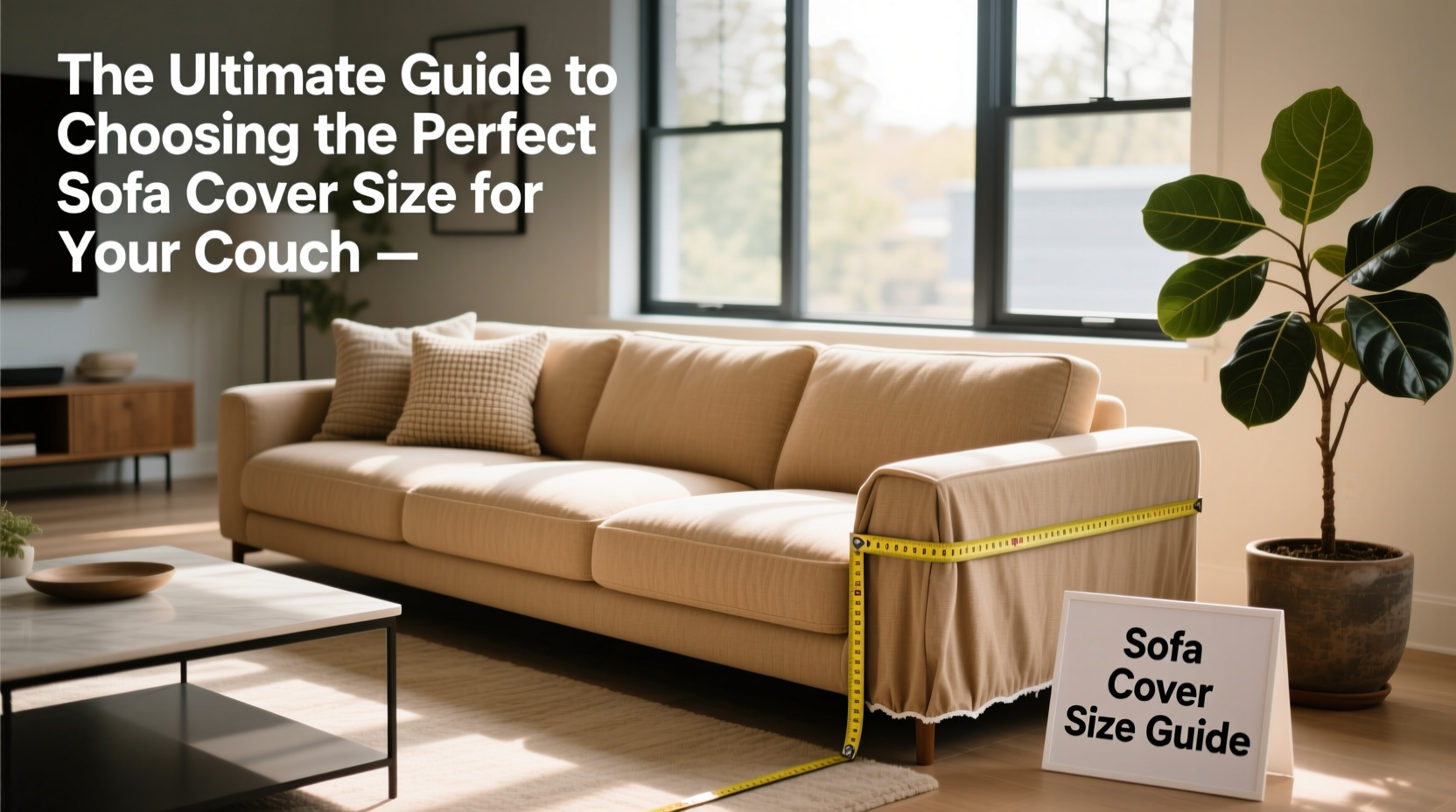
The difference between a professional-looking cover and one that appears haphazard often comes down to size accuracy. A cover too large sags and shifts, while one too small strains at the seams and exposes edges. Beyond appearance, improper sizing compromises protection. Gaps allow dust and liquids to reach the upholstery, defeating the purpose of using a cover.
Furniture manufacturers rarely follow standardized dimensions across models. Two sofas labeled “3-seater” may vary by several inches in depth or arm height. This inconsistency means relying solely on product names like “large” or “sectional” is risky. Instead, accurate measurements are essential.
“Many customers return covers not because the material is poor, but because they didn’t measure properly. Five minutes with a tape measure saves weeks of frustration.” — Lena Torres, Home Textiles Specialist at UrbanFurnish
How to Measure Your Sofa: A Step-by-Step Guide
Before browsing options, gather a flexible tape measure, notepad, and pen. Measure in inches or centimeters consistently. Sit your sofa on a flat surface, free of cushions or throws. Follow these steps:
- Length: Measure from the outer edge of one armrest to the other, along the front.
- Depth: From the front edge of the seat to the back of the rear cushion (or top of the backrest if no cushion).
- Height: From the floor to the highest point of the backrest.
- Arm Height: Floor to the top of the armrest.
- Arm Width: From the front to the back of the armrest.
If your sofa has a chaise or corner unit, measure each section separately. Note whether the cover needs to accommodate loose cushions or a tight back.
Sofa Cover Sizing Standards: What Labels Really Mean
Retailers use various naming conventions, which can be misleading. The table below translates common labels into actual dimensions. Use this as a reference, but always compare with your own measurements.
| Cover Label | Typical Length | Typical Depth | Best For |
|---|---|---|---|
| Love Seat / 2-Seater | 50–60 inches | 28–34 inches | Small apartments, two-person seating |
| Standard 3-Seater | 70–85 inches | 32–38 inches | Most living rooms, average family couches |
| Large / Oversized | 85–96 inches | 36–42 inches | Bigger frames, deep seats, or L-shaped ends |
| Sectional (Custom) | Varies per section | Varies | L-shaped, U-shaped, or multi-piece setups |
Always check whether the listing includes exact dimensions. Avoid vague terms like “fits most sofas” unless backed by specific ranges. If in doubt, contact customer service with your measurements before purchasing.
Choosing Between Stretch, Slip-On, and Tailored Covers
Not all sofa covers function the same way. The type affects how size should be interpreted:
- Stretch (Spandex-blend) Covers: Designed to expand. Choose one within 1–3 inches of your sofa’s dimensions. These hug tightly and resist slipping.
- Slip-On (Loose-fit) Covers: Drape over the frame. Allow 4–6 extra inches in length and depth for tucking. Ideal for irregular shapes.
- Tailored (Custom-fit) Covers: Precision-cut for specific models. Best when you know your sofa brand and model number.
Stretch covers work well for modern, boxy designs. Slip-on styles suit traditional roll-arm sofas where coverage over arms is desired. Tailored options offer the neatest finish but cost more.
Real Example: How Sarah Fixed Her Ill-Fitting Cover Problem
Sarah bought a “3-seater” cover for her mid-century sectional, assuming it would fit. The cover bunched behind the back and wouldn’t stretch over the wide arms. After returning it twice, she measured carefully: her sofa was 88 inches long with a depth of 40 inches—larger than standard. She switched to an oversized stretch cover with gusseted corners and elastic hem. The new fit was snug, smooth, and stayed in place even with her two cats jumping on and off daily.
Her mistake? Assuming “3-seater” meant universal sizing. Her solution? Measuring first, reading product specs second.
Checklist: Before You Buy a Sofa Cover
To ensure a perfect fit every time, follow this checklist:
- ✅ Measure length, depth, height, and arm dimensions
- ✅ Note your sofa style (track arm, rolled arm, sectional, etc.)
- ✅ Decide on cover type: stretch, slip-on, or tailored
- ✅ Compare your numbers to the seller’s size chart
- ✅ Check return policy in case of fit issues
- ✅ Confirm fabric care instructions match your lifestyle
Common Mistakes to Avoid
Even experienced shoppers make errors. Watch out for these pitfalls:
- Mistake: Using couch blanket dimensions instead of structural measurements.
Solution: Measure the frame, not the cushion area. - Mistake: Ignoring seat depth on deep-seated sofas.
Solution: Add 2–3 inches of tolerance for thick cushions. - Mistake: Ordering a cover for a sectional as one piece when it’s modular.
Solution: Buy individual pieces or confirm compatibility with multi-part sets.
FAQ
Can I use a larger cover and tuck the excess?
You can with slip-on styles designed for draping. However, tucked fabric may shift and require frequent readjusting. For a clean look, proper sizing is better than improvisation.
What if my sofa doesn’t match any standard size?
Consider a custom-fit cover. Many companies offer made-to-measure options using your exact dimensions. Though pricier, they provide the best fit for unique or vintage sofas.
Do sofa covers shrink after washing?
Some natural fabrics like cotton may shrink up to 5% after the first wash. Always check care labels and pre-wash if possible. Synthetic blends (polyester-spandex) resist shrinking and maintain shape longer.
Final Thoughts: Fit Is Everything
A sofa cover should enhance, not hide, your furniture. The right size transforms a functional necessity into a design asset. By measuring accurately, understanding sizing labels, and selecting the appropriate style, you gain both protection and polish. Don’t let assumptions or rushed decisions compromise the outcome. A few minutes with a tape measure today can save you time, money, and disappointment tomorrow.




 浙公网安备
33010002000092号
浙公网安备
33010002000092号 浙B2-20120091-4
Comments
No comments yet. Why don't you start the discussion?