
Selecting the perfect pair of men’s sandals isn’t just about aesthetics—it’s about achieving a balance between comfort, fit, and personal style. Too often, men compromise on fit for the sake of fashion, only to face foot fatigue, blisters, or long-term discomfort. The key lies in understanding how to choose the right size with precision. Whether you're walking through city streets, hiking coastal trails, or lounging at a summer barbecue, a properly sized sandal makes all the difference.
Why Sandal Fit Matters More Than You Think
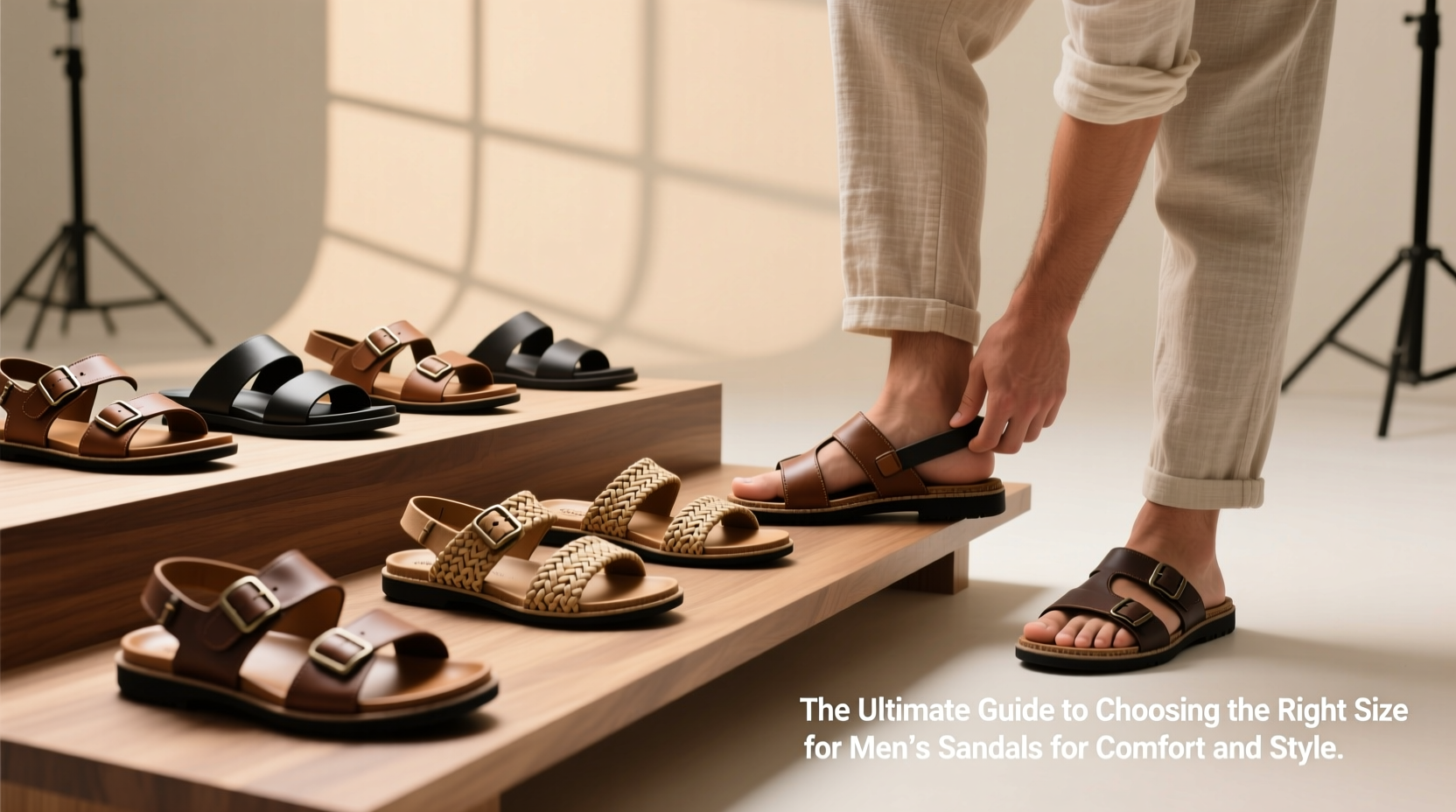
Few footwear choices are as liberating as sandals—lightweight, breathable, and ideal for warm weather. However, their open design means less structural support than closed shoes, placing greater importance on accurate sizing. A poorly fitted sandal can lead to instability, excessive friction, or even posture issues over time.
The anatomy of a sandal—its strap placement, sole contour, and toe bar—interacts directly with your foot shape. Unlike sneakers or dress shoes that encase the foot, sandals rely on strategic contact points to stay secure. If these don’t align with your foot dimensions, even premium materials won’t prevent discomfort.
“Footwear that doesn’t match your natural gait pattern forces compensatory movements, which can lead to strain in the knees, hips, and lower back.” — Dr. Alan Pierce, Podiatrist & Gait Specialist
Step-by-Step: How to Measure Your Feet at Home
Many men wear the wrong shoe size simply because they’ve never measured their feet as adults. Feet change over time due to weight gain, aging, or lifestyle factors like prolonged standing. Follow this simple process to get accurate measurements:
- Gather supplies: Ruler or tape measure, blank paper, pen, and a flat surface.
- Measure in the afternoon: Feet naturally swell during the day; measuring then gives a realistic sense of daily size.
- Stand on paper: Place one foot on the paper and trace its outline while standing normally. Repeat for the other foot—yes, both! One is often slightly larger.
- Measure length: Use the ruler to find the distance from heel to longest toe. Record in inches or centimeters.
- Measure width: Find the widest part of the foot (usually behind the toes) and note the measurement.
- Compare to brand charts: Convert your measurements using the manufacturer’s size guide—never assume standardization across brands.
Key Fit Factors Beyond Length
Length is just one piece of the puzzle. Several other fit elements determine whether a sandal will feel supportive or slip-prone.
- Arch compatibility: High-arched feet need contoured footbeds, while flat-footed individuals benefit from built-in arch support.
- Heel grip: The heel should sit snugly without lifting when you walk. A loose heel causes slippage and blisters.
- Toe room: There should be no pressure on the toes, especially in styles with a front strap or toe post.
- Adjustability: Multiple straps with buckles or Velcro allow micro-adjustments for a custom fit.
Common Fit Mistakes to Avoid
| Mistake | Why It’s Problematic | Better Approach |
|---|---|---|
| Using athletic shoe size as reference | Sandal lasts vary significantly; assuming equivalence leads to errors | Measure feet and consult the specific brand’s sandal chart |
| Ignoring width differences | Narrow straps dig into wide feet; oversized sandals lack stability | Check if the brand offers wide or narrow variants |
| Buying too tight “to break in” | Sandals don’t stretch like leather shoes; tightness causes pain | Fit should be comfortable from day one |
Brand Variations and Sizing Charts: What You Need to Know
No universal sandal size exists. For example, Teva may run half a size large compared to Chaco, while Birkenstock uses a proprietary sizing system based on footbed molding. Always refer to the brand’s official size guide—and when shopping online, read customer reviews mentioning fit.
Some brands design around European standards, which differ from U.S. measurements. Others use unisex sizing, where women’s and men’s sizes share a scale but not necessarily proportional widths. When in doubt, look for brands offering free returns or exchanges to test fit risk-free.
Real Example: Choosing Sandals for a Beach Vacation
Mark, a 38-year-old traveler, bought a popular sandal brand online before his Hawaiian trip. He assumed his usual size 10 would work. Within two days of walking on uneven terrain, he developed blisters along his heel and midfoot. Upon returning, he measured his feet and discovered his right foot was actually 10.5, and the sandal’s rigid strap sat awkwardly on his instep. He exchanged them for a size 11 with adjustable straps and reported immediate improvement in comfort—even after six-hour hikes.
This case illustrates how minor discrepancies compound under real-world conditions. Active use demands precise fit.
Style Without Sacrifice: Matching Size to Design
Styling matters, but it shouldn’t override function. Certain designs are more forgiving with fit, while others demand exact sizing.
- Athletic sandals (e.g., sport or hiking): Prioritize adjustability and support. Look for models with heel loops and multidirectional tread.
- Casual slides: Minimal structure means less forgiveness. Ensure the footbed contours to your arch and the heel stays planted.
- Dress sandals: Often made from leather with limited stretch. Try them on late in the day and walk around briefly to test comfort.
If you plan to wear socks with sandals—a growing trend in smart-casual wear—opt for a size up to accommodate added volume without constriction.
Essential Checklist Before Buying Men’s Sandals
✅ Measure both feet in the afternoon ✅ Check brand-specific size chart—not generic conversions ✅ Confirm availability of wide or narrow widths ✅ Look for adjustable straps (buckles, Velcro, or elastic) ✅ Read customer reviews focused on fit and comfort ✅ Verify return policy for online purchases ✅ Test heel stability and toe freedom before extended wear
Frequently Asked Questions
Do sandals stretch over time?
Unlike full-grain leather shoes, most sandals—especially those with EVA foam or synthetic uppers—do not stretch significantly. Fabric straps may loosen slightly with wear, but structural fit remains consistent. Choose a size that feels right immediately.
Should my toes touch the front of the sandal?
No. There should be a small gap—about 0.2 to 0.5 inches—between your longest toe and the front edge. This prevents bruising during downhill walking or sudden stops.
How do I know if a sandal has good arch support?
Press your thumb into the footbed. It should resist deep indentation under the arch area. Also, check product details for terms like “ergonomic,” “anatomical,” or “contoured.” Brands like Birkenstock and Vionic are known for medical-grade support.
Final Thoughts: Comfort Is the Ultimate Style Statement
Choosing the right size for men’s sandals isn’t a detail to overlook—it’s the foundation of lasting comfort and confident style. When your footwear fits correctly, you walk taller, move easier, and enjoy every step without distraction. Take the time to measure, research, and test. Your feet will thank you, whether you're crossing a boardwalk or stepping into a rooftop dinner.




 浙公网安备
33010002000092号
浙公网安备
33010002000092号 浙B2-20120091-4
Comments
No comments yet. Why don't you start the discussion?